

Innovation Case Study: Council Plan 2025-2029
Greater Shepparton City Council
From consultation to co-creation: Deliberative democracy shapes Greater Shepparton’s future
Greater Shepparton’s Council Plan 2025–2029 was co-created through innovative deliberative engagement, scenario planning, and inclusive outreach. By amplifying under represented voices and integrating robust evidence with community aspirations, the process built genuine trust and delivered a resilient, community owned roadmap that is already guiding integrated strategy implementation across council.
2026 MAVlab Innovation Awards Joint Winner:
The Community Voice Award for Inclusive Democratic Engagement, supported by the Australian Resilient Democracy Network (ARDN)
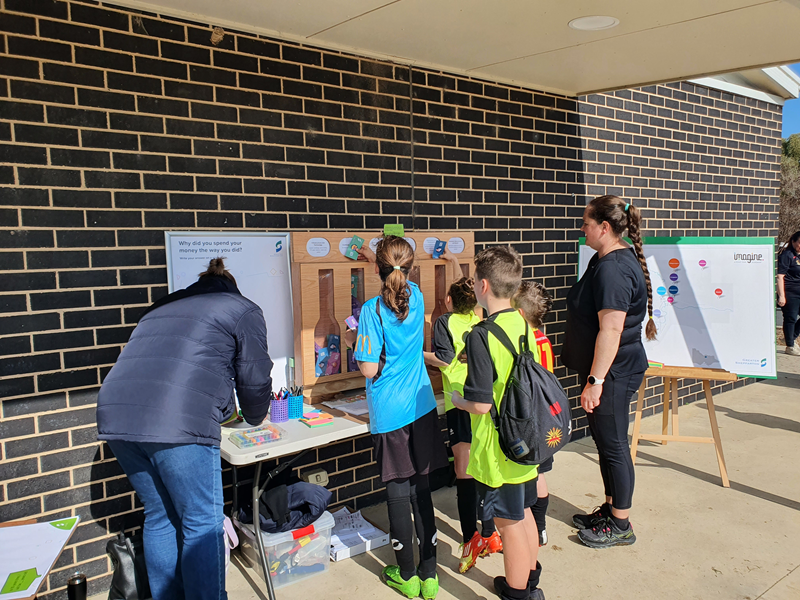
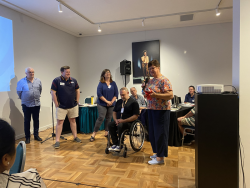
Mini Roadshow - This is part of a stand at the mini roadshow and includes a family sharing their ideas
Project Goals:
- Co-create a community-owned Council Plan 2025–2029 through genuine deliberative democracy, moving beyond traditional consultation.
- Amplify diverse and under-represented voices (youth, seniors, culturally diverse residents, smaller townships, and lower socioeconomic groups).
- Integrate robust quantitative evidence with qualitative community insights and scenario planning to create realistic, resilient priorities.
- Strengthen democratic trust and ownership through transparent feedback loops showing clear links between community input and final decisions.
- Build internal capability and cross-organisational alignment so the Plan drives integrated implementation across all strategies.
- Deliver a future-ready, actionable roadmap that supports post-COVID recovery and maintains strong community mandate.
Project Team:
The core project team consisted of 8–10 people.
This included a dedicated Project Manager and a Project Control Group of 8 senior leaders representing all key areas of the organisation (CEO, Governance, Finance, Community Engagement, Communications, Environment, Economic Development, and Service Delivery).
Additional internal specialists contributed as needed to evidence gathering, engagement delivery, and drafting.
External consultants provided targeted specialist support in facilitation and data analysis. This lean, cross-functional structure enabled agile decision-making while drawing on broad organisational expertise.
Team or contributors:
- Fiona Le Gassick - CEO
- Chris Teitzel - Corporate Services Director
- Rebecca Good - Corporate Governance Manager
- Sonja King - Communications and Engagement Manager
- Renee Austin - Community Wellbeing Manager
- James Nolan - Corporate Planning Analyst.
Project duration:
The Council Plan project ran for 18 months, from March 2024 to September 2025.
The program was intentionally aligned with the local government election cycle and statutory timeframes.
Key phases included:
- Establishment and planning (March–June 2024)
- Community and stakeholder engagement (July 2024–January 2025), with a pause during the October 2024 election period
- Councillor engagement and drafting (February–August 2025)
- Final adoption in September 2025.
This extended timeframe allowed for thorough evidence gathering, meaningful deliberative engagement, and strong integration across the organisation.
Challenge and context:
Greater Shepparton faced a high-stakes challenge in developing its 2025–2029 Council Plan amid compounding crises: post-COVID recovery, the severe 2022 floods that caused widespread infrastructure damage, economic disruption and community trauma across Shepparton, Mooroopna and smaller townships, an upcoming local government election, shifting demographics, escalating climate risks, and declining institutional trust.
Traditional consultation methods had repeatedly failed to engage under represented groups (youth, seniors in smaller townships, culturally diverse communities, and lower socioeconomic cohorts), resulting in plans with limited ownership and weak implementation. In a polarised environment, there was also a growing risk that low information or misleading narratives could undermine the Plan’s democratic legitimacy.
The context was complex: tight legislative timeframes, budgets already strained by flood recovery costs, competing priorities across strategies (Public Health & Wellbeing, Asset Management, Climate Adaptation and flood resilience), and risks of disengagement or misinformation. Traditional consultation offered limited protection against these challenges.
Identifying the challenge involved reviewing past Council Plan evaluations (2017–2021), which highlighted siloed drafting, limited deliberative depth, and weak integration of community voice with evidence. This created a clear need for an innovative, inclusive process that could amplify unheard voices — particularly those most affected by recent crises — stress test ideas against real constraints, and strengthen democratic legitimacy through genuine co-creation.
Solution and innovation:
We shifted from transactional consultation to a sophisticated deliberative democracy model embedded within integrated strategic planning. Unlike basic box ticking consultation exercises that meet statutory minimums but deliver limited ownership and weak implementation, our approach was deliberately designed to achieve genuine community co-ownership — giving residents a real voice in exploring trade-offs and seeing their input directly shape the final strategic direction. The approach combined evidence-based analysis, scenario planning, and inclusive engagement to co-create priorities.
Key stages:
- Evidence baseline (quantitative data on demographics, assets, finances + qualitative insights).
- Broad activation via Shaping Greater Shepparton platform, pop-ups, mailouts, and translated materials.
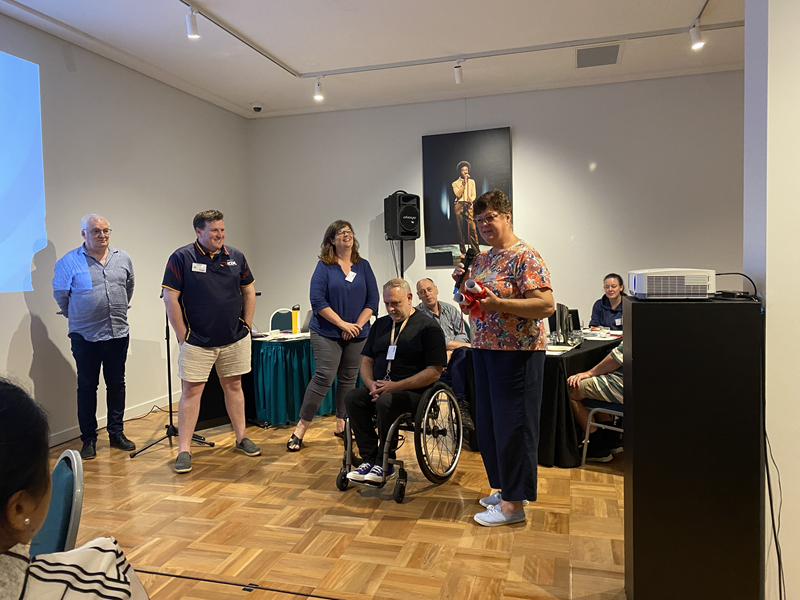
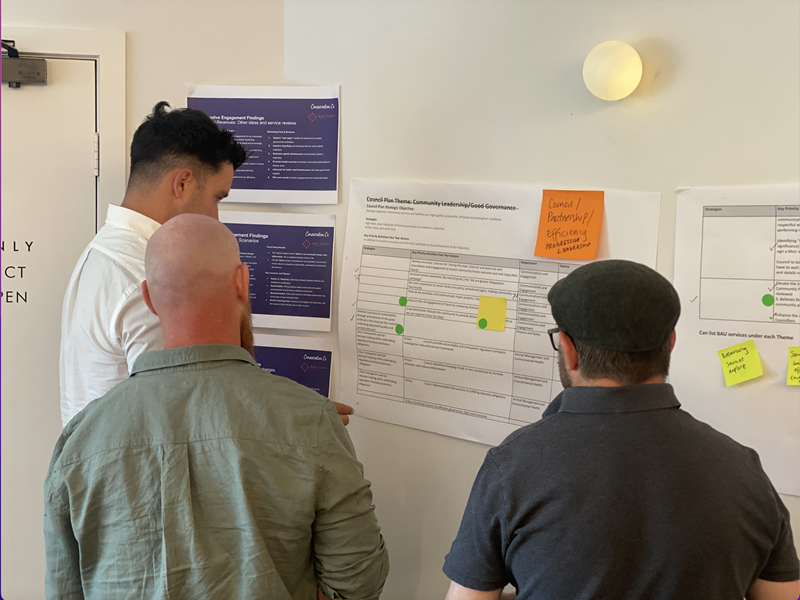
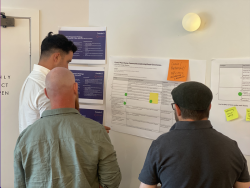
- Deep deliberative engagement (Aug 2024–Jan 2025): facilitated workshops, targeted outreach (youth, seniors, business), and a representative Community Panel using scenario based exercises to explore trade-offs and co-design directions.
- Councillor & staff integration: post election sense making sessions, cross functional sprints, and capability building in facilitation.
- Agile adaptation: real time feedback loops, dashboard monitoring, and adjustments (e.g., additional Councillor briefings when concerns arose about pre-election timing).
Innovation highlights (compared to past practice):
Deliberative panels and scenario modelling enabled informed trade-offs rather than simple preference gathering or superficial box ticking, while also building resilience against misinformation through evidence-based dialogue and transparent decision making that fostered authentic community ownership.
Mobile/targeted outreach + digital tools broadened reach to under-represented voices.
Strong internal capability focus (leveraging staff skills instead of heavy consultant reliance).
Seamless integration of community input with statutory strategies and performance frameworks.
This created a living, adaptive process rather than a static document, directly addressing trust and inclusion gaps.
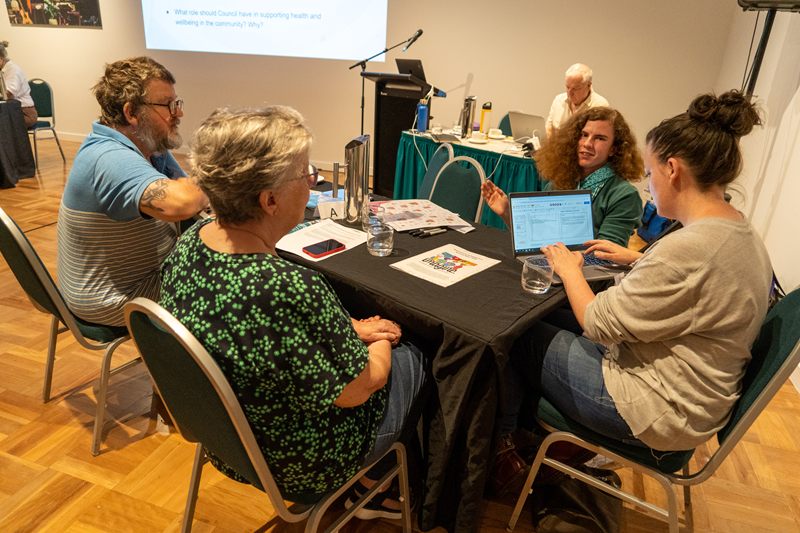
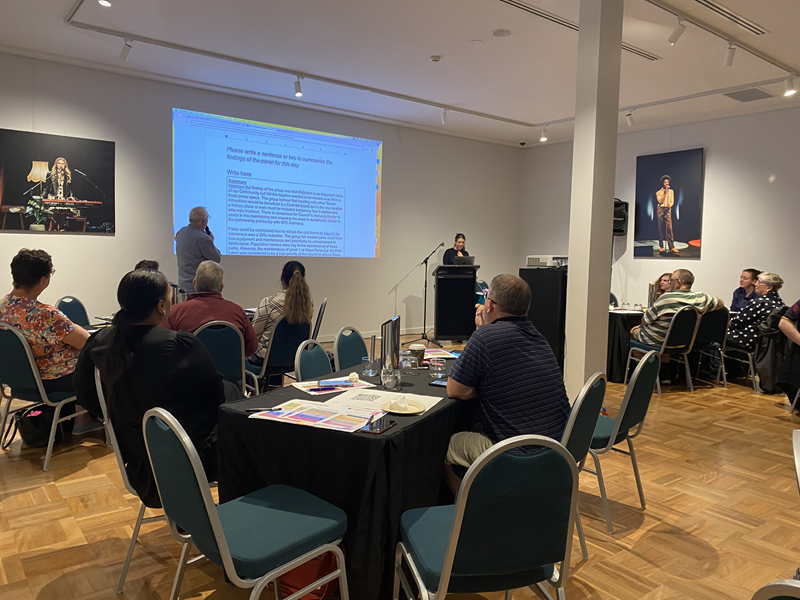
Beyond delivering the Council Plan, it [this project] has built enduring organisational and community capability that will shape evidence informed, trusted decision-making for years to come.
Project impacts and short-term outcomes:
The process delivered strong short term democratic and planning outcomes via inclusive deliberative engagement.
Higher participation and diversity: The engagement generated 996 ideas from 438 survey responses, mini roadshows in small towns and contributions from 106 stakeholder groups, with the Shaping Greater Shepparton platform recording 4,544 page views. Participation was significantly broader and more inclusive than previous cycles, with strong representation from under represented groups: 8% Aboriginal or Torres Strait Islander (vs 4% population), 22% with disability or caring responsibilities, 6% LGBTQIA+, 9% speaking a language other than English at home, plus robust rural township (Mooroopna 14%, Kialla 15%) and older resident (21% aged 60–69, 14% aged 70+) input.
A representative Community Panel of 35 residents was recruited via stratified random sampling from 111 expressions of interest to reflect municipal demographics. The panel included 3 Aboriginal or Torres Strait Islander members, 15 people with disability or carer responsibilities, 4 LGBTIQA+ members and strong youth representation. Fifty council staff contributed via workshops. Post-panel evaluation found 84% of participants strongly agreed they had effectively contributed; many noted greater understanding of constraints and trade-offs, stating they had “a real voice and impact” and that the process was “an important process which more members of our community should experience.”
Informed ownership and stronger alignment: Participants in panels and workshops developed deeper understanding of constraints and trade-offs. Priorities with genuine community mandate were directly adopted into the Council Plan, creating clear, traceable links from deliberative input to outcomes through transparent feedback loops. Cross functional collaboration reduced silos, with the Plan adopted amid strong Councillor and staff confidence — evidenced by engagement metrics, post-engagement feedback and timely legislative compliance. These outcomes strengthened democratic engagement and laid firm foundations for implementable priorities.
Capability and long-term impacts:
This project has transformed how Greater Shepparton City Council engages with its community, shifting from consultation to genuine co-creation as standard practice. Beyond delivering the Council Plan, it has built enduring organisational and community capability that will shape evidence informed, trusted decision-making for years to come.
New ways of working: Deliberative engagement is now embedded across Council as standard practice, supported by a lessons learned register and continuous improvement framework. Refined Project Control Group triggers are actively guiding the scoping, engagement design and integration of subsequent major strategies, including the Circular Economy strategy. This demonstrates that the shift to genuine co-creation and evidence-informed decision making is now a sustained organisational capability rather than a one-off project.
Internal capability uplift: A dedicated Internal Communications Officer now guides consistent, high quality engagement planning and delivery across the organisation. This is reinforced by staff training in facilitation and deliberative methods, together with corporate membership of the Engagement Institute. The membership has enabled accessible training — including an onsite Essentials of Engagement workshop where 20 staff achieved certification, with further staff completing courses online and in person — embedding a shared, organisation-wide approach.
Governance evolution: The Project Control Group model has been refined with clear transition triggers, strengthening accountability and decision making. The Council Plan now serves as the central lens for aligning strategies across Public Health and Wellbeing, Climate Adaptation, Housing, Economic Development and other priorities.
Community infrastructure and resilience: The Shaping Greater Shepparton platform, together with the potential continuation of a Community Panel, provides enduring mechanisms for ongoing dialogue, feedback and co-design. Council has strengthened its ability to navigate elections, uncertainty and competing priorities through evidence informed, trust-based decision making, improving adaptability, coordination and long-term legitimacy.
Scalability and transferability:
The model is highly transferable to other Victorian councils facing similar integrated planning and engagement challenges. Core elements — deliberative panels, scenario testing, hybrid outreach (including mini roadshows), agile internal sprints, and strategy integration — can be readily adapted to different scales and contexts.
We are keen to share practical tools and resources with the sector, including our engagement frameworks, scenario planning tools, dashboard monitoring approach, and lessons learned register. We are open to peer support, presenting at MAV and other sector forums, and hosting learning sessions for other councils.
The approach aligns strongly with the principles of the Local Government Act 2020 and supports UN Sustainable Development Goals, particularly SDG 11 (Sustainable Cities and Communities), SDG 16 (Peace, Justice and Strong Institutions), and SDG 17 (Partnerships for the Goals).