
Innovation Case Study: Disability at Dusk: Reimagining Inclusive Community Events
Casey City Council; Greater Dandenong City Council; Cardinia Shire Council
Reimagining community events through disability pride, access and belonging
Disability at Dusk was a regional community celebration designed for people with disability, families, carers and allies. Delivered by the Southern Region Disability Alliance (SRDA), this partnership between three councils created a mainstream-quality event experience people with disability are often excluded from, bringing together entertainment, performers with disability, a services expo, sensory and quiet spaces, access volunteers and accessible wayfinding.
2026 MAVlab Innovation Awards Winner:
The Connector Award for Inclusion and Community Cohesion, supported by YLab

Project goals:
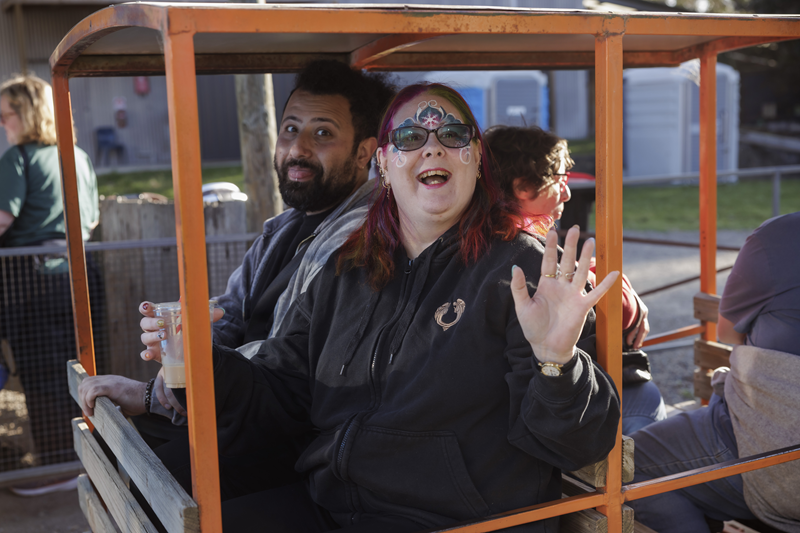
Disability at Dusk was created because people with disability, families and carers are often excluded from mainstream community events through inaccessible design, unclear information, sensory overload, limited facilities, or not feeling safe and welcome. The goal was to create a large-scale regional celebration where people with disability, families, carers and allies could feel visible, included and celebrated.
Through the Southern Region Disability Alliance, the City of Casey, City of Greater Dandenong and Cardinia Shire councils pooled resources, networks and expertise to deliver what no single council could achieve alone. The project used community leadership through a regional Disability Community Event Reference Group, chose an accessible and inclusive venue, and designed access into the event model from the start. This included an access guide, cognitive wayfinding, sensory and quiet spaces, accessible facilities, assistance animal planning, access volunteers, a services expo, and performers with lived experience of disability.
Project team:
Disability at Dusk was delivered by a cross-council project team led by the three SRDA disability inclusion leads, with support from City of Casey’s events, business support and Myuna Farm teams.
The internal planning group included eight key staff across disability inclusion, event delivery, farm operations and business support.
A regional Disability Community Event Reference Group, made up of community members from the three councils’ disability advisory committees, guided the design.
On the day, 25 access volunteers supported attendees, alongside 21 community and disability organisations, performers, food vendors and roving entertainers.
Core project team: Alexandra Bignell, City of Casey; Mala Doyle, City of Greater Dandenong; Tania Lancaster, Cardinia Shire; Erin Hart, City of Casey; Natalie Bayliss, City of Casey; Nydane Reth, City of Casey; Michelle Sessler, City of Casey; Steve Hill and Ethan O’Connor, Myuna Farm.
Community leadership: Disability Community Event Reference Group members from the City of Casey, Cardinia Shire and City of Greater Dandenong disability advisory committees.
Delivery contributors: 25 access volunteers from across the three council regions; 21 community and disability organisations at the services expo; five performing ensembles; food vendors; face painters; animal experience providers; roving performers; Myuna Farm staff; and event suppliers.
Project duration:
The project began in early 2025, when SRDA identified the opportunity to deliver a shared regional event for people with disability, families, carers and allies.
The Disability Community Event Reference Group met from July 2025 to guide the concept, branding, accessibility, programming and communications.
Operational planning, supplier coordination, access planning, promotion and volunteer preparation occurred from July to November 2025.
The event was delivered at Myuna Farm on Thursday 27 November 2025 from 4.00pm to 8.00pm, with evaluation, feedback and learnings captured afterwards to inform future inclusive event planning.
Challenge and context:
People with disability are often excluded from mainstream community events, not because they do not want to participate, but because events are commonly designed around standard assumptions about movement, noise, crowding, communication, toilets, parking, wayfinding and support. Families and carers often carry the burden of making events work, while people with disability may experience sensory overload, inaccessible activities, unclear information, judgement from others or a lack of safe places to rest and regulate.
The Southern Region Disability Alliance (SRDA), a partnership between the City of Casey, City of Greater Dandenong and Cardinia Shire councils, identified an opportunity to respond regionally. Each council had limited capacity to deliver a large disability inclusion event alone, but together the councils could pool staff expertise, community networks, service provider relationships, venues, event capability and local knowledge.
The challenge was to create an event that was large enough to reach people across three municipalities, but calm and accessible enough for people who often avoid crowded public events. It needed to feel like a mainstream community celebration, while being deliberately designed around disability, pride, access and belonging. It also needed to connect community members with services, showcase performers with disability, engage families, manage event risks and build trust with people who may have had poor experiences at public events before.
At the heart of the project was disability pride. The Community Reference Group deliberately chose the name Disability at Dusk because they wanted disability to be visible, clear and celebrated, not softened or hidden behind vague language. That decision shaped the project as more than an accessible event. It became a community celebration where people with disability were centred from the beginning.
Solution and innovation:
Disability at Dusk was designed as a regional, disability-community-led event, rather than a standard event with access added later. SRDA formed a Disability Community Event Reference Group from members of the three councils’ disability advisory groups and community networks. This group co-designed the name, concept, accessibility priorities, communications, programming and event design.
The innovation was not one single feature, but the way access was built into the operating model. Many community events include accessible toilets or general volunteers, but the practical access supports people need are often missing, unclear or left for families to manage on the day. Disability at Dusk treated access as a core event function. A plain-language Access Guide, colour-coded event map, matching wayfinding signage, sensory and quiet spaces, Changing Places information, assistance animal planning, wheelchair charging, accessible parking and drop-off planning were designed together so people knew what to expect before and during the event.
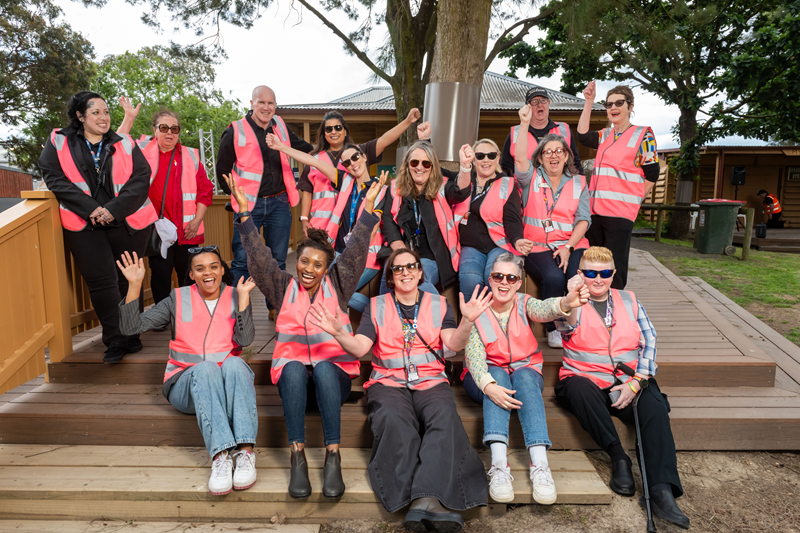
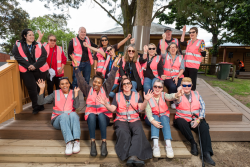
A new access-volunteer model was also developed alongside standard event operations. In addition to operational staff already managing logistics, safety, suppliers and site coordination, 25 access volunteers from across the three council regions were recruited, briefed in disability awareness, allocated to zones and supported by zone captains. Wearing distinctive pink vests, their role was visible and practical: answering access questions, supporting wayfinding, helping people find quieter spaces, identifying barriers early and resolving small issues before they became reasons to leave or miss out.
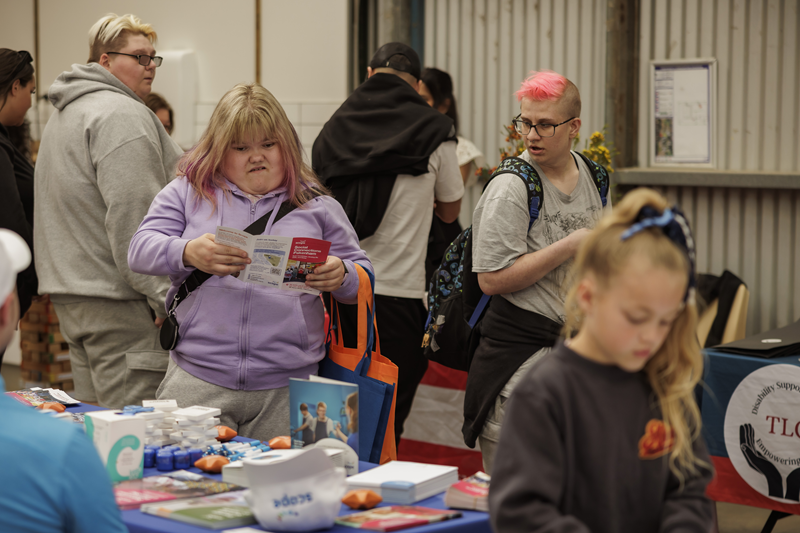
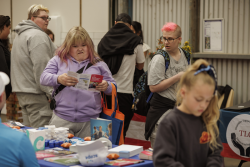
The expo reimagined how people connect with services. Rather than expecting people to navigate formal service systems separately, Disability at Dusk brought 21 community and disability organisations into a relaxed, fun and welcoming environment. Families could explore services, ask questions and make connections while enjoying food trucks, farm activities, face painting, roving performers and live music.
Together, these elements created a practical, repeatable model for inclusive event delivery.
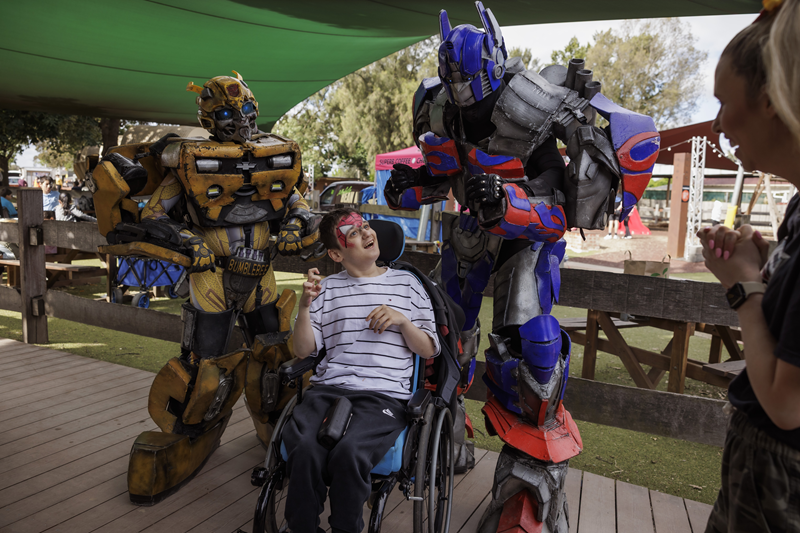
[Disability at Dusk] showed that access is not only a compliance requirement or checklist. It is a way of designing public life so people with disability can participate with dignity, joy and ease.
Project impacts and short-term outcomes:
Disability at Dusk achieved strong community reach and participation despite only using targeted communications rather than broad public advertising. Promotion focused on service providers, special schools and SRDA networks, yet the event sold out, with 1,302 registrations and 876 attendees from across Casey, Greater Dandenong, Cardinia and broader Victoria. This demonstrated unmet demand for accessible community events designed specifically for people with disability.
The services expo brought 21 community and disability organisations into the event, including council teams and regional support services. This mattered because people with disability and families often navigate fragmented service systems on their own. Disability at Dusk made service connection easier by bringing information, people and services together in one relaxed, welcoming place.
The access model also delivered tangible outcomes. Twenty-five access volunteers provided an extra layer of visible support across parking, entry, animal experiences, the expo, food, stage, sensory, face painting and playground zones. Their presence helped reduce uncertainty, made it easier to ask access questions, and supported attendees to find quieter spaces or practical help before issues became stressful.
Feedback showed that attendees valued the calm atmosphere, sensory and quiet spaces, welcoming staff and volunteers, inclusive activities and sense of belonging. The event received an average rating of 8.92 out of 10, and 100% of respondents said they would attend again.
The strongest impact was social and emotional. One attendee said staff and volunteers were “welcoming and understanding”. Another said their child could be “his real authentic self” without worrying about people staring or judging him. A neurodiverse family said the event “catered to us all”, showing that the access model supported whole-family participation, reduced sensory stress and created a space where people could take part without judgement.
Capability and long-term impacts:
Disability at Dusk strengthened council capability beyond a single event. It gave the three SRDA councils a practical model for designing accessible community events from the beginning, rather than retrofitting access at the end. It also strengthened SRDA from a network of aligned council officers and service providers into a more active regional collaboration able to deliver major social inclusion projects together.
The project created reusable tools and ways of working, including the access-volunteer model, with zone-based volunteer allocation and disability awareness briefing, and plain-language Access Guide, cognitive wayfinding approach, assistance animal planning, sensory and quiet space planning, and targeted outreach through advisory groups, schools, service providers and disability networks.
The model has already influenced how City of Casey plans accessible events. The access framework developed through Disability at Dusk, including how access information is prepared, how wayfinding is designed, and how access volunteers are trained and placed across a site, is now being used to inform broader event planning practice. The access planning approach developed through Disability at Dusk helped strengthen Council’s successful Australian Government Revive Live grant application for Open Space Festival 2026, which secured $50,000 for original Australian artist fees and accessibility costs.
The event also built confidence and relationships across councils, advisory group members, volunteers, community organisations, service providers and event staff. Service providers have continued looking for opportunities to connect, and SRDA now has a stronger shared foundation for future regional social inclusion projects.
Most importantly, Disability at Dusk helped shift expectations of what a disability-inclusive event can be. It showed that access is not only a compliance requirement or checklist. It is a way of designing public life so people with disability can participate with dignity, joy and ease.
Scalability and transferability:
Disability at Dusk is highly transferable because its innovation is a model, not a one-off event format. Other councils can adapt the same core elements to different places, communities and budgets: regional collaboration, co-design with people with disability, targeted promotion, plain-language access information, cognitive wayfinding, trained access volunteers, sensory and quiet spaces, accessible activity planning, service connection and post-event evaluation.
The model can scale in several ways. It can be repeated as an annual SRDA regional event, adapted by individual councils for festivals, open space activations, community celebrations and civic events, or shared across local government as a practical access-planning framework. It is especially useful for councils that want to improve disability inclusion but need practical ways to translate policy commitments into the lived experience of community events.
The project also demonstrates the value of cross-council collaboration. By pooling staff expertise, budgets, networks and community knowledge, three councils delivered a higher-impact event than any one council could have delivered alone. This approach is transferable to other regional alliances, particularly where communities move across municipal boundaries to access services, schools, employment, recreation and social connection.
The model aligns with core local government responsibilities: creating inclusive places, supporting community wellbeing, strengthening participation and ensuring people can access community life. Disability at Dusk provides a practical framework that other councils can adapt to make events accessible from the beginning, rather than treating access as an add-on.