

Innovation Case Study: Engaging Fathers, Strengthening Families: MCH & Dads Group Collaboration
Stonnington City Council
Engaging fathers in positive early childhood and family connections
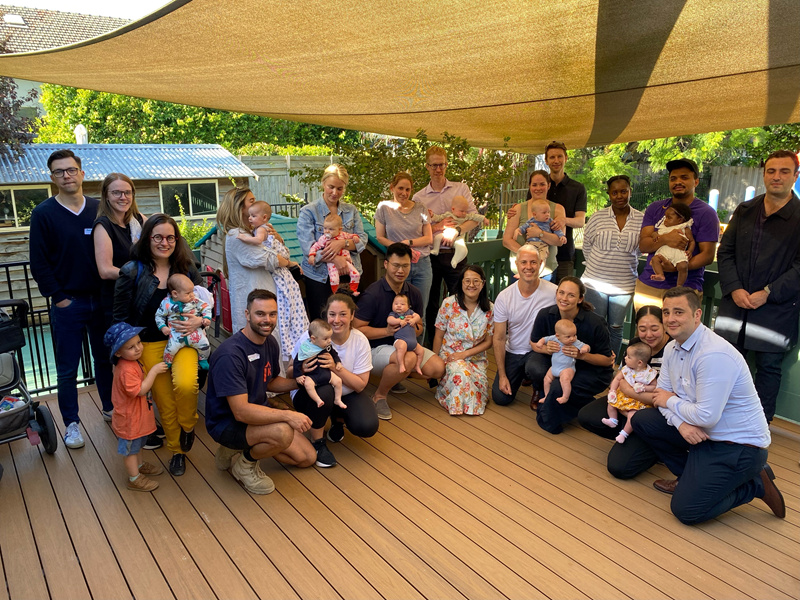
A collaborative initiative between Stonnington Maternal and Child Health Services (MCH) and Dads Group to actively engage fathers in early parenting. The program integrates father-inclusive practice into MCH services, delivers targeted events, and strengthens referral pathways—improving connection, parenting confidence, and mental wellbeing for fathers and their families.
2026 MAVlab Innovation Awards Finalist:
The Wellbeing Award for community health impacts, supported by Choosewell and the Local Government Employees Health Plan

Project goals:
- Increase father engagement in MCH services
- Improve early parenting confidence and wellbeing for fathers
- Strengthen gender equity in early years' service delivery
- Build sustainable partnerships between MCH and community organisations
- Increase participation in dad-specific programs and supports
- Embed father-inclusive practice within MCH workforce
- Provide accessible local peer support for fathers
- Support positive parenting connections and family wellbeing.
Project team:
27 people.
MCH Nurses:
- Samantha Cooke – Coord Maternal & Child Health
- Samantha Clarke – Team Leader MCH
- Evelyn Chan – Graduate MCH Nurse
- Jasmine Pynakker – Maternal & Child Health Nurse
- Claire Peake – Maternal & Child Health Nurse
- Kristy Yu – Maternal & Child Health Nurse
- Catherine Blackmore – Maternal & Child Health Nurse
- Agatha McIntosh – Maternal & Child Health Nurse
- Jane Perry – Maternal & Child Health Nurse
- Lukshmi Chauhan – Maternal & Child Health Nurse
- Irina Gold – Maternal & Child Health Nurse
- Cheryl Moar – Maternal & Child Health Nurse
- Leanne Smith – Maternal & Child Health Nurse / Sleep & Settling MCH Nurse
- Anne Craw – Maternal & Child Health Nurse
- Christine A Clarke – Maternal & Child Health Nurse
- Cecelia A Randles – Maternal & Child Health Nurse
- Megan Ward – Enhanced MCH Nurse
- Laurie Dziubinski – Enhanced MCH Nurse
- Caroline Wen – Maternal & Child Health Nurse
- Mikki Green – Maternal & Child Health Nurse
- Tamara Tanfara – Maternal & Child Health Nurse
- Lynne Morgan – Maternal & Child Health Nurse
- Susan E Marchesani – Maternal & Child Health Nurse.
Dads Group Facilitators:
- Thomas Fagernes
- Alex Dugdale
- Raj Pillay
- Andrew Marmont.
Project duration:
The project commenced in 2020 and continues today in 2026.
Challenge and context:
While becoming a father can be a rewarding experience, it can also be a period of considerable adjustment, vulnerability, and unmet support needs.
The Australian Institute of Family Studies' Ten to Men study found that one in three new fathers report barriers to accessing health services, and one in six use no relevant services for depression at all (Gasser et al., 2025).
The consequences for families are significant. Research shows that 96% of mothers identify the baby's father as their first source of support, yet there is minimal system-level support for fathers themselves. With one in five mothers experiencing postnatal depression, the wellbeing and capacity of fathers has a direct impact on family outcomes. When fathers struggle silently, the effects are felt across the entire family.
The City of Stonnington recognised that, despite a highly regarded Maternal and Child Health (MCH) service, paternal participation remained at the national average of 5–10%, and many fathers were not attending the MCH service. Addressing this gap required more than adding a father-focused session; it required a genuine shift in practice and culture within an established clinical service.
Developing a co-delivery partnership was challenging. It required Council to embrace a new model of engagement, MCH staff to adapt their professional approach, and both organisations to invest significantly in relationship-building before implementation. The model also needed to acknowledge that fathers are often reluctant help-seekers and therefore must be engaged on their own terms rather than through services designed primarily for mothers.
The outcomes have been encouraging. Fathers report reduced isolation, increased confidence, and ongoing peer connections that continue beyond the formal program. Several participants have become volunteer peer leaders, creating a sustainable network of community support and strengthening local family wellbeing.
Solution and innovation:
The innovation of this program lies not simply in offering father-inclusive content, but in how that content was embedded within a live Maternal and Child Health (MCH) service through a unique partnership between the City of Stonnington and Dads Group. Rather than funding a separate program that sits alongside existing services, Stonnington integrated a specialist fatherhood partner directly into its MCH model, transforming service delivery and engagement.
The City of Stonnington provided the foundation through its established MCH infrastructure, including clinical settings, staff expertise, organisational credibility, and longstanding community relationships. MCH staff worked as true co-delivery partners, co-designing and facilitating sessions alongside Dads Group. This approach repositioned fathers as equal participants in their family’s health journey and contributed to increased paternal attendance.
Dads Group brought specialist fatherhood expertise, a nationally tested peer-led model, digital engagement platforms, and access to evidence and practice knowledge not readily available within traditional MCH services. The program operates across four interconnected areas: New Parent Support through co-delivered MCH sessions, Community Building initiatives such as Man With a Pram, Advocacy, and Peer Leader Training. Together, these components provide multiple pathways for fathers to engage, from structured clinical settings to informal community gatherings and accessible online support.
A particularly distinctive feature is the peer-led model, where participating fathers are supported to become volunteer leaders. This creates a sustainable community network that extends beyond service delivery and builds long-term community capacity within the Council’s footprint.
According to Dads Group’s National Clinical Innovation Impact Report (April 2026), this model represents a national first—the first successful integration of father-inclusive practice within clinical services in Australia. The partnership demonstrates how local government and specialist community organisations can work together to create lasting systems change that improves engagement, strengthens family wellbeing, and embeds father inclusion as a core element of service delivery.
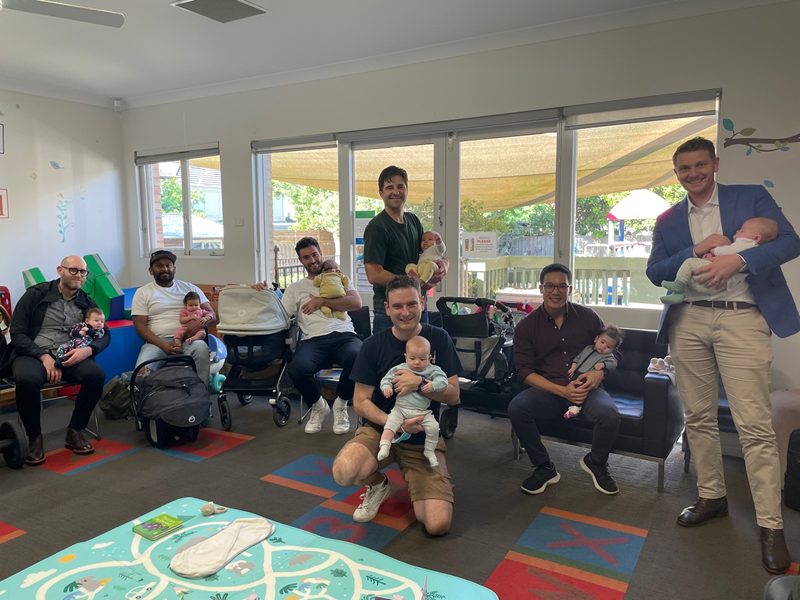
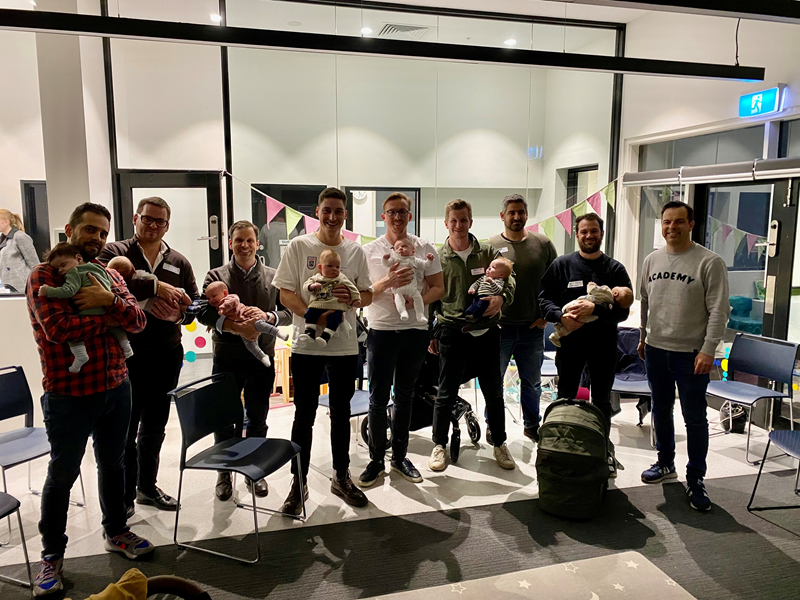
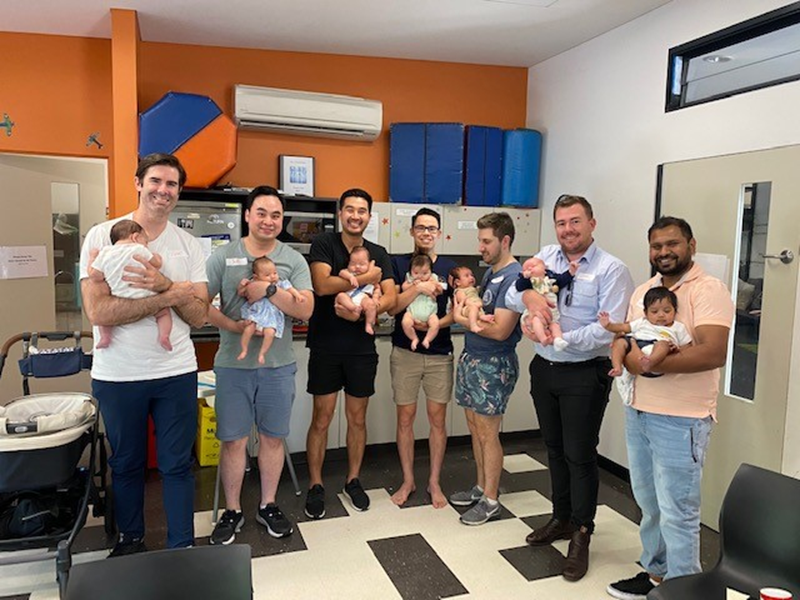
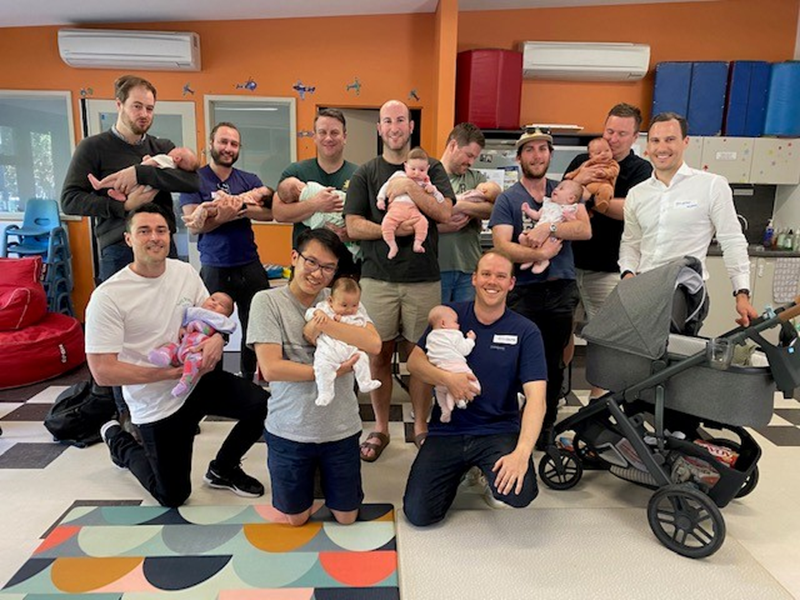
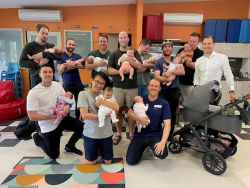
The partnership demonstrates how local government and specialist community organisations can work together to create lasting systems change that improves engagement, strengthens family wellbeing, and embeds father inclusion as a core element of service delivery.
Project impacts and short-term outcomes:
The partnership has delivered significant and measurable outcomes for Stonnington families. To date, 735 participants have engaged directly with the program, including more than 49 parenting sessions co-delivered by City of Stonnington Maternal and Child Health (MCH) staff and Dads Group facilitators. Regular weekly digital support groups and community initiatives such as Man With a Pram have further strengthened family connections and normalised father involvement. Funding has been fully acquitted across staffing, program delivery, volunteer training, events, digital infrastructure, and marketing.
A key achievement has been the substantial increase in father engagement. Thirty-seven MCH Talks have been delivered in partnership, attracting approximately 300 fathers. Paternal participation in Stonnington MCH sessions have significantly increased exceeding the national average . MCH staff report fathers showing greater confidence, engagement, and active participation in discussions about parenting, child development, and family wellbeing.
The Stonnington model has been intentionally designed for replication. Its foundation is a strong co-delivery partnership between local government and a specialist fatherhood organisation embedded within existing MCH services. The model is underpinned by a six-pillar framework: New Parent Support, Mental Health Training, Community Building, Flexible Digital Learning, Advocacy, and Peer Leader Development. This provides a practical, adaptable structure for other councils seeking to strengthen father inclusion.
Transferability is enhanced by Dads Group’s established national infrastructure, including digital learning resources, online support sessions, and community platforms that reduce the need for councils to develop these independently. The peer leader component also supports long-term sustainability by equipping fathers to mentor and support future cohorts. As a case study, Stonnington demonstrates that intentional investment in father-inclusive practice can significantly increase paternal participation and strengthen family engagement with maternal and child health services, providing a scalable model for broader implementation across local government settings.
Capability and long-term impacts:
The Stonnington program has generated lasting capability changes within Council systems that extend well beyond any single funding period.
Most significantly, it has permanently embedded father-inclusive practice within MCH service delivery. Prior to the partnership, MCH teams lacked specific tools and frameworks for engaging fathers. The co-delivery model has created an ongoing practice shift: MCH nurses now actively facilitate father engagement, not just accommodate it. This knowledge - once embedded in professional practice - does not disappear when a program ends. It becomes the new standard.
The partnership has also strengthened the Council's ability to respond to future perinatal health challenges. By building a network of trained peer leaders within Stonnington's community, the Council now has local capacity that can flex, expand, and respond to emerging needs independently of funded staff. The shift from professional-delivered to peer-supported service is a resilience asset.
At an organisational level, the partnership has created new coordination capabilities between Council, a national not-for-profit, and the MCH system. The structured handover process when program staff changed (Thomas Fagernes to Alex Dugdale) demonstrates an improved ability to manage continuity in complex, multi-party partnerships - a capability directly applicable to future Council initiatives.
The program has also generated a documented institutional knowledge base: acquittal reports, session records, and participant feedback that capture what father-inclusive perinatal practice looks like in a council context. What draws fathers in, what sustains engagement, what barriers exist, and how to address them. This knowledge base is a lasting Council asset that can inform future investment in health, family services, and community wellbeing.
City of Stonnington is now nationally recognised as a leader in father-inclusive perinatal practice - a reputational asset that will shape future partnerships, funding applications, and peer council influence.
Scalability and transferability:
The Stonnington model is explicitly designed to transfer. Its core architecture - a deep co-delivery partnership between a local council and a specialist organisation, embedded within existing MCH infrastructure - is replicable by any council willing to make the same institutional commitment Stonnington made.
The six-pillar framework (New Parent Support, Mental Health Training, Community Building, Flexible Digital Learning, Advocacy, and Peer Leader Development) provides a structured template that other councils can adopt in full or adapt to local context. Stonnington's acquittal reporting, participation data, and qualitative feedback constitute a ready evidence base that other councils can use to justify similar investment - reducing the research and justification burden that typically delays replication.
Critically, the digital delivery components are already available nationally through Dads Group: self-paced modules, online sessions, and digital community infrastructure do not need to be rebuilt from scratch. A council that partners with Dads Group inherits an existing platform, an established methodology, and a national peer leader network. Stonnington has done the hard work of proof of concept.
The peer leader model further accelerates transferability. Trained peer leaders can support new cohorts in adjacent areas and carry the program's culture with them, independently of organisational infrastructure.
The MCH partnership model has been shared with other councils as a case study in what becomes possible when local government takes a proactive, partnership-based approach to perinatal inclusion - not funding a program that runs alongside services, but transforming the service itself. Stonnington has demonstrated that a council can move from a national average of 5-10% paternal MCH participation to over 50% by making a deliberate institutional commitment. That is the proof point other councils need.