

Innovation Case Study: Homelessness in Bass Coast: Scaling Collective Impact
Bass Coast Shire Council
Transforming homelessness responses through leadership, advocacy and collaboration
Through brave leadership and catalytic partnership-development, Bass Coast Shire Council has demonstrated and scaled a holistic approach to inter-agency coordination, community-led advocacy and funding attraction that is now driving sub-regional implementation of international best practice to end homelessness in the region.
2026 MAVlab Innovation Awards Winner:
The Wellbeing Award for Community Health Impacts, supported by Choosewell and the Local Government Employees Health Plan

Project goals:
- Convene a collective impact coalition across community and sectors to define and action an agenda for coordinated action on homelessness
- Uplift service coordination in Bass Coast to deliver better outcomes for community members experiencing or at risk of homelessness
- Attract new and needed homelessness and housing services to the municipality and region
- Demonstrate scaleable models for effective collaboration at peri-urban Councils that align to international best practice and support greater support for regional local governments facing a growing homelessness crisis
- Form regional leadership group and agenda to achieve scale and sustainable funding outcomes
- End homelessness in Bass Coast.
Project team:
5 people.
Project duration:
2.5 years and ongoing.
Challenge and context:
Homelessness is one of the highest-complexity problems faced by local government, with councils lacking a defined or funded role within state and national frameworks while bearing the brunt of support needs and community concerns at the local level.
The precipitous increase in homelessness over the last years – particularly in regional communities – represents the failure of multiple service and infrastructure systems, often manifesting for local government and the communities we serve as issues of food and housing insecurity, public amenity and utilisation of municipal spaces.
Family violence is a key driver of homelessness, with under-funded service systems unable to meet demand and a shortfall in affordable housing across the spectrum of housing types of more than 60,000 creating backlogs at every point for individuals facing homelessness and communities grappling with these structural challenges.
Peri-urban and regional Councils such as Bass Coast face particular challenges, with either thin or non-existent services attempting to support broad regional areas across intake points, and housing market dynamics evincing a crisis in housing affordability and availability – with rental vacancy rates under 2%, housing stress above 30%, and significant impact from short stay rental accommodation.
Without outreach service services to meet community needs and accurately capture demand, Bass Coast and other regional Councils face a second-order problem of reporting and accurate reflection of the scale of homelessness in their municipalities, with census data severely under-representing the scale of the problem and curtailing effective advocacy.
In Bass Coast, this was starkly evident in the census count of 67 people experiencing homelessness, compared to more than 360 people accessing homelessness services.
In Gippsland, the problem of homelessness has moved from an ‘invisible’ crisis, to a public poly-crisis where community members are being failed on multiple fronts, and the number of rough sleepers has increased by more than 25%.
Solution and innovation:
In Bass Coast, the approach to address the complex challenges of homelessness has been to establish a collective-impact model for community-led innovation, and to scale that impact across the sub-region and state. We have – in partnership with community and response agencies – proven a new fit-for-purpose model for local government coordination aligned with international Advance to Zero best practice, that is itself a platform for funding attraction, partnership catalysation and impact amplification.
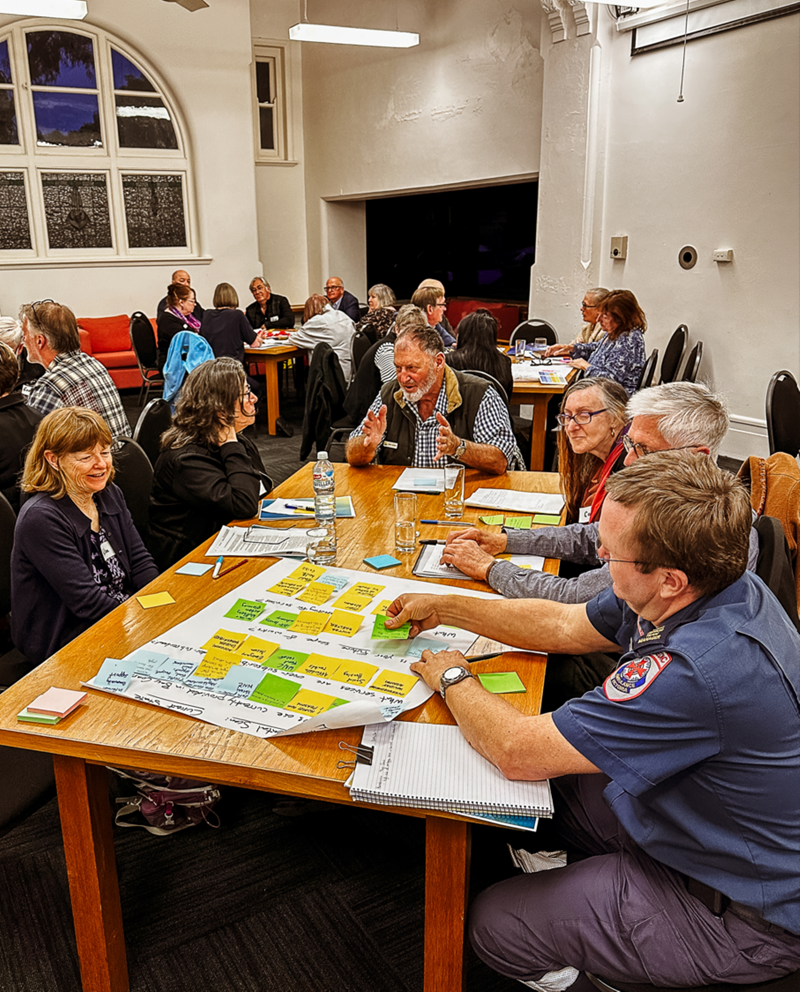
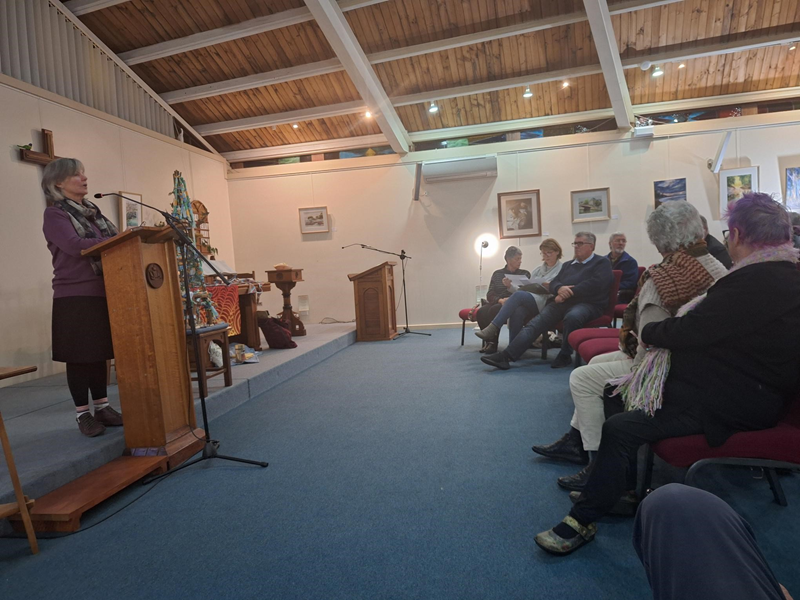
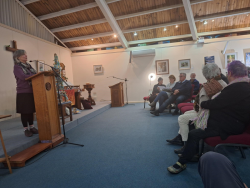
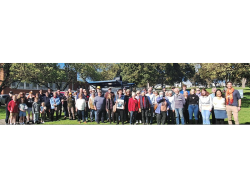
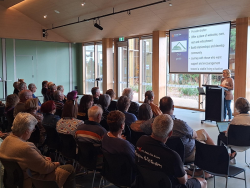
Bass Coast convened a series of Homelessness Community Think Tanks, bringing together over 20 agencies across sectors – including faith groups, community food pantries, funded homelessness services, tiers of government, philanthropy, police and ambulance and national peak bodies in homelessness and affordable housing – to workshop and define a community-led agenda of collective impact and action. This required both brave leadership from council and an appetite to work within an innovation frame in order to catalyse new partnerships and empower agencies to define and deliver impact within what can be a complex and overwhelming set of interlocking issues driving the homelessness crisis. From the Think Tanks, multiple community-led projects were led through leadership groups made up of multiple agencies, delivering a set of outcomes well beyond the scope of what many initially felt to be possible.
In parallel, Council leveraged partnerships with Victoria Police and other key agencies to implement a human-centred approach to referral and coordination via the VicPol-led Local Safety Committee, establishing Victoria-first practices for human-centred implementation across coastal land managers. This approach has now been scaled regionally across Inner Gippsland, and is formalised in a new partnership with Alliance to End Homelessness.
Advocacy to amplify the community voice, with successful service attraction, and the funding by state government of a Gippsland-first Assertive Outreach program in Bass Coast constituting the initial achievements, and serving to scaffold further advocacy.
In Gippsland, the problem of homelessness has moved from an ‘invisible’ crisis, to a public poly-crisis where community members are being failed on multiple fronts, and the number of rough sleepers has increased by more than 25%.
Project impacts and short-term outcomes:
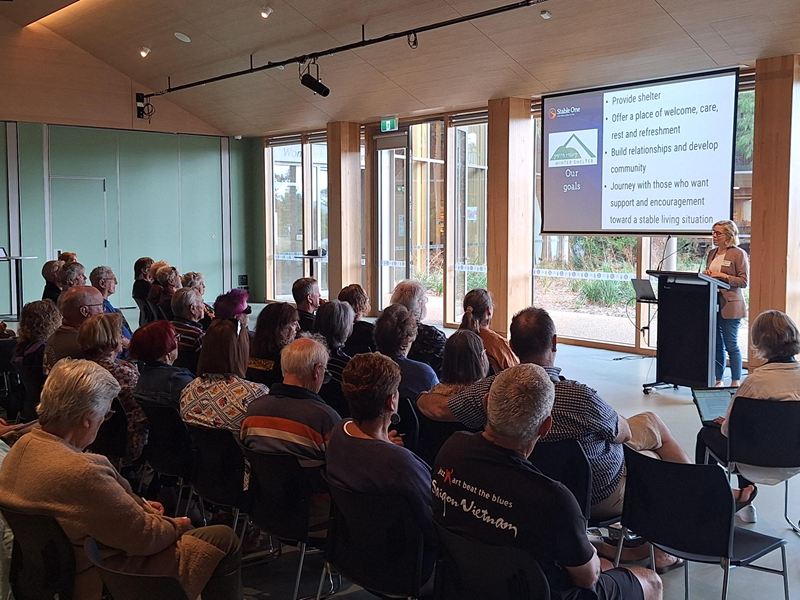
The impacts of this work are manifold, across agencies and – most importantly – for those at risk and experiencing homelessness in Bass Coast. The project has led to service attraction of Orange Sky to Wonthaggi, which was a key community priority. It has also led to establishment of Stable1 Winter Shelter on Phillip Island in partnership between faith communities and the neighbourhood house.
Innovative and embedded service referral protocols across key agencies – particularly with coastal land managers who previously has little exposure to the homelessness service system – continue to drive community support, and have led to multiple outcomes for community members moving from acute crisis to long-term funded housing solutions.
The establishment of a Gippsland-first assertive outreach pilot in partnership with DFFH and Salvation Army supported more than 60 community members to access support and case management, and link to long-term Housing First support. Further, this pilot led to successful regional advocacy in partnership with Inner Gippsland Councils and the Homelessness Network for ongoing assertive outreach funding – a critical priority and the keystone for unlocking Advance to Zero implementation in Bass Coast and as a replicable model for per-urban Councils.
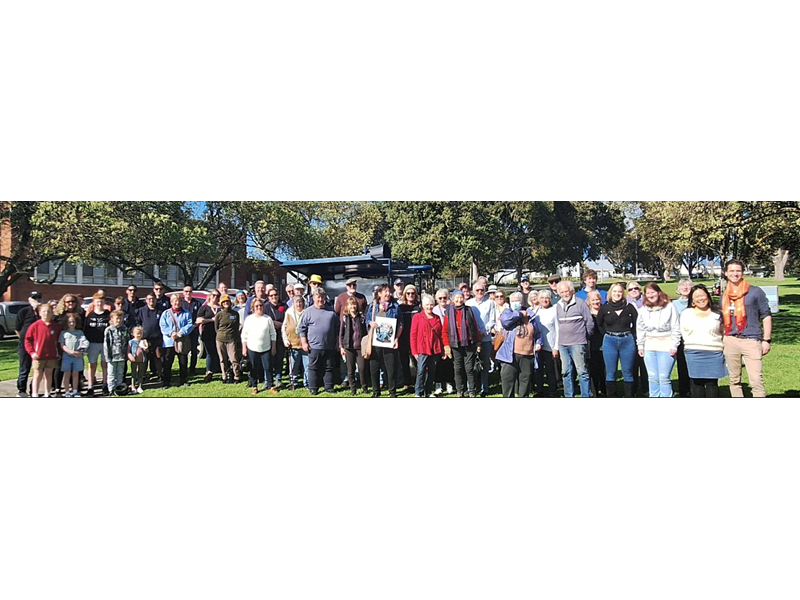
The project has also significantly strengthened community knowledge and support, with local advocacy groups partnering with government and agencies to lead community-wide communications campaigns and events raising awareness on issues of homelessness.
The project has led to more than $1.5 million of funding attracted to Bass Coast and proven a scale-able model for best practice innovation in the homelessness space – critical at a moment in which many councils are being overwhelmed by the issues and moving toward ineffective and non-human-centred enforcement-driven responses.
Capability and long-term impacts:
This project has genuinely transformed collaborative practice in the homelessness space at the local and regional level, as well as the funding landscape in which regional councils do this work.
Through the Community Think Tank model, Bass Coast has established and proven a blueprint for brave, collective-impact driven leadership in this highly ambiguous space, and this model has been presented to Councils across the nation at a range of forums.
The model of inter-agency service coordination established at the local level has been scaled across Inner Gippsland, and is the basis of a national-first partnership with Alliance to End Homelessness to define service coordination protocols at the sub-regional scale.
The project has seen the successful transition from successful advocacy for pilot funding to securing sustained funding streams for needed services, leveraging scale and joined-up advocacy across councils to achieve this incredibly exciting outcome, which will – in a tangible and proven way – make our communities safer and better supported every day. This successful advocacy also supports Council teams across functions – from local laws to customer service – who now have the requisite agency supports and embedded referral protocols to meet the needs of some of the most challenging community interactions, and to transform those to positive outcomes.
The project has seen true community-led development and implementation of projects: from Orange Sky to Winter Shelter and emergency food provision, meaning that these projects have durability and legacy with a range of community organisations.
Scalability and transferability:
The multiple facets of this project are already being scaled and adopted across local governments – building what was proven as an effective model for holistic collective impact and advocacy at the municipal scale into a sub-regional model for catalytic uplift, funding attraction and implementation of international best practice.
The project has produced multiple demonstration projects at the state and national scale, and is now driving conversations around the future of local government collaboration across newly-formed national network.
Proving that not only metro ‘gold-plated’ Advance to Zero projects can deliver change in this space has significantly shaped possibilities and pathways that are replicable across local government areas and regions.