

Innovation Case Study: Manohar Esarapu, City of Port Phillip
Manohar Esarapu, Chief Information and Innovation Officer
Providing AI leadership with C.A.R.E
Manohar Esarapu was the Chief Information and Innovation Officer for the City of Port Phillip and innovator of the C.A.R.E framework: a balanced, accessible framework for AI adoption that brings together governance, use-case alignment, workforce enablement and technological foundations.
2026 MAVlab Innovation Awards Finalist:
Innovatio Pro Bono Publico Award: Emerging Leader, supported by JLT Public Sector

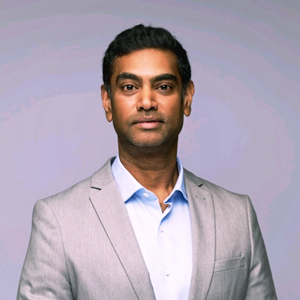
Bold leadership and strategic vision:
In early 2025, AI was advancing faster than local government’s capacity to interpret, govern or adopt it. Even while new tools and models were emerging rapidly, practical guidance for councils was a mix of highly specific government warnings and broad, jargon-heavy technical frameworks. None were easy to map onto the community-centred, fundamentally human dimensions of local government work.
Many leaders at the time were weighing the opportunities of AI against the risks. The easiest response would have been to block access to all AI tools and wait for clearer direction. Manohar chose a bolder path: use his existing understanding of AI to create strategic clarity and manage risk without slowing innovation.
As Chief Information and Innovation Officer (CIIO), Manohar recognised that AI adoption could not be treated as simply another technology rollout. During early collaboration with peer councils, he saw that local governments needed a practical, future-focused model that could translate a complex topic into language and actions meaningful to executives, technical teams, governance specialists and frontline staff alike.
His strategic insight was that AI adoption needed to be as much about people as it was about technology. It had to support people to understand AI and apply it in their own context within clear guardrails.
This led Manohar to author the C.A.R.E. Framework: a balanced, accessible framework for AI adoption that brings together ‘Conscious Governance’ (ensuring accountability and alignment with strategy), ‘Applied Value’ (focus on high-value service improvements), ‘Ready Workforce’ (training and empowering staff), and ‘Enabling Technology’ (secure, sustainable technological foundations). The name was deliberately chosen to highlight the framework’s human-centred approach. C.A.R.E. is informed by Manohar’s understanding of both the underlying technologies and the unique, rewarding nature of public service. As a result, it provides councils with a shared direction for engaging with AI confidently, safely and purposefully.
Influence and enablement:
Manohar’s leadership facilitated AI adoption by first creating the conditions for trust. He recognised that AI could not be introduced successfully as an IT-department-owned technology initiative or a top-down efficiency mandate. Instead, he deliberately framed AI as an all-of-organisation project.
By bringing together governance, HR, communications, change, data and technology perspectives, the cross-functional C.A.R.E. model helped break down silos and gave business areas a legitimate voice in shaping how AI could be governed and used.
In the early stages of implementation, staff raised concerns about privacy, information handling, job relevance and the risks of unsafe use. Rather than dismissing these concerns, he approached them with sincerity, acknowledging that “the optimist builds the plane, but the pessimist builds the parachute” and that both were crucial to successful AI adoption. By positioning AI as a tool people could choose to use, rather than something imposed on them, he created psychological safety for staff to learn, question and experiment.
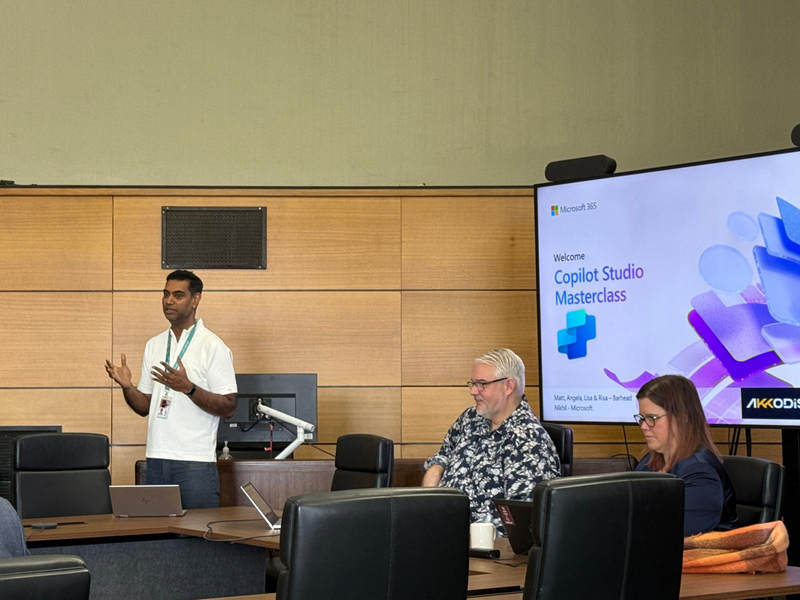
Crucially, within this safe environment, Manohar also fostered optimism wherever possible. He promoted initiatives involving storytelling, workshops, leadership conversations and roadshows, all of which translated “AI” as a concept into relatable use cases for different teams. Encouraging teams to think beyond “what can the technology do?” and focus on “what could it mean for our service, our role and our community?” helped business areas move from passive recipients to active owners and champions of change.
Manohar’s C.A.R.E. approach to AI fosters a culture where teams can test, challenge, iterate and imagine new ways of working, learning from their own exploration and from each other, albeit always within clearly drawn guardrails. Importantly, Manohar extended this enablement beyond Port Phillip from the outset. Sharing and discussing the framework with peer councils helped to grow a collaborative sector approach to safe, effective and clever AI adoption.

His strategic insight was that AI adoption needed to be as much about people as it was about technology. It had to support people to understand AI and apply it in their own context within clear guardrails.
Agility, adaptability and growth:
Manohar models the learning mindset required of contemporary leaders by actively investing in his own understanding of emerging technology and its broader context. His practice goes beyond following AI product updates: he reads research, attends industry events, engages with peer leaders and vendor partners, and tracks developments in adjacent fields such as cybersecurity, as well as less obviously linked fields such as macroeconomics and biotech. From his perspective, changes in technology will manifest as changes in society, which will ultimately impact councils, community and staff; preparing for these impacts means understanding these upstream effects.
This learning mindset is embedded in the design of the C.A.R.E. framework itself. Manohar deliberately avoided presenting C.A.R.E. as a fixed path towards a known end-state, or incorporating static maturity scores; in his view, AI is evolving too quickly for that. An organisation that scores as mature today could fall behind tomorrow if risks or opportunities shift and the adaptability isn’t there.
C.A.R.E. therefore uses maturity levels as a dynamic model for continuous reassessment, helping councils evolve alongside AI. The framework allows organisations to start with immediate, lower-risk opportunities while building readiness for more advanced enterprise AI, agentic workflows and embedded product capability as earlier initiatives mature. It also encourages reflection throughout the process on what is or isn’t working and where governance or technology foundations might need strengthening; in this way, it reflects the realities of local government work, with interconnected parts that may have different purposes but work towards the same goals.
Manohar has also encouraged learning through controlled experimentation. Rather than outsourcing understanding, he has supported teams to develop their own skills, facilitating in-house development of everything from agents to training materials, with results that are tailored to the teams that need them. Through C.A.R.E., he has made adaptation a shared organisational discipline.
Impact and enduring value:
As a structured platform for safe and scalable AI adoption, the C.A.R.E. Framework has created tangible, measurable value. Under Manohar’s leadership, C.A.R.E. has supported practical uptake of everyday AI through initiatives such as Copilot training customised for individual teams and the popular “21 Days of Copilot” video series, helping staff move from curiosity or uncertainty to active experimentation. It has also supported the development and use of AI agents that deliver benefits from day 1 while being designed to scale as the underlying technology improves.
C.A.R.E. has also begun to change service and operating models. In a practical example, the St Kilda Film Festival team identified that an existing vendor-led process could be done differently. Working with the Data team, Council rapidly built an AI-enabled application to support stock availability and point-of-sale considerations, demonstrating how C.A.R.E. can translate into faster, more flexible and more locally owned solutions.
Beyond individual examples, C.A.R.E. has created enduring organisational capability. Manohar deliberately challenged the idea that AI should be owned by a single specialist, treated as an isolated technical skill, or conceptualised as fundamentally separate from other technologies. Instead, the C.A.R.E. approach has helped democratise AI capability across the organisation; in turn, this helps prepare the organisation for a possible future in which AI is an integral part of daily work.
The framework’s longer-term value lies in this cultural and strategic shift. C.A.R.E. has moved Council’s conversation from whether AI should be used to how it can be used responsibly and purposefully. It provides a durable foundation for future capability, including multimodal service agents, contact centre integration, transactional workflows and embedded AI in core systems.
In facilitating this shift, Manohar has created lasting change: a repeatable model for innovation that can mature with the technology and continue deliver