
Innovation Case Study: ngurrak barring
Yarra Ranges Shire Council
Connecting people, stories and Country through immersive experiences
ngurrak barring (‘mountain paths’ in Wurundjeri Woi-wurrung) invites an immersive exploration into the cultural and creative heartbeat of goranwarrabil (the Dandenong Ranges), along 39 km of interconnected walking trails. At its core, ngurrak barring is about innovative storytelling through art, design and interpretation, including permanent sculptures, First Peoples design, digital platforms and interpretive signage, connecting a rich creative heritage to a thriving contemporary culture.
2026 MAVlab Innovation Awards Finalist:
The Storytelling Award for Inclusive and Engaging Council Communications, supported by RMIT Regenerative Futures Institute
Project goals:
- Rich storytelling: Share important Dandenong Ranges stories, a place where creative communities flourish and some of Australia’s significant artists, activists, writers and creatives were inspired
- Decolonise narrative: Create an immersive storytelling platform that centres Wurundjeri cultural knowledge, custodianship and connection to Country.
- Elevate First Nations voices: Ensure Wurundjeri Elders and community lead key themes, narratives and cultural expressions for the project, building deep trust and shared governance.
- Innovate the medium: Move beyond traditional passive signage by extending the storytelling through physical pathways, architecture and design, commissioned public art, and digital platforms.
- Community engagement: Ensure the voices of the local and Indigenous community have been heard to provide a balanced and safe experience.
- Foster cultural literacy: Drive deep community inclusion and understanding around local Aboriginal heritage and environmental stewardship.
- Ensure accessibility: Provide multiple entry points to the story (physical, visual, digital) to ensure engagement across diverse community cohorts and physical abilities.
Project team:
A core project team of approximately 5 FTE, including the Project Coordinator, Public Art Programs Officer, Indigenous Cultural Safety Officer, and Destination Marketing & Communications Coordinator, supported by the broader Traffic & Transport team, Recreation, Parks and Trails team and Creative Communities teams.
Team or contributors:
- Anna Nguyen – Project Coordinator
- Anthony Fitzpatrick – Public Art Programs Officer
- Marie Allaman – Cultural Lead / Public Art Programs Officer
- Meagan Carlaw - Destination Marketing & Communications Coordinator
- Sam Piper - Indigenous Cultural Safety Officer
- Karly Tucker – Project Officer
- Emily Boyle – Recreation & Sport Program Officer.
Project duration:
The project has been in deep consultation, design, and delivery for over eight years. The physical and digital storytelling assets transitioned from the construction and delivery phase into official community launch and ongoing activation in April 2026.
Challenge and context:
The ultimate challenge was finding a way to make the story of the Dandenong Ranges visible, engaging, and accessible to a highly diverse audience, transforming passive walkers into active listeners.
Furthermore, building the requisite trust for Traditional Owners to share their Indigenous Cultural and Intellectual Property (ICIP) required overcoming historical barriers and institutional inertia. We had to ensure our communications and engagement with Wurundjeri Elders and community inclusive, dynamic, and culturally safe.
Delivering a 39 km walking trail through the Dandenong Ranges presented a unique logistical and communications challenge: how do you authentically, cohesively and physically tell the story of a landscape across such a vast, dispersed area?
Incorporating both a major infrastructure project and rigorous heritage and cultural research and curatorial oversight, ngurrak barring required a truly cross-departmental collaboration across several directorates at Yarra Ranges Council.
The project scope meant navigating complex stakeholder environments, including Wurundjeri Woi-wurrung Cultural Heritage Aboriginal Corporation, Parks Victoria, numerous local historical societies, local residents, artists, businesses, schools, cultural and community organisations.
The resulting design is a hybrid approach - incorporating architecture, public art, digital platforms, and deep Traditional Owner governance to transform a recreation trail into an inclusive, living narrative experience.
Given ngurrak barring’s strong emphasis on narrative, two cultural studies were commissioned to inform the project:
- “RidgeWalk”: A History of Culture, Artists and Creativity in the Dandenong Ranges was developed by Dr Bronwyn Hanna in collaboration with local history groups.
- An Aboriginal Cultural Values Assessment Report provided a greater understanding of Aboriginal culture and history in the Dandenong Ranges with key guidance and project themes emerging from discussions with Wurundjeri Elders.
Given the strong emphasis on First Nations stories throughout ngurrak barring, a Project Indigenous Advisory Network was activated to maintain strong cultural leadership throughout all stages of ngurrak barring.
Solution and innovation:
To facilitate an experience that engages a wide local, national and international audience with a deep sense of Country and place, the solution was to treat the entire 39 km ngurrak barring network as a multimedia storytelling canvas curated around five distinct themed trails: Ways of Seeing, Community, Activism, Resilience and Country.
From the abiding connection to Country of First Peoples to shared contemporary experiences, each theme is explored through a variety of innovative creative platforms, including permanent sculptures, design and architecture, digital platforms and heritage interpretation, with each element providing an important narrative contribution that encourages deeper understanding about a shared culture and history that continues to shape people and the environment.
Examples of the way storytelling is innovatively embedded in the project include:
- The Woi-wurrung name ngurrak barring (mountain paths) acknowledges the Wurundjeri people’s deep and enduring connection to goranwarrabil.
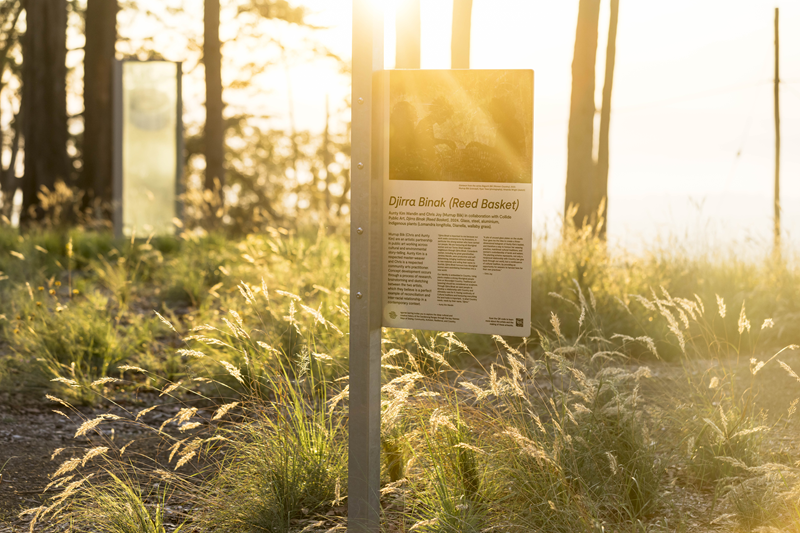
- The project logo is based on artwork by Wurundjeri artist Mandy Nicholson which reflects the six layers of Country and these symbols have been incorporated into the website design and the interpretive and wayfinding signage
- Artwork commissions such as Anton McMurray’s Storm Leaves sculptures directly express local stories of resilience, transformation and renewal
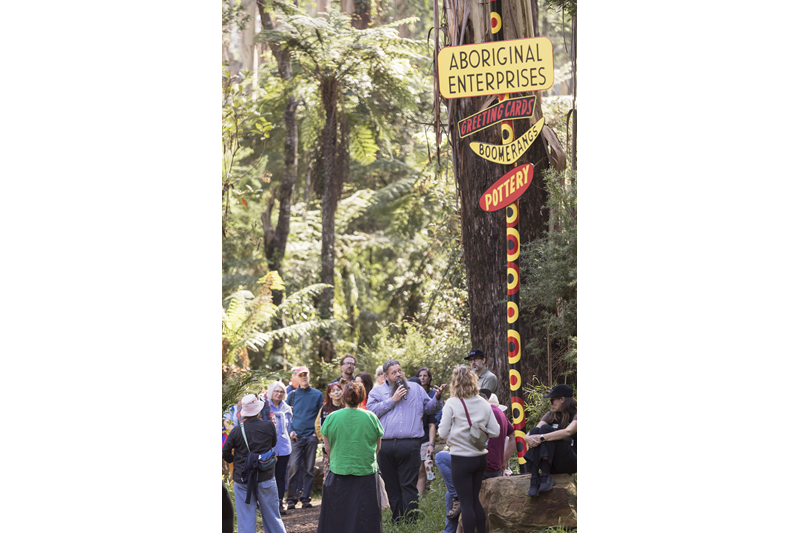
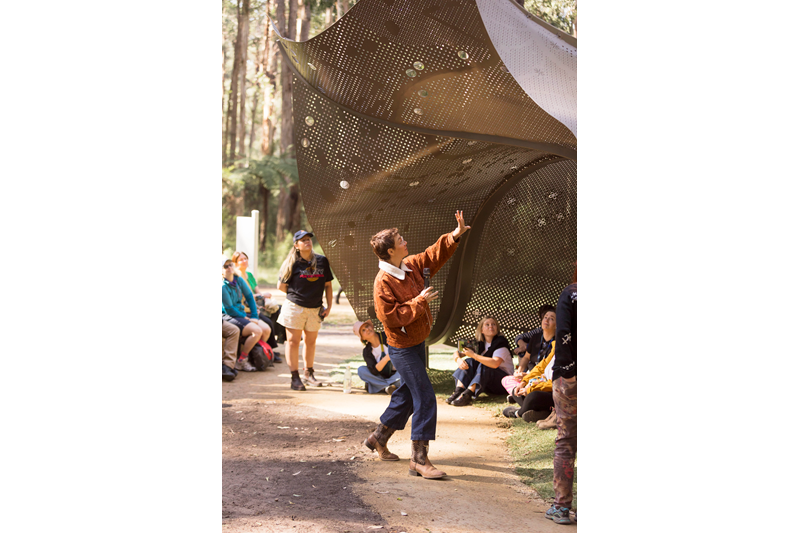
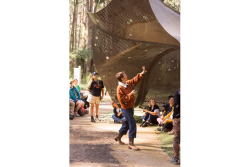
- The designs of the five Architectural Nodes by Djinjama and COLA Studio explore each of the themes of the walk from an Indigenous perspective and foster a deeper understanding of Wurundjeri culture and connection to Country
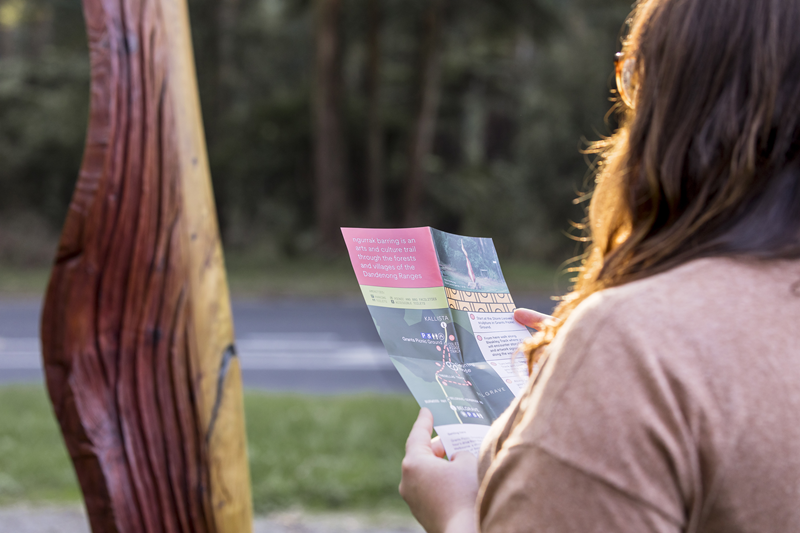
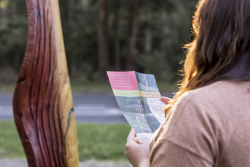
- Using high-impact visual art as the primary communication tool with QR codes leading to the website – an online museum.
Collaboration with RMIT to develop a bespoke digital "walking with..." App which provides an immersive audio-visual layer of storytelling that users can access on their personal devices.
ngurrak barring fundamentally transformed Council’s internal capability regarding inclusive communications and First Nations engagement. By moving from a model of 'consultation' to 'co-design and shared cultural governance,' we established a new organisational benchmark for how to communicate heritage.
Project impacts and short-term outcomes:
The project has successfully delivered a transformative storytelling asset, moving into its official activation phase in April 2026. The immediate impact is a highly visible and profound re-centring of Wurundjeri culture within the Dandenong Ranges.
As a large-scale infrastructure project, ngurrak barring embodies a spirit of generosity, collaboration and participation. Situated on the outskirts of metropolitan Melbourne, ngurrak barring provides a unique and expansive new addition to the city, and a welcoming invitation to slow down and appreciate the natural wonders of the Dandenong Ranges and the thriving townships that are now connected via the newly upgraded and extended network of trails which were delivered in close partnership with Parks Victoria.
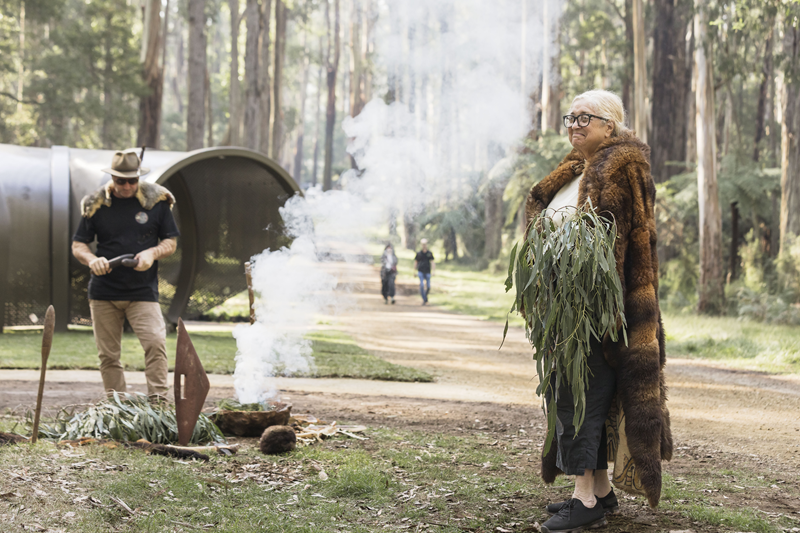
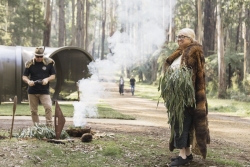
The launch programming directly reflects this inclusive communications success. The event featured Call to Country, a Welcome to Country and Smoking Ceremony accompanied by a yidaki, and performances by the Djirri Djirri dancers, translating the trail's permanent stories into a living community celebration. To ensure the narrative reaches diverse cohorts, our Open Day included tailored educational talks by the First Peoples designers of the architectural nodes for local primary school students alongside public artist talks, fostering immediate civic engagement and literacy.
The RMIT digital app allows users to engage [AF1] with the stories regardless of their physical ability to traverse the entire 39km, ensuring high accessibility for the elderly or mobility impaired. Crucially, the project achieved overwhelming support from the Wurundjeri Woi-wurrung Cultural Heritage Aboriginal Corporation, demonstrating that our engagement and co-design process fostered genuine trust. By treating storytelling as a collaborative partnership rather than a council-dictated output, we achieved a communications outcome that Traditional Owners are proud to share.
Capability and long-term impacts:
ngurrak barring fundamentally transformed Council’s internal capability regarding inclusive communications and First Nations engagement. By moving from a model of "consultation" to "co-design and shared cultural governance," we established a new organisational benchmark for how to communicate heritage.
This project was supported by an Indigenous Cultural Safety Officer role within the project team - a capability shift that ensures ongoing cultural integrity and safety in all project communications. It forced internal silos to break down, merging the expertise of the Recreation & Parks team (who build the physical trail) with the Economy, Tourism & Culture team (who activate the story).
Long-term, this project has equipped Council with the frameworks, strategic partnerships, and documented learnings required to handle complex cultural IP responsibly. We have shifted our organisational identity from simple infrastructure providers to genuine stewards of community storytelling and truth-telling. The networks established with artists, digital developers, and Traditional Owners will inform Yarra Ranges Council communications and placemaking for decades.
Scalability and transferability:
The ngurrak barring storytelling model is highly transferable to other local governments grappling with how to respectfully share First Nations narratives in public spaces.
The core methodology - replacing static signage with a hybrid of First Nations-led public art, architectural nodes, and digital audio-visual overlays - can be scaled and adapted to any municipal trail, park, or public realm project. Our documented co-design and cultural safety process provides a blueprint for other councils seeking to build trust and navigate the complexities of cultural IP and truth-telling.
Furthermore, the project creates immense value by demonstrating how local government can practically contribute to the UN Sustainable Development Goals, specifically Goal 10 (Reduced Inequalities) and Goal 11 (Sustainable Cities and Communities). By ensuring that public spaces are inclusive, culturally safe, and actively promote the heritage of marginalised communities to the broader public through innovative communications, ngurrak barring sets a new standard for local government storytelling nationwide.