

Innovation Case Study: Talking Kingston
Kingston City Council
Giving our community a voice, every day of the year
Talking Kingston is Kingston City Council’s year-round engagement platform, giving residents and businesses ongoing opportunities to influence Council priorities and investment decisions. By moving beyond traditional annual consultation, Talking Kingston creates a two-way conversation between Council and community, ensuring feedback is heard, acted upon and reflected in projects and services that shape Kingston's future.
2026 MAVlab Innovation Awards Joint Winner:
The Community Voice Award for Inclusive Democratic Engagement, supported by Australian Resilient Democracy Network (ARDN)
Project goals:
- Transform budget consultation from an annual exercise into a year-round conversation.
- Provide residents and businesses with earlier and greater influence over Council decision-making.
- Increase participation and democratic engagement across the community.
- Improve transparency and trust by ensuring every submission receives a response.
- Create a more inclusive and accessible engagement process.
- Reach diverse and underrepresented groups through multiple participation channels.
- Enable departments to access community insights throughout the year.
- Strengthen collaboration between Council and the community.
- Ensure investment decisions better reflect community priorities.
- Build a culture of continuous listening and meaningful participation.
Project team:
8-10 people.
Project duration:
Talking Kingston is an ongoing initiative that was established to create continuous community engagement rather than a once-a-year consultation process.
Development and implementation occurred over several months, followed by a significant communications and engagement campaign.
The platform now operates year-round and has been embedded into council's formal budget development and decision-making processes, ensuring community input is continually captured and considered.
Challenge and context:
Kingston City Council recognised that traditional budget consultation processes were limiting the community's ability to meaningfully influence decisions. Historically, residents were invited to provide feedback only after the draft budget had already been prepared, leaving little opportunity to incorporate new ideas or respond to emerging community priorities.
Participation levels reflected this challenge. Prior to Talking Kingston, annual budget consultations typically attracted only 20–40 submissions. While communities increasingly expected greater transparency, responsiveness and involvement in decision-making, traditional engagement approaches were often perceived as one-way and transactional.
The challenge was further complicated by the need to engage a diverse community with varying levels of digital literacy, language needs and preferred methods of participation. Ensuring that residents from different backgrounds, ages and abilities could contribute required an approach that went beyond online consultation alone.
In a period of economic pressure and increasing expectations around public accountability, Council needed a more inclusive and meaningful way to understand community priorities and ensure ratepayer investment reflected local needs.
Addressing these challenges required rethinking consultation altogether—moving from a once-a-year exercise to a continuous and accessible model of democratic engagement that strengthened trust and enabled the community to participate when it mattered most.
 Solution and innovation:
Talking Kingston transformed traditional consultation by creating a year-round engagement platform that enables residents and businesses to contribute ideas and feedback at any time. Rather than asking the community to comment after decisions had largely been made, Council shifted to an ongoing model that allows early input and greater influence over priorities and investment.
What makes Talking Kingston innovative is its emphasis on two-way engagement. Every submission is directed to the relevant department and receives a personalised response, ensuring community members understand how their feedback is being considered and what actions may follow. This moves beyond consultation as a one-way exercise and creates an ongoing conversation between Council and community.
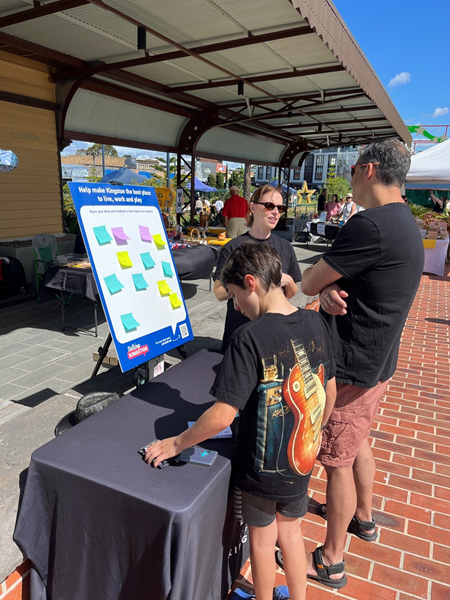
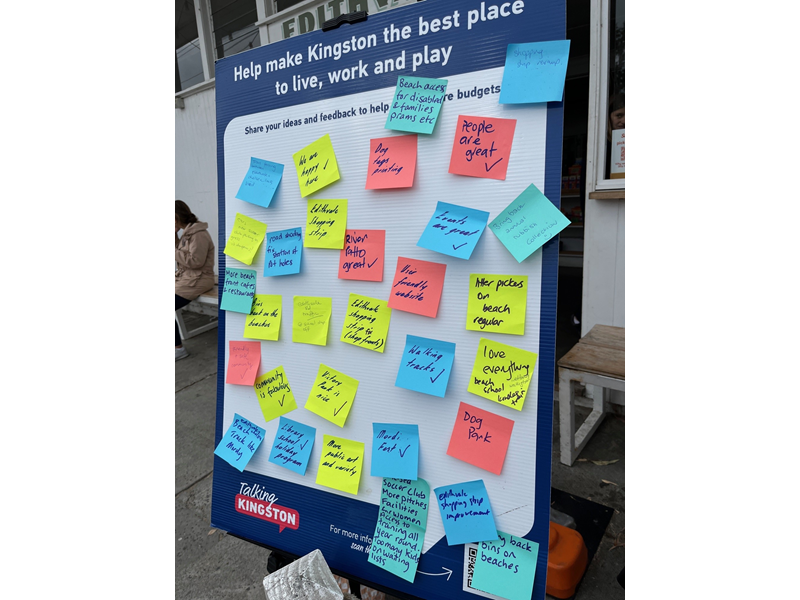
Inclusion and accessibility were embedded throughout delivery. Promotional materials were translated into Kingston's five most commonly spoken languages, with instructions provided for accessing translated online content. Community members could participate online, in hard copy or face-to-face through a "no wrong door" approach.
To reach people where they were, Council delivered pop-up sessions at shopping strips, community centres and farmers markets, while QR codes, social media campaigns, local advertising and direct outreach to community groups and sporting clubs broadened participation.
By combining accessibility, responsiveness and continuous engagement, Talking Kingston reimagined how local democracy can operate and placed the community at the centre of decision-making.
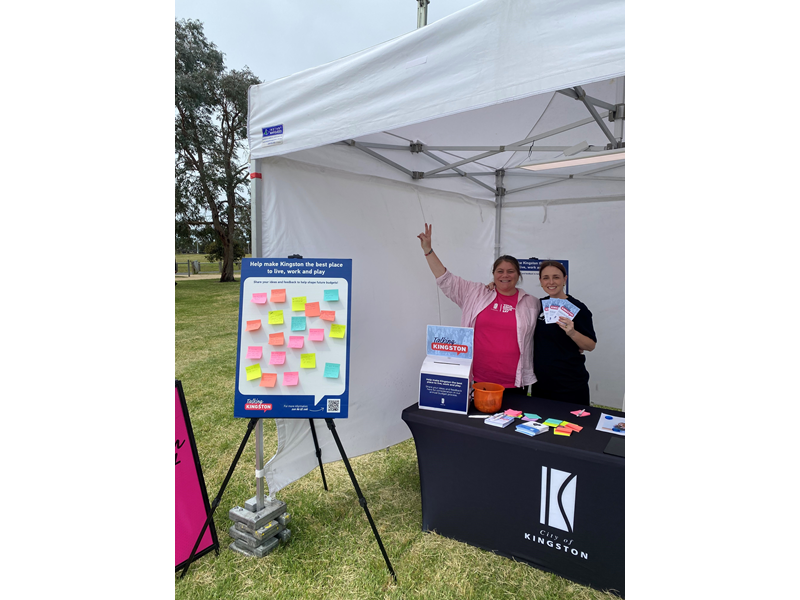
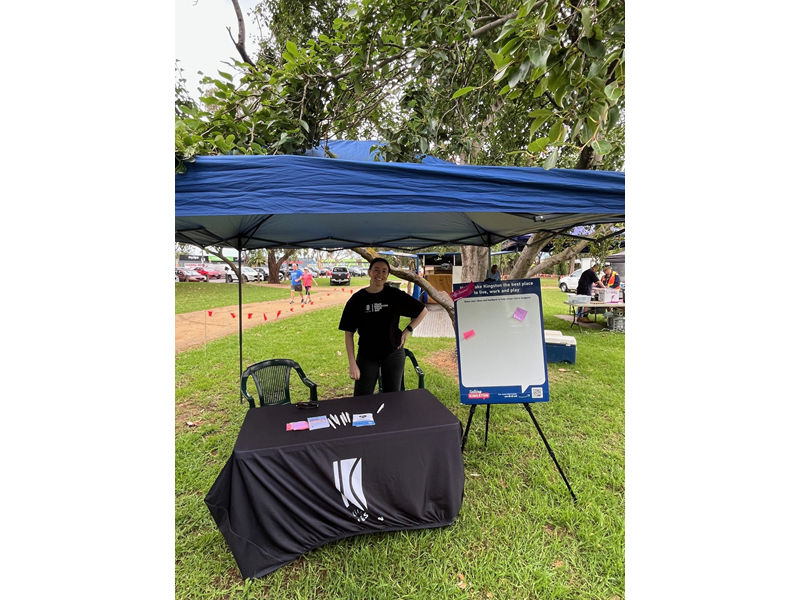
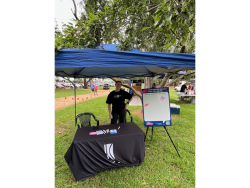
Kingston City Council recognised that traditional budget consultation processes were limiting the community's ability to meaningfully influence decisions.
Project impacts and short-term outcomes:
Talking Kingston delivered immediate and measurable improvements in community participation and engagement.
Prior to the initiative, annual budget consultations typically generated between 20 and 40 submissions. Following the introduction of Talking Kingston, participation increased dramatically, with 459 submissions received in the first year and 724 submissions contributing to the development of the 2025–26 Budget—an increase of more than 3,000 per cent compared with previous approaches.
The communications campaign achieved strong reach across multiple channels, including more than 66,000 people through Kingston Your City, over 12,000 people through social media and more than 10,000 email recipients. Eleven pop-up events and direct outreach activities ensured participation opportunities extended beyond digital channels.
The project also improved the quality of engagement. Every submitter received a response from the relevant Council department, increasing transparency and fostering trust. Community members could clearly see how their ideas progressed and how their feedback informed decision-making.
Importantly, more than 67 per cent of submissions were already underway, planned or anticipated to be incorporated into the budget process. An additional 15 per cent consisted of compliments and positive feedback, demonstrating strong community pride and confidence in Council's willingness to listen.
These outcomes show that Talking Kingston successfully broadened participation and delivered more inclusive and meaningful democratic engagement.
Capability and long-term impacts:
Talking Kingston has fundamentally changed the way Kingston City Council engages with its community and makes decisions.
The initiative has been embedded into Council's formal budget development process, ensuring community insights are continually available rather than captured once each year. Departments across the organisation now work collaboratively to review submissions and provide direct responses, strengthening cross-functional coordination and shared accountability.
Regular reporting to the Executive Leadership Team and Councillors has improved visibility of emerging community priorities and enhanced evidence-based decision-making. Increased participation has also strengthened Councillor confidence by providing assurance that investment decisions are informed by genuine community needs.
The initiative has fostered a culture of continuous listening and responsiveness, shifting engagement from a compliance activity to a core organisational capability. By creating stronger relationships and improving trust, Talking Kingston has increased Council's ability to anticipate and respond to future challenges and changing community expectations.
Importantly, the model has strengthened organisational resilience and adaptability. Continuous access to community insights enables Council to make more informed decisions and better align services and investment with local priorities.
Talking Kingston has established enduring systems and ways of working that will continue to support inclusive, community-centred decision-making well beyond the life of the project.
Scalability and transferability:
Talking Kingston demonstrates how local governments can strengthen democracy by moving from periodic consultation to continuous engagement.
The model is highly scalable because it relies on existing engagement platforms, communication channels and cross-organisational collaboration rather than significant additional resources. Its principles—continuous listening, responsiveness and accessibility—can be adapted by councils of varying sizes and contexts.
A key lesson has been that participation increases when communities are engaged early and receive visible responses to their feedback. The initiative's "no wrong door" approach, multilingual communications, pop-up engagement activities and personalised responses provide practical strategies that other councils can readily replicate.
Kingston has already shared learnings and operational insights with other councils and community engagement networks, contributing to sector-wide knowledge and innovation.
The initiative aligns strongly with the United Nations Sustainable Development Goal 16: Peace, Justice and Strong Institutions by promoting inclusive, participatory and representative decision-making. It also supports Goal 11: Sustainable Cities and Communities by ensuring local priorities and community voices help shape investment and planning.
Talking Kingston demonstrates that meaningful engagement is not an event—it is an ongoing partnership with the community, and one that can be replicated across the local government sector.