
Innovation Case Study: Test and Learn: Co-Designing Inclusive Playgrounds
Boroondara City Council
Co-designing playgrounds with lived experience for inclusion
Boroondara’s “Test and Learn” playground program engaged people with lived experience to co-design inclusive community spaces. It reimagined playgrounds beyond infrastructure, strengthening inclusion, connection, and belonging. Partnering with Belmore Special School students and Ability Works, it used a “design for one, extend to many” approach, testing, refining, and delivering small, high-impact improvements for people of all abilities across local playgrounds.
2026 MAVlab Innovation Awards Finalist:
The Connector Award for Inclusion and Community Cohesion, supported by Ylab

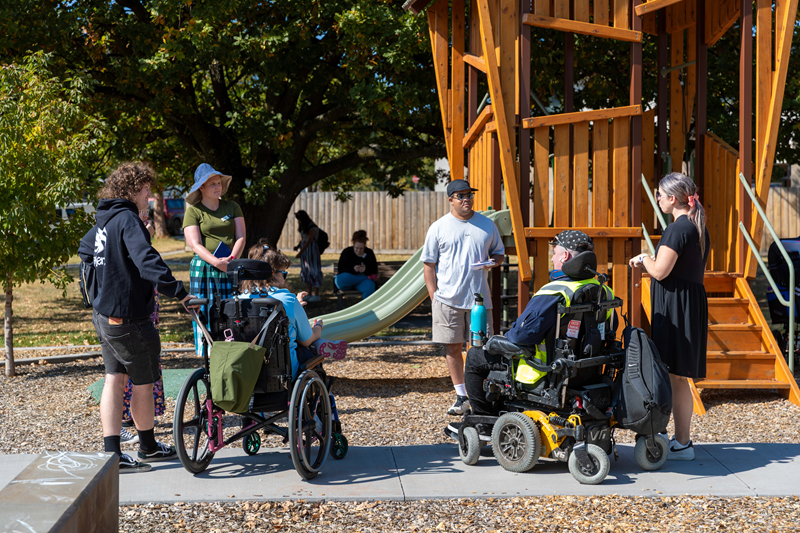
Grovedale Park
Project goals:
- It built council capability in inclusive, community-led design.
- Lived experience was embedded as a core design input, ensuring equitable, real-world outcomes.
- It delivered inclusive playgrounds demonstrating innovation in “design for one, extend to all.”
- It supported connection, confidence and participation across ages and abilities through safe, shared play for children, carers, and grandparents.
- It showed inclusive design can be seamless, intuitive, and beneficial for everyone.
- The project moved beyond compliance-based accessibility to deliver a playground supporting shared play, confidence, and social connection.
- It demonstrated how design can increase the confidence of adults with disabilities to supervise children.
- It reduced isolation and strengthened belonging through shared play experiences.
- It created high-impact social outcomes, including moments where children once excluded played alongside peers.
- It applied scalable, low-cost innovations improving accessibility, comfort, sensory and imaginative play, and validated a model for broader rollout while strengthening internal capability through co-design.
Project team:
Alice Leake led day to day delivery of the playground design, coordinating engagement and managing stakeholder communications.
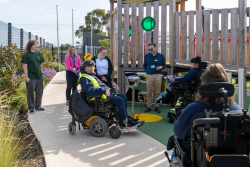
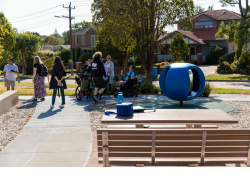
Test and Learn sessions were held over three mornings at Belmore Special School, Grovedale, and South Surrey playgrounds.
Participants met with Council staff to experience each site, share feedback, and identify improvements. The process centred on lived experience, generating practical insights that informed targeted, high-impact changes. Outcomes include improved accessibility, usability, and overall experience, supporting people of all abilities to participate more fully in local community spaces.
Nine lived experience participants informed the test and learn project. This included four adults with disability, representing diverse perspectives in supervising children, including mobility (power wheelchair use), hearing loss, low vision, ADHD and lived experience as a parent of a child with disability, with balanced gender representation.
Five students from Belmore School, Balwyn, contributed insights, including young people with physical mobility needs, manual and power wheelchair use, complex communication, and intellectual disability.
Belmore School staff and teachers and additional support staff supported the test and learn process.
“A reflection of our inclusive design work will be when people visit our playgrounds and don’t even notice how inclusive they are. There’ll be things for everyone to do and to access. Our work should be invisible and work for everyone.” Natalie Collins - Ability works
Project duration:
The project ran over approximately 19 months from late 2024 to mid-2026.
Consultation planning and initial coordination began in November 2024, with site testing and engagement in February 2025.
This was followed by design development in March 2025.
Construction of the South Surrey local playground commenced in late February 2026 and is on track for completion by 30 June 2026.
Challenge and context:
Local playgrounds are critical social infrastructure. When they are not genuinely inclusive, children and carers are excluded from shared play, reducing opportunities for connection and reinforcing isolation rather than community cohesion. Despite being highly valued and widely used, many do not adequately support people with additional needs, limiting comfort, independence and participation.
Boroondara manages a large and diverse playground network, yet standard design and maintenance approaches often prioritise compliance and able-bodied users over lived experience. This limits participation, connection and shared use. The network of more than one hundred playgrounds is largely made up of local sites, delivered within tight budgets and guided by a hierarchy that prioritises larger destination playgrounds for inclusive features. This context constrains innovation at a local scale and reinforces conventional design responses that do not fully support diverse community needs.
Community feedback and observation over time have highlighted subtle but significant barriers, including timber edges that restrict access into playgrounds, constrained circulation areas, limited seating, challenges with supervision, and few opportunities for shared play. These issues are often not immediately visible and are rarely addressed through minimum standards, meaning they are frequently overlooked in traditional design processes.
Limited guidance, constrained budgets, and the desire to engage underrepresented communities add further complexity. People with lived experience, and the nuances of their needs, are often overlooked in traditional equipment design and local playground provision, creating gaps between compliance and genuine inclusion. This project created an opportunity to be curious, ask questions and listen deeply, while identifying small, practical changes that support social connection.
The project responded by embedding co-design to identify simple, cost-effective interventions that could be tested, refined and scaled across the playground network.
Solution and innovation:
The Test and Learn program represents a shift from compliance-led playground design to a lived experience, evidence-based model. While co-design is increasingly common in local government, this program embedded lived-experience testing and decision-making into the design process before concepts were finalised, shifting inclusion from consultation to a real-time design validation system.
Rather than relying on minimum standards or post-design feedback, Boroondara Council partnered with Ability Works and Belmore Special School to involve people with disability as active contributors, testing playgrounds in situ. Early testing revealed that numerous ‘compliant’ elements were still exclusionary in practice, prompting a move away from compliance as a baseline toward real-world usability as the primary measure of success.
Innovation lay in both who was involved and how insights were generated. The program expanded the definition of users to include carers, adults with disability and families with diverse needs. A key feature was the buddy model, pairing students with additional needs alongside adult participants, including people with disability and carers. This created shared, supported play experiences that revealed how people navigated space together, uncovering insights about access, supervision, independence, and social interaction that would not emerge through traditional consultation. These lived observations directly informed design decisions.
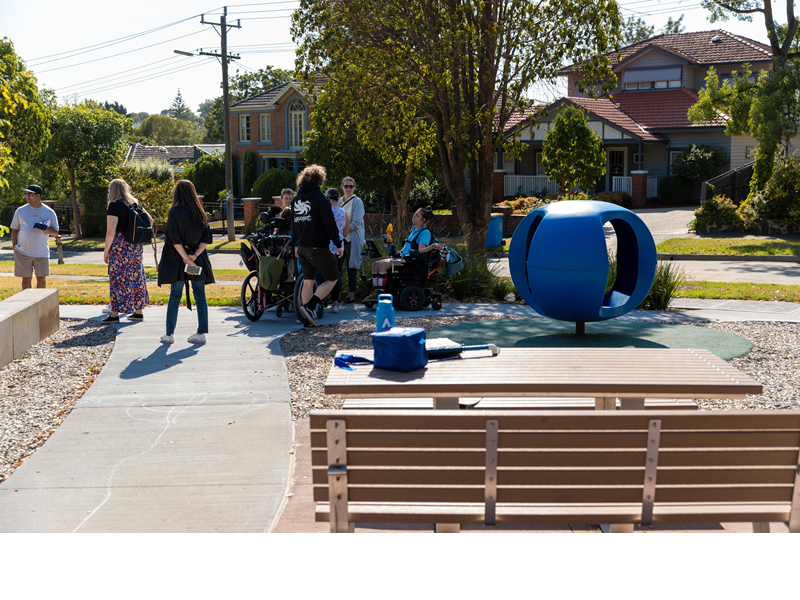
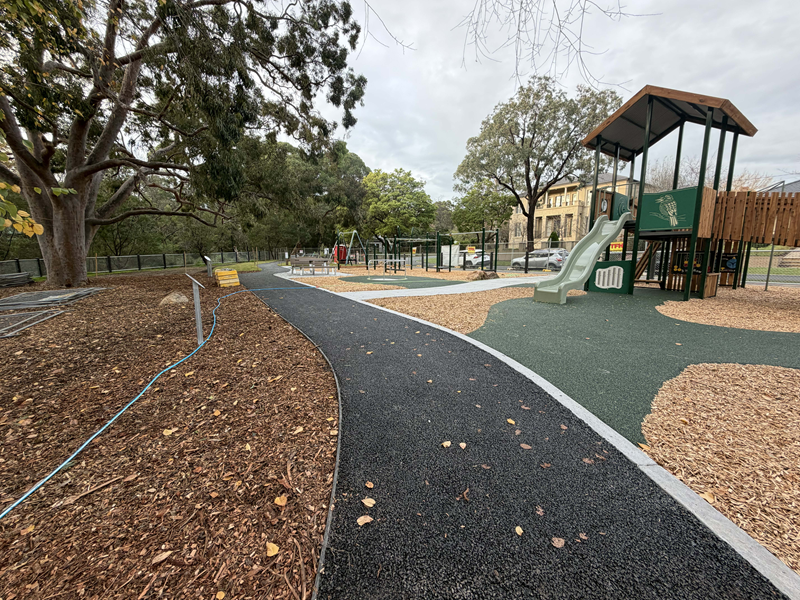
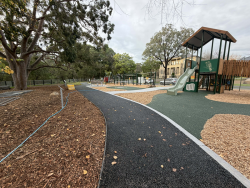
Testing showed many barriers were not complex or costly, but often overlooked, such as timber edges, seating, sightlines, and quiet spaces. This led to low-cost, high-impact interventions including accessible pathways, inclusive play elements, communication supports and improved supervision points at the South Surrey Park Playground.
The result is a practical, scalable model that moves beyond consultation-based inclusion, demonstrating how real-time lived experience can shape better design; delivering more inclusive, usable playgrounds that strengthen confidence, connection and community belonging.
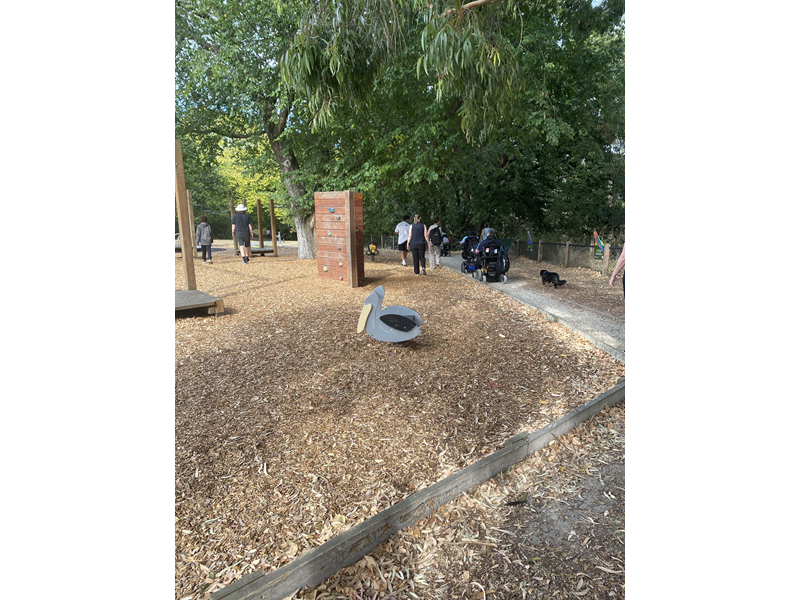
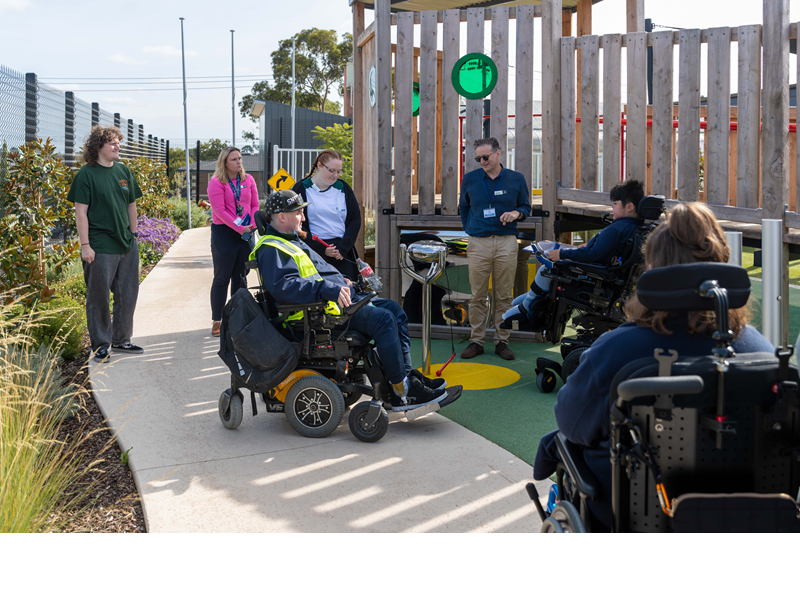
What began as a pilot has become standard practice, supported by cross-team knowledge sharing that strengthens consistency, capability and accountability across projects. The approach is extending beyond playgrounds into broader public realm delivery, including applications at Balwyn North Shopping Centre and upgrades such as improved wheelchair circulation at Kellett Reserve and across the King of Chains network.
Project impacts and short-term outcomes:
Improved accessibility and usability
Design changes directly improved access and movement across pilot sites, including accessible entry points, one-handed gate latches, smoother paths of travel, and seating layouts that accommodate wheelchairs and prams. These were evaluated on site and refined through user feedback.
More inclusive play opportunities
Adaptable elements such as basket swings, inclusive spinners and communication boards increased shared play between children and carers. Increased participation and interaction were observed during testing. Lived-experience input directly shaped outcomes, including shared-use swings (Livian) and imaginative elements like dinosaur footprints (Ryan).
Greater comfort and safety for carers
Reconfigured layouts improved sightlines, circulation, and supervision. Carers reported greater confidence, reduced stress, and increased willingness to stay longer.
Reduction of everyday barriers
Targeted changes, including removal of obstructive edging and improved circulation around picnic areas, enabled more independent movement and use.
Stronger participation from people with disability
Direct involvement of Belmore Special School students and Ability Works participants ensured decisions reflected real needs, resulting in ongoing engagement and more meaningful participation.
Observable changes in use and behaviour
Testing showed increased shared use of equipment, longer dwell times and more interaction between children of different abilities.
Practical, scalable solutions
The project identified low-cost, repeatable design interventions suitable for rollout across the broader playground network.
Embedded change in practice
The approach is now informing current upgrades, embedding a repeatable test-and-learn model within council delivery.
Increased social inclusion and connection
Participants reported greater confidence and willingness to engage, with more inclusive, shared play experiences strengthening belonging and community connection.
Capability and long-term impacts:
The “Test and Learn” program strengthened Boroondara’s capability by embedding lived experience into everyday design practice, shifting how playgrounds and public spaces are planned, delivered, and evaluated.
A key outcome is a sustained change in how council works. The project moved beyond consultation to co-design, positioning community members, including children and adults with disability, as active contributors. This approach is now embedded earlier in project planning, influencing decision-making across current and future projects.
The program also built internal capability and confidence. Staff developed a stronger understanding of inclusive design and demonstrated how small, practical changes can deliver meaningful outcomes. This has challenged traditional approaches and strengthened the team’s ability to respond to diverse user needs within constrained budgets.
Learnings from this project are already informing other playground upgrades, demonstrating lasting organisational change rather than a one-off outcome. The approach is being applied across current projects, embedding a repeatable “test and learn” model within delivery.
The initiative established ongoing partnerships with Ability Works and Belmore Special School, creating a reliable pathway to embed lived experience and specialist input into future projects.
Importantly, the project delivered a scalable, adaptable model. Its simple framework enables ideas to be evaluated, refined and applied across a large network of playgrounds and other public spaces, improving outcomes while reducing delivery risk.
The program also delivered social value, creating pathways to employment, with participants such as Livian gaining practical experience, confidence, and visibility, leading to paid employment with Ability Works.
Overall, the project has strengthened council systems, embedding inclusion as core business and creating a more responsive, collaborative, and resilient approach to community infrastructure.
Scalability and transferability:
The “Test and Learn” program delivers strong value through its simplicity, adaptability and focus on practical outcomes. Rather than relying on large budgets or complex interventions, it identifies small, cost-effective design improvements that can be scaled across Boroondara’s playground network and readily transferred to other councils.
The model is inherently adaptable. Its core elements, early engagement, lived experience testing and iterative design, can be applied regardless of council size or resources. By collaborating directly with users in real settings and prioritising usability over compliance, it provides a repeatable approach that fits within existing workflows while reducing the risk of delivering spaces that are technically compliant but not genuinely inclusive.
Importantly, accessibility review is now embedded within Council’s design ethos. What began as a pilot has become standard practice, supported by cross-team knowledge sharing that strengthens consistency, capability and accountability across projects. The approach is extending beyond playgrounds into broader public realm delivery, including applications at Balwyn North Shopping Centre and upgrades such as improved wheelchair circulation at Kellett Reserve and across the King of Chains network.
At South Surrey Park Playground, this has resulted in inclusive features including a carousel with seating, a sensory path, communication boards, a self-closing gate and improved accessible play elements.
The program supports Sustainable Development Goal 11 by improving access to safe, inclusive public spaces, and Goal 8 by creating pathways to employment through partnerships with organisations such as Ability Works. A participating student progressing to employment demonstrates the power of lived experience in shaping better, more inclusive design outcomes.
Overall, the program provides a scalable, low risk model for embedding accessibility and delivering more inclusive communities.