
Innovation Case Study: Yarra Ranges Council Resilient Buildings Program
Yarra Ranges Shire Council
Empowering Resilient Communities...literally
Yarra Ranges Council’s Resilient Buildings Program is redefining community resilience by transforming 33 existing facilities into a network of emergency-ready, low-carbon hubs. Through innovative retrofits including solar, batteries and backup power, the program strengthens disaster preparedness, cuts emissions and reduces costs. Delivering lasting social, environmental and operational benefits, it provides a scalable model for resilient communities everywhere.
2026 MAVlab Innovation Awards Finalist:
The Resilient Infrastructure Award for emergency-ready community systems, supported by Matter

Project Goals:
- Improve user experience by providing intuitive navigation, clear guidance, and accessible information for community members.
- Streamline planning application workflows to reduce processing times, eliminate duplication, and enhance overall operational efficiency.
- Increase transparency through real time status tracking, open data access, and consistent communication with applicants.
- Enable data driven decision making using integrated analytics, reporting dashboards, and reliable datasets across departments.
- Support collaboration between council teams, developers, and community stakeholders with shared tools and communication channels.
- Ensure compliance with regulatory requirements through in validations, standardised processes, and automated checks throughout applications.
- Reduce administrative burden by digitising manual tasks, improving document management, and minimising repetitive entry activities.
- Provide scalable architecture that supports future growth, integration with systems, and evolving community and needs.
- Enhance accessibility and inclusion by meeting standards and ensuring usability for diverse users with abilities.
- Deliver measurable outcomes through performance tracking, feedback, continuous improvement practices, and clear success metrics time.
Project team:
10 people.
Project duration:
4 years.
Challenge and context:
Yarra Ranges is one of Victoria’s most disaster‑exposed municipalities, with communities regularly affected by major storms, bushfire risk, heatwaves and prolonged power outages. In recent years, repeated emergency events; particularly the June 2021 storms, exposed the vulnerability of community facilities that residents rely on for relief, connection and recovery, with some buildings unable to operate effectively because of power loss, limited thermal comfort, poor energy efficiency or lack of backup systems.
Council identified that many community buildings across the municipality were performing below the level required for an emergency‑ready network of local hubs. Facilities such as halls, pavilions, libraries, community centres and depots were essential in theory, but in practice many lacked the infrastructure needed to support people before, during and after emergencies. This challenge was heightened by Yarra Ranges’ geography: dispersed townships, forested and mountainous terrain, road access constraints, and communities that can become isolated for extended periods during severe events.
The difficulty was not only technical, but systemic. Council needed to improve resilience across a large and diverse asset base while working within constrained grant windows, varying building conditions, procurement requirements and the different operational needs of each site. The work also had to respond to the needs of diverse and vulnerable cohorts, including older residents, families, people with disability and resident’s dependent on electricity for water, heating, cooling, food preparation and communications, while balancing immediate resilience needs with emissions reduction and long‑term operating cost pressures.
In response, Council created the Resilient Buildings Program: a Yarra Ranges‑wide initiative that has improved 33 buildings so they can better support community preparedness, response and recovery during extreme weather events, while also improving energy performance and reducing Council emissions and operating expenditure.
Solution and innovation:
The Resilient Buildings Program is an innovative model for upgrading existing community infrastructure across 55 towns and villages to create a distributed network of emergency‑ready facilities.
The innovation lies in four areas:
- Distributed emergency‑ready infrastructure: Council created a networked resilience model across 33 buildings rather than relying on a small number of centralised hubs. This improves geographic coverage and gives communities more locally accessible places for support during outages and extreme weather.
- Integrated climate mitigation and adaptation: The program combines critical asset resilience with emissions reduction and energy efficiency. Facilities are being upgraded to withstand and function through emergencies, but also to lower operating costs and reduce carbon footprint.
- Cross‑functional delivery model: The program brings together Climate, Facilities, Major Projects, Procurement and Emergency Management, creating a joined‑up approach to design, funding, construction, asset integration and operational readiness. This shifts resilient infrastructure from a siloed capital works issue to an organisational capability.
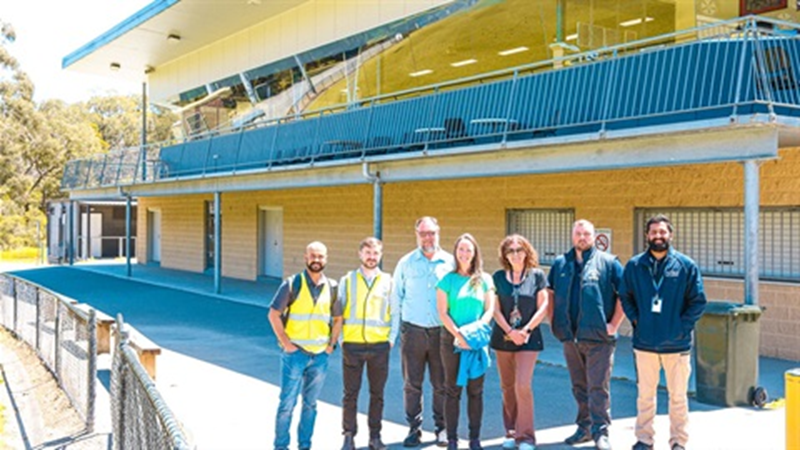
- Place‑responsive design: Council tailored upgrades to each building’s community role. For example, Olinda Recreation Reserve Pavilion was upgraded after serving as an emergency relief centre during the 2021 storm recovery when power outages lasted for several weeks. Council installed a 44 kW solar PV system and 95 kWh battery so the pavilion can remain fully operational during future outages and modified showers to suit relief operations.
The delivery process included site audits, prioritisation, grant alignment, design development, procurement, construction and commissioning, followed by integration into emergency preparedness activities.
Stakeholder engagement was embedded throughout, particularly at sites with active community management or where facilities play a significant local role in emergencies.
Inclusion and accessibility were also built into the solution: for example, modified showers and adaptable community spaces improve the ability of facilities to support a broader range of users during relief and recovery.
The Resilient Buildings Program has delivered direct, tangible outcomes across Yarra Ranges through the upgrade of 33 facilities, creating a network of buildings that support localised, independent community resilience across 55 townships in the second most disaster impacted municipality in Australia.
Project impacts and short-term outcomes:
The Resilient Buildings Program has delivered direct, tangible outcomes across Yarra Ranges through the upgrade of 33 facilities, creating a network of buildings that support localised, independent community resilience across 55 townships in the second most disaster impacted municipality in Australia.
Direct project outcomes include:
- 33 community and operational buildings upgraded, including libraries, halls, pavilions, community centres, depots, preschools and aquatic facilities.
- Installation of resilience and efficiency measures such as solar PV, battery storage, generator backup, LED lighting, glazing improvements, insulation and ventilation upgrades.
- Improved readiness of key sites to operate during outages and extreme weather, enabling them to serve as safe functional local hubs for relief, support and connection.
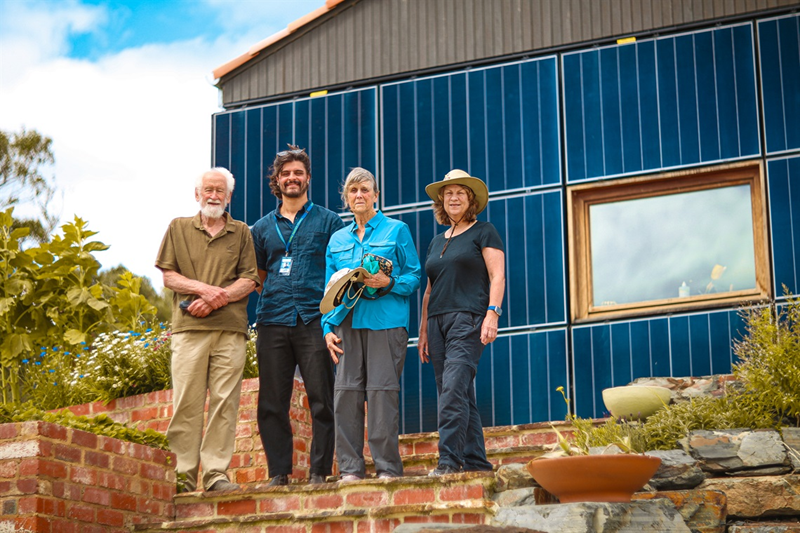
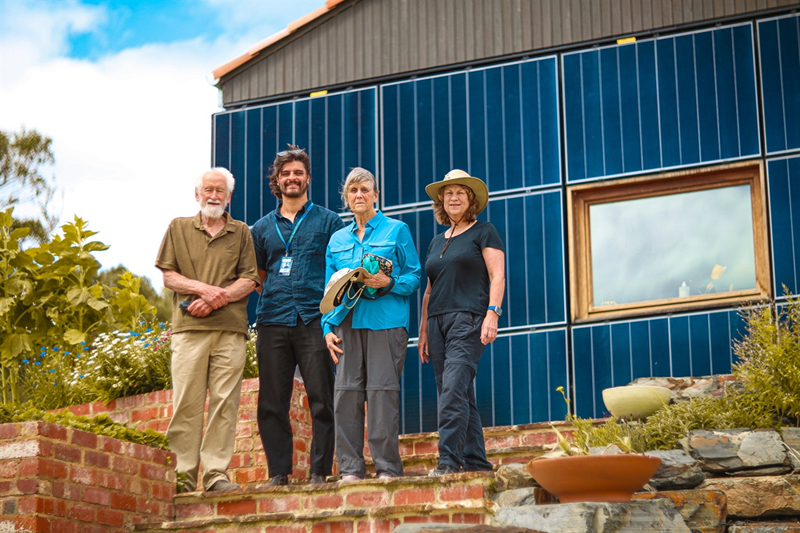
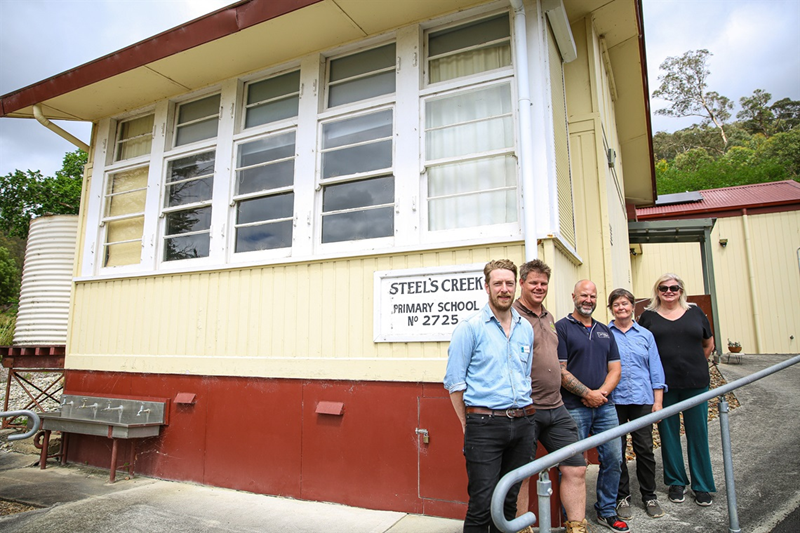
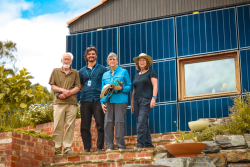
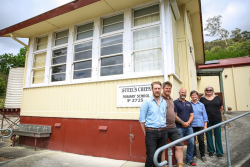
Several sites demonstrate these outcomes. At Olinda Recreation Reserve Pavilion, the new 44 kW solar array and 95 kWh battery can provide a week of off‑grid support for key functions, directly addressing the prolonged power loss experienced during the 2021 recovery period. At Steels Creek Community Centre, the combination of solar, battery and generator connection means the centre can operate independently during outages, supporting immediate self-led community response while external assistance mobilises. At Warburton Bowling Club, solar, battery and deployable generator support increase the reliability of a community facility in a high‑risk area.
Short‑term benefits have also included reduced electricity bills, lower operational expenditure and improved facility comfort and usability. This benefits community‑managed sites with limited resources, because lower bills improve financial viability, while resilience upgrades expand the role facilities can play in emergencies.
The program has delivered inclusion and equity benefits. By improving local buildings that communities already know and use, Council invested in accessible, familiar places for support during emergencies, which is particularly valuable for vulnerable residents.
Capability and long-term impacts:
The Resilient Buildings Program created value beyond isolated upgrades by strengthening Council’s systems, capabilities and ways of working for emergency‑ready infrastructure.
The program established a repeatable methodology for identifying, assessing and upgrading community buildings based on resilience need, building condition and local function. The use of energy audits, targeted design responses and grant matching has given Council a practical framework for prioritising future resilience investments across a complex asset portfolio serving 55 towns and villages. This strengthens long‑term organisational resilience by embedding preparedness into asset planning to reduce reliance on reactive post‑event responses.
The program improved internal coordination across Climate, Facilities, Major Projects, Procurement and Emergency Management. These teams aligned technical delivery with operational readiness, creating stronger internal relationships and shared ownership of resilience outcomes. This collaborative model improves Council’s capacity to anticipate and respond to future emergency and climate challenges in an integrated way.
The project built technical and operational capability in resilient energy systems, backup power, building performance and emergency hub readiness. Capability in assessing site suitability, integrating batteries and generators, upgrading existing buildings for multiple functions, and linking infrastructure investment to emergency preparedness and community resilience planning. This learning is durable and transferable across asset classes and future capital programming.
The program strengthened partnerships with state government and local communities. Successful grant alignment has improved Council’s ability to bring external investment into resilience projects, while place‑based engagement around specific sites has increased local understanding of how infrastructure can support preparedness and recovery. At sites such as Steels Creek, Olinda and Warburton, the upgraded infrastructure is already supporting broader community emergency preparedness work.
These changes shift Council from isolated upgrade projects to a more mature, coordinated and adaptive resilience infrastructure system that improves day‑to‑day building performance while creating enduring capability to support communities before, during and after emergencies.
Scalability and transferability:
The Resilient Buildings Program is highly scalable because it is based on a repeatable assessment‑and‑upgrade methodology rather than a single technology or site type. Its core model; audit each facility, identify resilience and efficiency opportunities, align with available funding, and deliver tailored upgrades through a cross‑functional team, can be readily applied to other council building portfolios.
This makes the approach highly transferable to councils with dispersed communities, ageing facilities and growing emergency risks. Many Victorian councils face similar challenges: buildings not originally designed as emergency hubs, rising energy costs, limited capital budgets and the need to integrate resilience with emissions reduction. Yarra Ranges’ model shows how to convert an existing portfolio into a distributed network of emergency‑ready community infrastructure through staged, evidence‑based retrofits rather than full rebuilds.
The program also offers practical lessons in governance and delivery, including how to coordinate climate, asset, project, procurement and emergency management functions; how to blend multiple funding sources; and how to tailor infrastructure to local community needs. These lessons can be shared through sector networks, case studies and peer exchange, enabling other councils to adapt the model to halls, libraries, pavilions, relief centres and other community assets.
The project contributes to several UN Sustainable Development Goals, including SDG 11 (Sustainable Cities and Communities), SDG 13 (Climate Action) and SDG 7 (Affordable and Clean Energy), by strengthening local resilience, reducing emissions and improving the performance of community infrastructure.