

Innovation Case Study: Banyule's 1000 Jobs Project
Banyule City Council
Innovating Inclusion: A Tested Model for Inclusive Employment and Economic Growth
Launched in 2020, Banyule's Inclusive Local Jobs and Social Enterprise Strategies aim to reduce employment barriers for First Nations people, culturally diverse communities, people with disability, and young people. Through inclusive hiring, social procurement, and partnerships with businesses and social enterprises, the initiative reached its goal of 1,000 job outcomes by June 2024 — a year ahead of schedule.
2025 MAVlab Innovation Awards Finalist
The Sandbox Award for Experimentation Practice, supported by Breakthrough Victoria.


Project statistics:
- 6-8 dedicated council staff including the Inclusive Enterprise and Local Jobs Coordinator, Strategic Development Officer, Inclusive Employment Program Lead, Local Jobs Officer, Social Enterprise Lead as well as additional support staff
- Project duration: July 2020 to June 2025 (over five years)
- Milestone: 1000 local jobs was achieved by June 2024 with ongoing monitoring, evaluation and continuous improvement activities continuing through to June 2025.
Project goals:
- Create 1,000 local job opportunities for residents facing employment barriers by 2025
- Promote economic inclusion and equitable access to work
- Grow and strengthen the local social enterprise sector for sustainable job creation
- Embed inclusive employment practices within Council operations and local businesses
- Build collaborative partnerships with community, business, and social enterprises, and
- Develop a scalable, replicable model for inclusive local government employment.
Challenge and context:
In 2020, Banyule City Council set an ambitious target: to create 1,000 local job outcomes for people facing barriers to employment by 2025. Despite a strong overall economy, parts of the municipality experience significant disadvantage. First Nations people, culturally and linguistically diverse communities, people living with disability, and disengaged young people have historically been excluded from local economic participation.
The challenge was complex. There was no existing model for large-scale, inclusive local government employment, and traditional economic development approaches had not addressed systemic barriers. Council needed to act not only as an employer, but also as a facilitator, connector, and investor in inclusive growth. The COVID-19 pandemic heightened the urgency, with unemployment among marginalised groups rising and service delivery disrupted.
Success required innovation, trust-building with long-excluded communities, and engagement across internal departments, local businesses, and the social enterprise sector. The Inclusive Local Jobs and Social Enterprise Strategies provided the framework, but it was the tailored, people-centred approach and cross-sector collaboration that made the difference. Reaching the 1,000-job milestone a year ahead of schedule demonstrates the impact of innovative, inclusive economic strategies.
Innovation and solution:
To tackle persistent employment barriers for diverse and disadvantaged residents, Banyule City Council developed an innovative, whole-of-Council approach that combined inclusive employment strategies with social enterprise growth. At its core was a collaborative, co-design process involving community members, local businesses, social enterprises, employment providers, and internal Council teams.
The project began with extensive engagement to understand lived experiences and unique needs, ensuring tailored interventions rather than one-size-fits-all solutions. This community-led design fostered ownership and relevance among all stakeholders.
The solution featured several innovative elements:
- Cross-departmental collaboration: Embedding inclusive employment across Council operations, from procurement to workforce pathways, for sustainable impact.
- Social enterprise partnerships: Developing shared-value projects that create local jobs while strengthening social enterprises.
- Sustainable procurement framework: Opening Council contracts to social impact suppliers, leveraging purchasing power to generate inclusive economic opportunities.
By uniting diverse Council functions with community and industry partners, the initiative created a systemic, scalable model. Programs were designed to actively address systemic barriers through tailored supports and pathways, prioritising accessibility and inclusivity.
This approach demonstrates how strategic integration, data-driven adaptability, and genuine co-design can achieve measurable social and economic outcomes. It provides a blueprint for councils nationwide to create equitable employment opportunities and foster resilient, inclusive local economies.



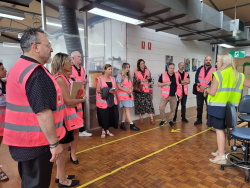
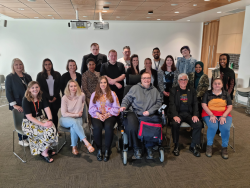

Over the past five years, Banyule has supported 22 councils across Victoria and beyond to strengthen social enterprise activity.
Impact and outcomes:
The Inclusive Local Jobs and Social Enterprise Strategies have delivered significant, measurable impact in addressing economic exclusion. By June 2024, Banyule City Council achieved its target of 1,000 local job outcomes for people facing barriers to employment—one year ahead of schedule. By mid-2025, this figure had grown to 1,419.
The strategies targeted groups often excluded from the labour market, including First Nations people, culturally diverse communities, people living with disability, disengaged young people, and the long-term unemployed. Outcomes were tracked through a robust evaluation framework using data from employment placements, participant and employer feedback, and quarterly reporting from partner organisations.
Over 120 inclusive roles were created within Council through the Inclusive Employment Program, offering supported employment pathways. Partnerships with local businesses and social enterprises extended impact further, with around half of all job outcomes achieved via social enterprise collaborations, highlighting their role in driving inclusive economic opportunities.
Beyond job outcomes, the strategies fostered organisational culture change, increased procurement spend with social enterprises, and strengthened the local inclusive employment ecosystem. The co-developed Inclusive Employment Toolkit now supports other councils and organisations to replicate Banyule’s approach.
With inclusive employment embedded across Council policies and procurement, this initiative demonstrates how local government leadership can create a practical, scalable model for a fairer, more inclusive economy.
Scalability:
The Inclusive Local Jobs and Social Enterprise Strategies were designed to be scalable and adaptable across councils. By embedding inclusive employment and social procurement into organisational systems and policies, rather than delivering standalone programs, Banyule has created a sustainable model that other councils can adopt and tailor to local needs. This includes integrating inclusive employment roles into workforce planning and introducing social procurement criteria into existing contract processes.
Over the past five years, Banyule has supported 22 councils across Victoria and beyond to strengthen social enterprise activity. This has included sharing practical tools and models, such as the Bellfield Social Enterprise Café, fostering collaboration through cross-council events, and contributing to sector-wide forums. Banyule has played a key role in growing local government understanding of social enterprise engagement, from embedding social procurement into contracts to co-designing shared-value initiatives.
Inclusive employment has also been a major focus. The Inclusive Employment Program Toolkit provides a practical foundation for replication, with councils including Whittlesea and Casey adopting and adapting the model for their communities. Sector support has also included webinars with LGPro, Special Interest Group meetings, presentations at Economic Development Australia events, and tailored mentoring.
This initiative aligns with the United Nations Sustainable Development Goals, particularly Goal 8: Decent Work and Economic Growth, and Goal 10: Reduced Inequalities. By leveraging economic levers to address local disadvantage, Banyule’s approach demonstrates how councils can create long-term, meaningful impact and has strong potential to scale further across the local government sector.