
Innovation Case Study (2026): By Kids For Kids Collective
City of Melbourne
Redefining child-led civic agency
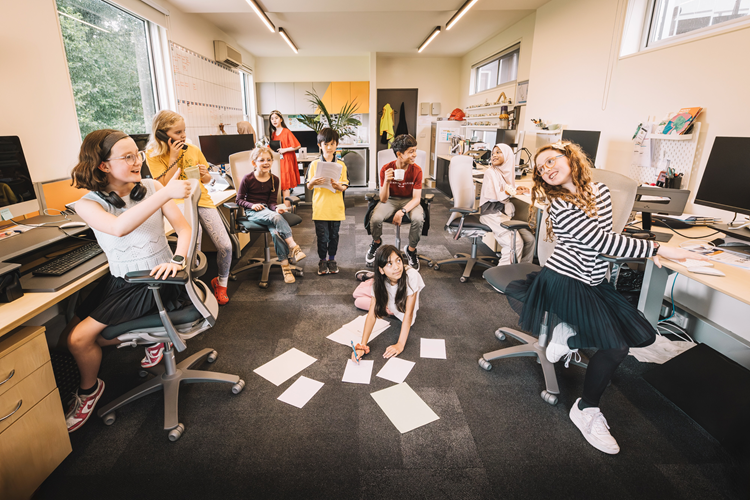
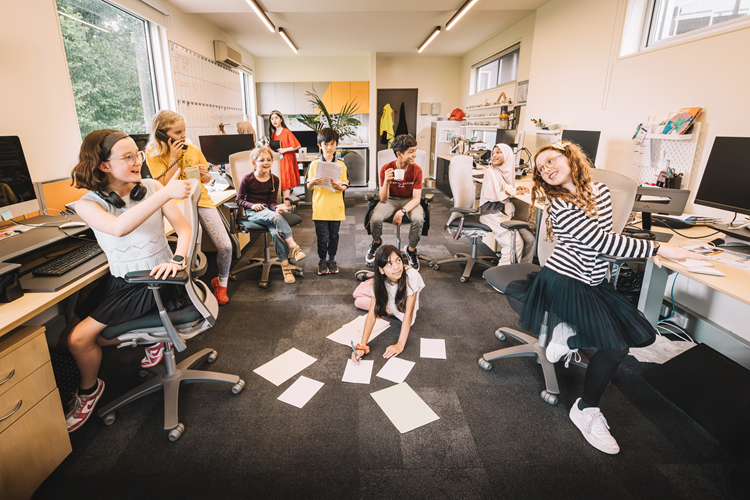
By Kids For Kids (BKFK) shifts children from passive consumers of public life into active co-designers of city programming. Operating as a democratic, child-led collective, the cohort pitches, debates, and executes interactive public arts experiences. By embedding genuine decision-making and resource allocation, BKFK builds early civic literacy, amplifies unheard voices, and redefines inclusive municipal engagement from the ground up.
2026 MAVlab Innovation Awards Finalist:
The Community Voice Award for inclusive democratic engagement, supported by the Australian Resilient Democracy Network (ARDN).
 aa
aa
Project Goals:
The core goals of By Kids For Kids (BKFK) are to embed child-led agency into municipal governance and establish new methods of inclusive democratic engagement by:
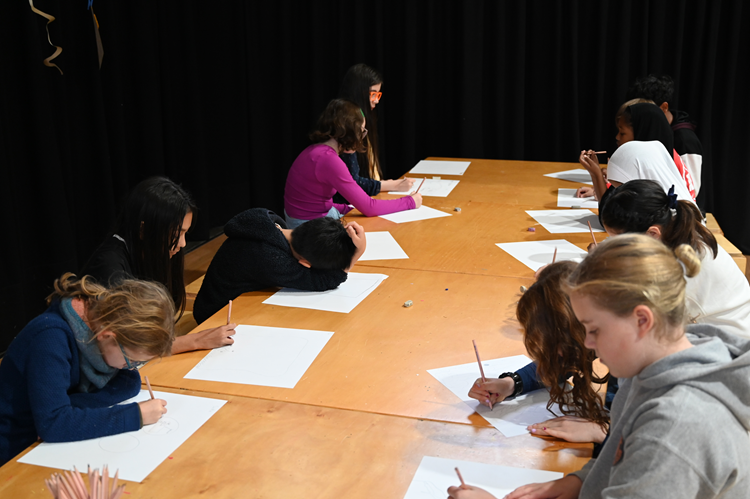
- Elevating children aged 8–12 beyond casual consultation: Positioning them as direct creators of public life through curated seasons where the collective retains full creative autonomy to design and host interactive public experiences for other families with young children.
- Building early civic literacy and public trust: Enabling participants to manage resource allocation, navigate differing viewpoints, negotiate complex power structures, and find consensus.
- Diversifying civic participation: Utilising creative, accessible, non-text-based platforms to dismantle traditional literacy and institutional barriers, ensuring that a representative cohort of young citizens can directly influence local government activity.
Project Team:
- Alex Walker, Lead Artist, Project Co-designer House of Muchness
- Hannah Liddeaux, Lead Artist, Project Co-designer House of Muchness
- Tanya Dickson/Sarah Lockwood Creative Producer
- Stephane Urruty, Program Manager
- Eelin Cheah, Venue Manager
- Myles Roxas/Mauricio Iregui, Production Coordinator
- Sonya Schubert, Front of House Coordinator
- Nishtha Banavalikar, Audience Engagement Coordinator
- Amy Gray, Stage Manager
- Adult artists (varying each year)
- BKFK Ensemble Members from 2022 - 2026.
Project duration:
The By Kids For Kids (BKFK) programme launched in 2022 and operates as an ongoing municipal initiative.
The framework runs on a continuous two-year cohort cycle, with public auditions held every second year to recruit a new group of young thinkers aged 9–13.
The pilot cohort developed and delivered Don't Panic, Everything Is Urgent across 2022–2024.
The second and current cohort commenced their two-year cycle in mid-2024, researching, designing, and executing the immersive project The Wall for its major public presentation season in 2026.
Challenge and context:
Elevating children under 12 to active civic participants inside a capital city council requires disrupting deeply embedded institutional habits. While the City of Melbourne recognises the value of youth perspectives, embedding the By Kids For Kids (BKFK) program framework into our standard local government operations introduces structural, operational, and relational challenges.
The primary internal barrier is protecting the long-term integrity of the program. Ceding genuine creative autonomy to a two-year cohort of children (ages 9–13) demands immense institutional risk tolerance. This structural friction intensifies when the young collective decides to investigate complex, adult-themed socio-political issues. For instance, our current season, The Wall, directly addresses human polarisation, forced compliance, and identity classification, themes that inherently push against the naturally cautious programming settings of a municipal bureaucracy.
Operationally, maintaining a continuous co-design model creates complex administrative friction. Traditional local government consultative bodies rely on static reference groups or short-term workshops. In contrast, BKFK demands a heavy, non-transactional investment of time and trust from staff, artists, and families. Staff must build highly specialised, relational safety frameworks to support fluid, public-facing experiences. During live seasons, the young people act as unscripted civic facilitators who must manage unpredictable adult audience variables and guide interactive, choice-driven group tasks in real time.
Navigating a true democratic ecosystem also presents significant relational challenges. The children face the demanding task of mastering complex civic skills: interrogating ideas, negotiating conflicting opinions, and respecting individual autonomy within a shared space. Nurturing this high-agency environment whilst constantly working within local government boundaries makes this overarching programmatic work uniquely difficult to execute.
Solution and innovation:
For over 20 years, children at ArtPlay have held real influence, helping to select the creative professionals of ArtPlay programs by sitting on the selection panel of ongoing commissioning programs. The By Kids For Kids (BKFK) Collective, launched in 2022, takes this engagement to the next level. Co-designed by the ArtPlay, City of Melbourne team and House of Muchness, this structural innovation shifts children from trusted advisors into a child-led creative consultation body operating in two-year cohorts.
The originality of the BKFK program lies in how it transforms creative play into a tool for municipal deliberation through three unique design choices:
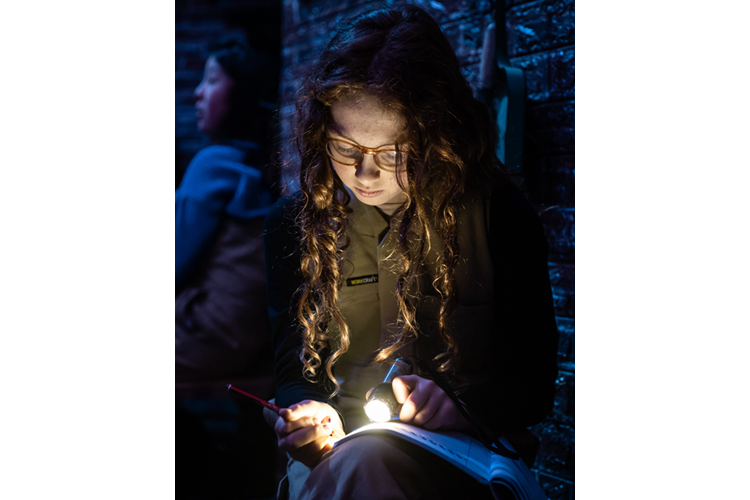
- A non-text-based democratic vocabulary: traditional civic spaces rely heavily on written agendas, creating systemic barriers for young people. The BKFK framework uses performance, movement, and physical metaphors as the primary tools for debate. This is demonstrated in the current season, The Wall, where complex socio-political themes like human polarisation and systemic division are investigated through tactile, experiential actions such as identity card classification and collective resource distribution.
- Decentralised co-facilitation: a major program innovation is shifting children from passive participants into active civic mediators. Young people are equipped with the autonomy to lead adult and peer audiences through changing physical environments, handle unpredictable human variables in real time, and answer questions directly. This fundamentally flips the traditional power dynamic, positioning children as capable civic leaders.
- Public accountability: Rather than acting as a casual focus group, the collective takes complete ownership of municipal civic space during public seasons. The innovation culminates in deep, choice-driven engagement and deliberate connection rituals such as sharing tea to debrief complex topics. By embedding this framework into the city's core cultural offering, the BKFK program establishes an enduring model for child-led civic diplomacy.
Image Gallery
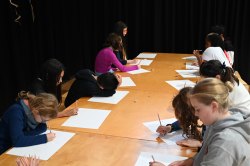
Quotation needed.
Project impacts and short-term outcomes:
The By Kids For Kids (BKFK) program has delivered significant, measurable outcomes across its consecutive seasons, validating the model’s capacity to translate child-led ideas into high-impact public offerings.
Audience mobilisation and market demand: The program’s inaugural season, Don’t Panic, Everything Is Urgent, directly engaged 345 children and their families as active audience participants during its July 2023 pilot. The exceptional public and industry reception led to a strategic partnership with the Melbourne Museum for their Playbound Festival, where the works were remounted for a completely sold-out season in July 2024. For our July 2026 season of The Wall, ticket sales already show that these audience numbers continue to grow.
Industry recognition and critical acclaim: The creative and civic rigour of the programme was recognised by the broader cultural sector, securing ArtPlay’s first-ever Green Room Award. The initiative also achieved extensive mainstream media profiles in The Age, Herald Sun, and the Australian Arts Review.
Tangible current delivery (This year's experience: The Wall): Building directly on these foundations, the current project cohort successfully conceptualised and executed The Wall. This immersive performance season directly engages community audiences in complex civic themes via interactive mechanics - including custom ID card distribution, group alignment via lanyards, and collective tactile problem-solving.
Peer validation and impact: Direct feedback from young participants confirmed that child-led curation radically lowers barriers to civic understanding. As one eleven-year-old audience participant noted: "Sometimes when grown-ups make things, it's a little bit hard for kids to understand... but when kids make them, it feels like you can understand them a little better."
Restructured legal frameworks: A short-term project outcome was the formal restructuring of legal frameworks, ensuring the young creators retain the intellectual property rights for their specific creative contributions.
Capability and long-term impacts:
As a first-of-its-kind initiative for the City of Melbourne, the BKFK programme serves as a vital proof of concept for moving beyond static, transactional youth consultation. By demonstrating how a council service can safely operate alongside an embedded co-creation model, the project has initiated important long-term shifts in institutional capability:
- Systemic alignment with strategic goals: BKFK operationalised the Inclusive Melbourne Strategy and the City’s child safety commitments by providing a tested framework where children's views directly inform public-facing delivery. It transitioned theoretical strategy into a concrete, reproducible operational workflow within ArtPlay.
- Advancing the Creative Programming framework: The initiative established a new benchmark for the city’s creative programming. By embedding a co-creation methodology, Council staff developed specialised capabilities in managing shared governance, navigating complex intergenerational power dynamics, and executing long-term, high-trust cohort programming.
- Adapting administrative and risk settings: The project required a progressive evolution in the team's standard administrative procedures. ArtPlay staff collaborated directly with the City of Melbourne’s Child Safe Officer to develop new child safety guidelines specifically tailored to the unique dynamics of long-term, high-agency cohort projects. Establishing these rigorous compliance protocols alongside working frameworks for young people under 13 expanded the team's operational capacity to deliver complex, child-led initiatives.
Inter-organisational strategic influence:
The insights gained from the BKFK collective have begun serving as a strategic resource beyond ArtPlay. The cohort's methodology has influenced strategic conversations and problem-solving workshops with major external cultural organisations and Councils across Melbourne, enhancing how external stakeholders value and engage with child perspectives.
Scalability and transferability:
The BKFK model was designed as a structured, adaptable methodology capable of being exported to other local government areas and cultural institutions. Rather than a static, closed initiative, the project operates as an open framework for a council seeking to deepen community engagement through three clear pathways:
- A universal, non-text-based blueprint: the core operational framework which utilises theatrical techniques like performance, physical improvisation, and spatial mapping as a democratic vocabulary, bypasses language and literacy barriers. This makes the methodology highly transferable to other councils looking to engage culturally diverse, newly arrived, or young populations who are typically excluded by traditional, text-heavy council consultation formats.
- An adaptable template for resource allocation: the administrative processes developed through the creation of BKFK processes provide a practical template for municipal risk. Other local authorities can readily adapt our structural systems for allocating real budgets to youth cohorts, managing child-led decision-making timelines.
ArtPlay and House of Muchness are currently in the process of documenting the BKFK methodology. By documenting established evaluation metrics, safety parameters, and pedagogical frameworks as we go, the City of Melbourne is actively creating a repeatable piece of civic architecture that will allow other municipal councils to learn and adapt child-led governance within their own communities.
The short documentary 'How Do You Get Power?' linked below highlights how the young people explore themes of power and leadership during the program's development.