
Innovation Case Study: Climate Action Living Lab (CALL)
Casey City Council
Embracing Experimentation and Collaboration to Tackle the Climate Challenge
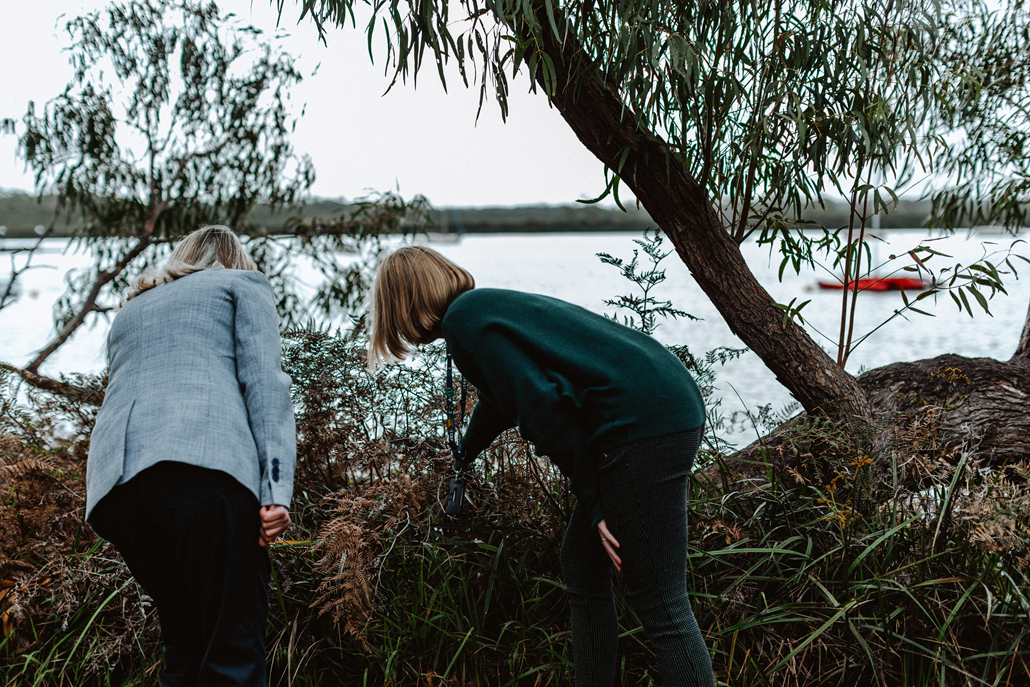
Climate Action Living Lab (CALL) is a Casey City Council initiative supporting external partners to test innovative climate solutions that build environmental and community resilience. Six organisations, selected via a grants process in August 2024, are trialling projects supporting biodiversity, safety, and renewable energy from February 2025 to February 2026. Impact is measured using shared metrics and data to evaluate outcomes across all trials.
2025 MAVlab Innovation Awards Finalist:
The Energiser Award for Climate Resilience and Adaptation, supported by Clean Energy Council.
Project statistics:
- 1 staff member leading and 1 supporting (both Innovation Advisors) in collaboration with 6 external partners
- Project duration: Total of 2 years and 6 months
- Testing period: 12 months from February 2025 to February 2026.
Project goals:
- Accelerate the development and adoption of practical climate solutions
- Ensure the community and environment are resilient to the impacts of climate change
- Support projects that successfully deliver and validate innovative solutions for climate action, including: protecting and increasing native vegetation and animal habitat, ensuring the safety and wellbeing of the community during and after extreme weather events and increasing the uptake of renewable energy for the community
- Provide a framework for real-world experimentation and community co-design
- Bring together diverse stakeholders — government, academia, businesses, and the community — to foster collaboration and knowledge-sharing
- Test solutions under genuine conditions, addressing real-world complexities.
Challenge and context:
As one of Australia's largest and fastest-growing municipalities, the City of Casey faces significant challenges amplified by climate change. Rapid urban development contributes to urban heat island effects, places pressure on existing infrastructure and natural ecosystems, and generates substantial waste and emissions. Council recognises its critical role in mitigating these impacts and building a resilient community.
Casey’s commitment is formalised in its Climate Action Plan, which outlines ambitious goals for reducing council and community greenhouse gas emissions, enhancing biodiversity, transitioning towards a circular economy, and increasing climate resilience. The Climate Action Living Lab (CALL) is a key mechanism designed to translate these strategic goals into tangible, on-the-ground actions.
CALL is focused on addressing three challenges, aligned with community priorities:
- How might we protect and increase native vegetation and animal habitat?
- How might we ensure the safety and wellbeing of the community during and after extreme weather events?
- How might we increase the uptake of renewable energy for the community?
Factors making this challenging and requiring innovation include:
- Scale and complexity: Climate change demands systemic shifts, often beyond the direct control of a local council.
- Resource constraints: With only two staff and a $150K budget, CALL is limited to six small-scale trials.
- Community engagement and trust: Low awareness or perceived relevance of climate issues (especially for new migrants with immediate settlement concerns), language and cultural differences, time constraints for participation, and a lack of trust in government.
- Diverse and vulnerable cohorts: Multicultural communities face language barriers, mobility issues, and a lack of culturally appropriate information. Low-income households are disproportionately vulnerable to economic impacts like under-insurance, while some coastal areas face direct threats from sea-level rise and storm surges.
Innovation and solution:
To address the challenges above, organisations operating in the climate-ready space were invited to apply for a Climate Action Living Lab (CALL) grant in August 2024. Following an extensive application process, six organisations were selected to partner with Council from February 2025 to February 2026 to trial innovative solutions for climate action:
- Monash Climate Change Communication Research Hub – Climate scientists will collaborate with local secondary school students and teachers to co-design engaging climate and energy education materials, building climate literacy and empowering young people to lead future environmental action.
- Royal Botanic Gardens Cranbourne – Students from two local primary schools will cultivate the endangered Swamp Everlasting (Xerochrysum palustre), gaining hands-on conservation experience that fosters environmental awareness and stewardship.
- Federation University – Trials UV-C light technology in Casey’s wetlands as an alternative to chemical weed control, protecting sensitive ecosystems while exploring more sustainable land management practices.
- Equoia – Deploys mobile, battery-powered “Power Droids” at Council-run events, replacing noisy, polluting diesel and petrol generators with a cleaner, sustainable power solution for community activities.
- Western Port Catchment Landcare Network – Monitors Southern Brown Bandicoot populations using wildlife cameras, with local schools and residents contributing to community-based data collection for vital conservation efforts.
- Western Port Biosphere – Uses acoustic monitoring to detect koala vocalisations across the Western Port Koala Corridor, supporting more targeted and effective conservation strategies for Casey’s koala population.
These six projects showcase the breadth of the Living Lab, leveraging partnerships and community involvement to test practical solutions across Council’s key climate action priorities.


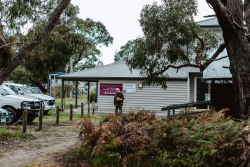
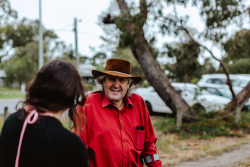
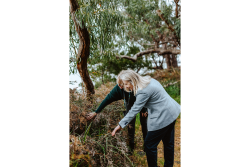
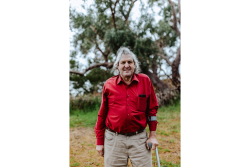
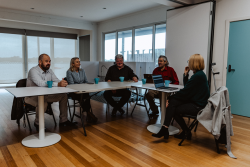
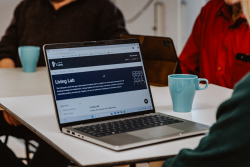
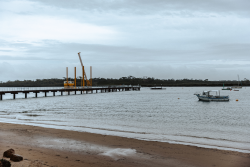
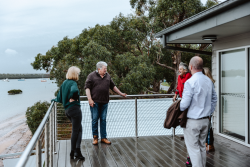
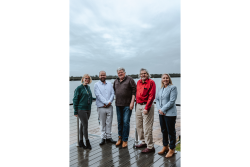
By granting and partnering with diverse organisations to trial climate solutions in a local setting, CALL offers a replicable blueprint for other councils.
Impact and outcomes:
The Climate Action Living Lab (CALL) is delivering environmental, social, economic, and innovation-driven outcomes, with the 12-month trials due to conclude in February 2026. The mid-trial report (June 2025) highlights the following achievements to date:
Environmental Outcomes
- Enhanced biodiversity: Conservation efforts by Royal Botanic Gardens, Western Port Catchment Landcare Network, and Western Port Biosphere are protecting and increasing local endangered species.
- Sustainable land use: Federation University’s use of UV-C technology reduces reliance on chemical weed control
- Climate mitigation: Equoia Power Droids have avoided CO₂ emissions by replacing petrol generators at Council-run events.
- Ecological restoration: Wildlife corridors mapped by Western Port Biosphere will protect and improve several hectares of habitat.
Social Outcomes
- Community resilience: Participants report increased preparedness for climate-related risks.
- Climate literacy: Participants have increased knowledge and understanding of climate change.
- Community engagement: Over 60 community members have actively participated in the trials.
Economic Outcomes
- Work opportunity creation: Each of the six trials has created at least one full-time equivalent (FTE) job.
- Education and upskilling: All trials have provided volunteering and training opportunities for participants.
- Cost efficiency: Equoia Power Droids reduce operational costs for Council by replacing petrol generators at events.
Innovation and Technology/Data Outcomes
- Data-driven insights: Trials have generated datasets to inform policies and plans for biodiversity, conservation, and sustainability.
- Validated technologies: Power Droids and UV-C technology have been successfully deployed.
- Community-centred innovation: Ongoing qualitative and quantitative feedback will inform potential scale-up in 2026.
Scalability:
The Climate Action Living Lab (CALL) provides a robust framework for scaling climate initiatives and generating broader impact. By granting and partnering with diverse organisations to trial climate solutions in a local setting, CALL offers a replicable blueprint for other councils. To support adoption, the process has been documented in a Living Lab Playbook, including templates for grant applications, partner selection criteria, and project evaluation metrics.
Successful trials will be captured as case studies in the final CALL report, allowing municipalities and community groups to easily replicate proven approaches. Casey’s Innovation team also shares outcomes and lessons learned through quarterly catch-ups with innovation teams at Boroondara Council and City of Melbourne, as well as at existing council network events and online platforms such as the MAVlab Innovation Associates Network and Smart Council Catch-up. This approach fosters network-scale impact, enabling councils to leverage proven solutions, avoid past pitfalls, and collectively advance climate action.
Within Council, CALL’s methodologies and projects are being integrated across other departments. For example:
- Mobile battery units trialled at events are being considered by the Emergency Management team for use in relief centres.
- Koala and bandicoot monitoring trials are likely to be scaled up with support from the Sustainability and Open Space teams.
CALL also aligns with multiple UN Sustainable Development Goals (SDGs):
- SDG 4: Quality Education – through youth empowerment and climate education initiatives.
- SDG 7: Affordable and Clean Energy – via renewable energy trials.
- SDG 11: Sustainable Cities and Communities and SDG 13: Climate Action – by building community climate resilience and fostering sustainable practices.
By connecting localised action with global goals, CALL demonstrates how councils can drive measurable environmental, social, and educational impact.
Learn more:
- Climate Action Living Lab website
- Current projects:
- Monash Climate Change Communication Research Hub – “Empowering youth for climate action” (YouTube)
- Equoia – “Clean mobile power for a sustainable future” (YouTube)
- Federation University – “Using UV-C technology to reduce chemical weedicide” (YouTube)
- Royal Botanic Gardens – “Raising Rarity – City of Casey school outreach program” (YouTube)
- Western Port Biosphere – “Western Port Koala Corridor Project” (YouTube)
- Western Port Catchment Landcare Network – “A community of bandicoot buddies” (YouTube)