
Innovation Case Study: Community Infrastructure for Flood Recovery and Resilience
Mount Alexander Shire Council
A New Way for Community to Help Community Recover from Disasters
Following the October 2022 floods, Mount Alexander Shire Council launched a Flood Recovery and Resilience Program. Funded by Emergency Recovery Victoria and shaped through workshops with over 100 community members and partners, the program is delivering a series of projects that are strengthening local connection and building long-term resilience and recovery infrastructure.
2025 MAVlab Innovation Awards Finalist: The Connector Award for Community Inclusion and Cohesion, supported by NBN Local.

Project statistics:
- 14 total people involved: 4 council staff, 2 local facilitators, 3 community members from each of the flood affected communities, 2 workers from Loddon Campaspe Multicultural Service and 3 local Street Coordinators
- Project developed between March 2024 and November 2025.
Project goals:
- Understand and respond to the recovery needs of flood-affected residents and communities
- Tailor recovery resources, information, events, and activities to meet local needs
- Build “community infrastructure” to enable communities to support one another during flood recovery
- Strengthen community resilience through engagement with residents, emergency services, and local groups
- Deliver targeted projects informed by community workshops to enhance preparedness and recovery capacity in towns.
Challenge and context:
In 2022, 81% of local government areas were devastated by floods following the wettest month ever recorded in Victoria (October 2022). Communities across the Mount Alexander Shire were inundated, cut off, and some lost power and communications. Many residents felt they were on their own, but in reality they were surrounded by communities who could have helped each other — they simply lacked the neighbourhood-level infrastructure to do so.
Following the floods, Council received funding from the State Government to establish a Flood Recovery and Resilience Program. Council officers reported that residents described the most traumatising issues revolved around not being able to get smaller forms of help not provided by emergency services. These included not knowing where to get information, managing the crisis alone, needing help with sandbagging, assistance with clean-ups, feeling embarrassed about not being able to provide food to volunteers, linking with agencies for support (trauma, insurance, disability support, etc.), and ongoing support needs long after the event.
Pasifika labour hire workers living in the caravan park in central Castlemaine were flooded overnight and did not know who to reach out to or where to go.
Many residents could have been supported by their own communities, and several community resilience groups later reported they wanted to help. However, there was no “community infrastructure” to enable this assistance. No community had:
- a way to engage all flood-affected residents, or
- a method or place for the broader community to coordinate support.
In response, Council established the Future Planning for Community Flood Recovery and Resilience project to explore these issues and the opportunities identified. The project developed localised, place-based resources to support flood recovery and strengthen community response and resilience for future flood events.
Innovation and solution:
Stage 1: Context Setting
Residents’ issues were identified through individual meetings and discussions with newly formed flood-affected groups. From this work, six key issues emerged for exploration in community workshops.
Stage 2: Ideas Workshops
Three town-based “ideas” workshops were held, each featuring up to six tables — one for each of the key issues. Across the towns, 100 residents and key stakeholders were intentionally placed at tables to co-design practical, fundable solutions. Participants included flood-affected residents, community resilience groups, Council officers, emergency services, community organisations, and others with relevant expertise.
From these workshops, five project ideas emerged:
- Local Street Coordinators: A system of coordinators in flood-affected streets to link households with community resilience groups and emergency management, create local communication networks, and provide information about vulnerable residents.
- Community Emergency Hub (with kit and manual): A hub that community members can activate during emergencies to provide information and match the needs of flood-affected residents with offers of support.
- New Resident Kits: Kits for new residents in flood-affected streets providing information on local resilience groups and emergency management resources.
- Pasifika Language Videos: A series of videos developed in consultation with the Pasifika community to provide accessible, culturally appropriate information.
- Town-Based Communications Plan: A communications plan and associated activities for each town to build awareness of, and activate, the community emergency system.
Stage 3: Project Planning and Approval
Five detailed project plans were developed, and local residents and organisations were identified to lead the projects with support from community resilience groups. The plans were presented at three follow-up town feedback sessions, where residents endorsed them. A final proposal was then submitted to council, which was approved.


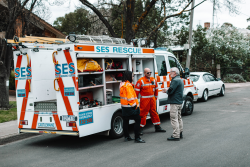
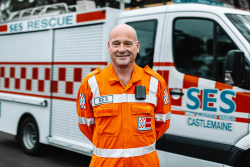
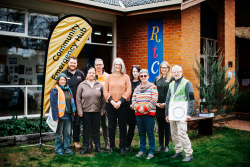
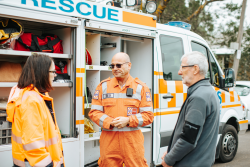
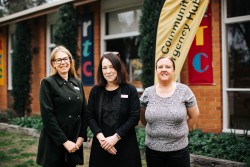
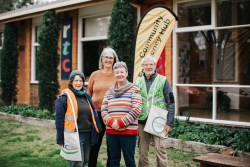
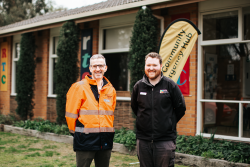
Many residents felt they were on their own, but in reality they were surrounded by communities who could have helped each other — they simply lacked the neighbourhood-level infrastructure to do so.
Impact and outcomes:
Four of the five projects were completed in 2025, with the final one now focused on activation. Events have already been booked, including a Community Fair organised by a local resilience group and community workshops for household plans. One of the hubs was opened in the recent bushfires.
Community Infrastructure
- For residents in flood-prone streets, there are now Local Street Coordinators to test and refine. So far:
- Two areas have established a local communication “tree”.
- Each has developed a localised new-resident information kit.
- Pasifika language videos have been produced.
- For the broader community who want to help, there is now a Community Emergency Hub, ready for activation at:
- The Old Castlemaine Gaol
- Newstead Rural Transaction Centre
- Barringhup Hall.
More than 100 residents and community organisations have been involved, and the projects have been led by local residents themselves.
The activation phase will see a significant increase in community volunteers. Emergency management agencies and community support organisations have offered activities to help activate the Community Emergency Hubs in non-emergency times. Examples include:
- The Bureau of Meteorology offering “how to read weather maps” workshops
- Local artists offering make-a-street-number activities
- The Red Cross training staff to run Redi Community Workshops in response to the project
- SES offering sandbagging workshops.
Support:
Resilient Lismore and Social Futures (Aboriginal agency), both active during the NSW floods, helped launch the projects at half-day seminars in each town and one with emergency management. They were impressed by the infrastructure developed and have taken several ideas back to their own communities.
Scalability:
We have prepared a manual that can be shared with other councils to help scale this resident-led initiative. We have already been approached by five other towns in our municipality wanting to establish Community Emergency Hubs, and we have created three additional kits to support them. Residents have also expressed interest in expanding the Hubs to respond to other types of emergencies, not just floods.
Our community emergency infrastructure contributes to several United Nations Sustainable Development Goals by strengthening community resilience, protecting vulnerable populations, and supporting sustainable development. In particular, it contributes to:
SDG 11: Sustainable Cities and Communities, by:
- Reducing disaster risk through better informed and better prepared communities
- Strengthening resilience through community involvement in flood preparedness and response
- Creating channels for community input into flood management, urban planning, and infrastructure, helping towns withstand and adapt to flood risk
- (The Parliamentary Inquiry into the 2022 floods also highlighted that community-centred emergency management is essential for effective emergency response.)
SDG 13: Climate Action, by:
- Helping communities adapt to the increased frequency and intensity of extreme weather events associated with climate change
- Supporting broader sustainability efforts through community resilience groups, which also helps reduce greenhouse gas emissions
- Raising public awareness of the importance of climate action through flood preparedness and response activities.
Residents consistently emphasised that community resilience depends on strong connections and activities across preparedness, response, and recovery. While the “first 72 hours” is critical for emergency management, long-term resilience requires sustained community engagement. Rural councils do not have the resources to deliver this alone, but these projects create a mechanism that brings the whole community together to ensure it can be achieved.