

Innovation Case Study: Growing Our Own Early Years Workforce
Corangamite Shire Council
Inspiring Early Years Futures, Growing Our Own
Since 2020, this initiative has built a skilled, collaborative early years workforce through tailored recruitment, professional development, and leadership pathways. Strong partnerships with educators, schools, and community have reduced professional isolation and improved retention. With 40% of staff upskilling, the organisation is now an employer of choice, offering career progression and fostering structured, collaborative work practices.
2025 MAVlab Innovation Awards Finalist:
The Now and Forever Award for Impact and Legacy, supported by Australian Red Cross.

Project statistics:
- Project team: Manager, Community Services with the Education and Care Coordination Team of 6
- Commenced early 2020, ongoing.
Project goals:
- Address workforce shortages in rural settings in early years
- Develop a ‘grow our own’ strategy to build a skilled workforce
- Establish career pathways with local jobs, mentoring, and progression opportunities
- Attract, support, and retain high-quality educators
- Align workforce practices to be inclusive, agile, and leadership-focused
- Invest in professional development and mentoring for career progression
- And foster a unified team culture that supports innovation and collaboration.
Challenge and context:
Operating in a small rural shire, we faced significant challenges attracting and retaining a skilled workforce. Geographic isolation and limited access to professional development opportunities contributed to workforce shortages and professional isolation, threatening the stability, continuity, and quality of early years services. These constraints were compounded by reform-driven demand to double our workforce during an acute pandemic period, which required inclusive, responsive care for families experiencing complex social issues, including hardship and family violence.
Aspiring educators faced economic challenges in accessing further education due to travel burdens and inflexible study options. Additionally, there was a lack of opportunities for local talent to start a career in early childhood, low local unemployment, intense competition for skilled workers, and low retention of school leavers.
To address these challenges, the organisation adopted a strategic and community-focused approach. Recognising the need to tailor a solution to fit the local context, we prioritised local job creation and skill development to draw on community knowledge and foster sustainable impact. We built community awareness of career options in early childhood, worked in partnership with schools to provide work experience, and collaborated with higher education providers.
The organisation also addressed professional isolation by creating structures that promote collaboration and build a sense of belonging and purpose. Our initiative unified staff from kindergartens, family day care, mobile childcare, and maternal and child health services, encouraging shared learning and mutual support. Regular planning days, communities of practice, and mentoring programs further strengthened these connections.
Flexible work arrangements and qualification-based compensation help retain staff and maintain service continuity. Adopting a “grow our own” strategy supports traineeships and upskilling qualifications, creating a sustainable pipeline of skilled professionals deeply embedded in the community.
These innovative responses demonstrate a deep understanding of the local context and a strong commitment to building a resilient, collaborative workforce.
Innovation and solution:
Our reimagined strategy has redefined workforce development in a rural context. While traditional models rely on external recruitment and generic professional development, we have addressed the unique challenges of our community. By strengthening pathways and offering tailored mentoring, we have supported the successful completion of 49 qualifications. The initiative has helped to address both immediate and long-term workforce challenges, resulting in an agile group able to respond to broader sector change and local needs.
The project was co-designed by the Manager Community Services, ECEC Coordinators, Educators, and higher education providers to ensure relevance, ownership, and buy-in. Our recruitment strategy focuses on hiring candidates with local ties to enhance a sense of belonging and promote long-term retention. A standout innovation was qualification-based compensation, ensuring educators are recognised and rewarded for their expertise regardless of the position they fill.
Innovation is also evident in our pipeline of skilled professionals and the provision of support through traineeships. Those upskilling their qualifications are paired with experienced educators/mentors to support skill development and collaborative practice. Individual mentoring has reduced barriers to career entry and progression.
We have also broken down operational silos and fostered a shared purpose across programs, increasing professional practice opportunities and tailored support structures. This aligns closely with the organisation’s values and collaborative culture, helping to reduce professional isolation.
The ‘Growing Our Own’ initiative is replicable by other LGAs and demonstrates how to embed inclusivity and educational accessibility into workforce development. We have shown the value of community-led solutions in building trust and created a sustainable approach to sector-wide workforce challenges.
Together, these strategies demonstrate a holistic and forward-thinking approach to workforce development. They are inclusive, accessible, and designed to embed leadership and collaboration at every level.
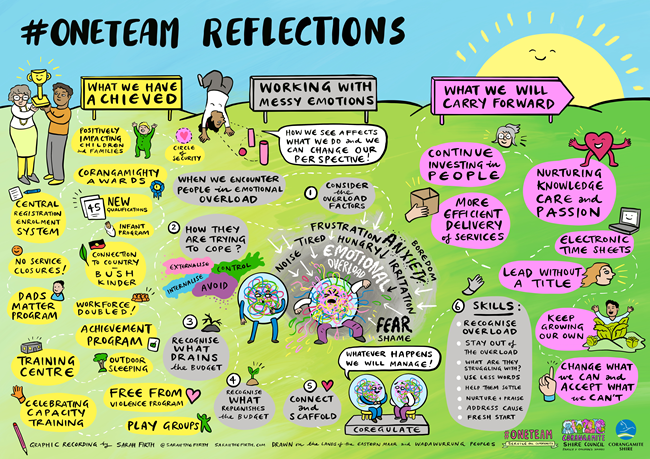
The organisation's innovative workforce strategies have delivered measurable and meaningful outcomes, with 33 educators receiving or working towards 50 qualifications since 2020, transforming rural early years service delivery.
Impact and outcomes:
Satisfyingly, the results of this project are ongoing, contributing to a sustainable, high-quality workforce aligned with the EYM Improvement Framework.
Improved staff retention, satisfaction, and continuity of service: The organisation's innovative workforce strategies have delivered measurable and meaningful outcomes, with 33 educators receiving or working towards 50 qualifications since 2020, transforming rural early years service delivery. Recruiting locally and offering flexible, family-friendly work arrangements has significantly improved staff retention and stability. This has ensured continuity of care for children and families, even during periods of staff illness or shortages.
Increased qualifications: The “Grow Our Own” strategy has created a sustainable pipeline of skilled professionals, with staff progressing from certificates through to degrees. Investment in qualifications has addressed workforce gaps and deepened staff commitment and alignment with the organisation's values. Educators are increasingly confident, capable, and embedded within their communities, enhancing the quality and inclusivity of services.
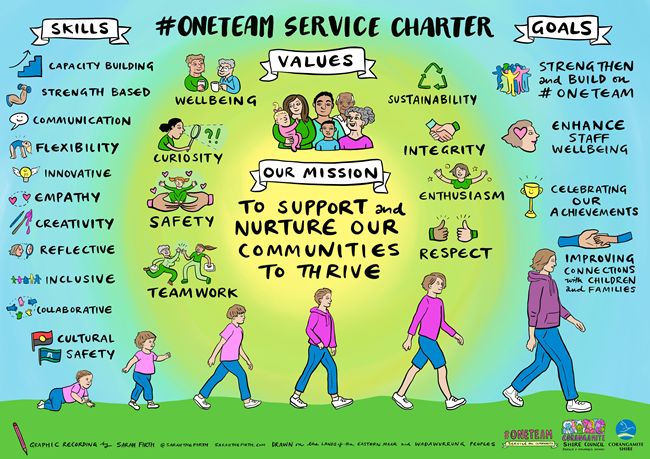
Collaboration: Collaboration is a defining feature of the workforce. The #oneteam initiative has unified staff across diverse programs, fostering shared learning and reducing professional isolation. Regular training days, communities of practice, and mentoring programs strengthen relationships and build collective capacity. Staff report feeling supported, empowered, and motivated to contribute their best.
Leadership development: Structured career pathways and collaborative leadership practices have cultivated a culture of trust, innovation, and shared responsibility. Staff are encouraged to lead initiatives, share ideas, and engage in sector-wide forums, bringing fresh insights back to their teams.
Stronger community connections: These outcomes reflect a workforce that is not only highly skilled and collaborative but also resilient and future-focused. The organisation's approach has elevated service quality, strengthened community connections, and positioned it as an employer of choice. The ripple effect of these strategies ensures that children and families receive consistent, high-quality support, aligned with the goals of the EYM Improvement Framework.
Scalability:
The strategies demonstrate strong potential for sector-wide adoption and knowledge sharing across councils. The workforce strategies implemented by the EYM organisation are highly scalable and adaptable across other local government areas and early years service providers. Designed with flexibility and inclusivity at their core, these initiatives respond to common sector challenges such as workforce shortages, professional isolation, and the need for culturally responsive care, making them relevant beyond the rural context in which they were developed.
The “Grow Your Own” strategy offers a replicable model for workforce development. By supporting traineeships and funding qualifications, councils can build internal capacity while strengthening community ties. This approach is particularly effective in regions facing recruitment difficulties and can be tailored to suit urban, regional, or remote settings.
The #oneteam initiative demonstrates how cross-service collaboration can be fostered through shared planning, mentorship, and communities of practice. These structures are low-cost, high-impact, and easily transferable to other organisations seeking to reduce silos and improve service integration. The initiative also aligns with broader sector goals around continuity of care and holistic family support.
At the basis of our work is Maternal Child Health (MCH) who are the first point of contact with our Shire families. MCH are a critical part of our Family & Children’s Services program and are the foundation and underpinning of our work.
Flexible work arrangements and qualification-based compensation provide a scalable framework for retaining staff and maintaining service continuity. These policies can be adopted by other councils to enhance workforce stability and promote equity in recognition of staff expertise.
Leadership development practices — including structured career pathways, collaborative leadership models, and sector-wide engagement — equip staff to lead change and share innovations across the sector. These strategies not only build internal capacity but also contribute to broader system improvement.
Together, these initiatives reflect a scalable, sustainable model for building a highly skilled, collaborative workforce. They support knowledge sharing, sector-wide learning, and alignment with the EYM Improvement Framework and UN Sustainable Development Goals, making them valuable for councils seeking to innovate and improve outcomes for children, families, and communities.