
Innovation Case Study: Melbourne's Stormwater Sensing Pilot
City of Melbourne
Driving Smarter Maintenance Through Real-time Insights
Running from early 2024 to June 2025, the Stormwater Sensing Pilot trialled smart sensors in 30 drains to monitor water levels, blockages, and debris in real time. Led by the Smart City Incubator, it enabled proactive maintenance, featured co-designed signage, and public education. Now operationalised, it improves asset management, with value shown through early interventions and reduced unplanned maintenance.
2025 MAVlab Innovation Awards Winner
The Future is Maintenance Award for Asset Maintenance, supported by Matter

Project statistics:
- Pilot contributors: 6 staff in total with 1 council staff member leading and delivering the pilot (12 months). Supporting staff helped set up data feeds and integration, led community engagement and created signage, and created a Stormwater Sensing game that integrates with a City of Melbourne 3D model (City DNA).
- Project duration: 18 months end-to-end (including periods of low activity)
- Core project work (sensor selection, procurement, site prioritisation, installation, configuration, testing, and evaluation): 12 months
- Handover phase: 2 months.
Project goals:
- Establish a network of stormwater sensors across key council locations
- Implement real-time data collection and reporting to support timely, informed maintenance decisions
- Enhance flood prediction by analysing stormwater level data
- Assess blockage and capacity of the existing main drainage system
- Understand drainage system performance during flood events
- Enable monitoring and proactive maintenance ahead of extreme weather
- Test and evaluate the functionality of constructed flood mitigation systems.
Challenge and context:
The City of Melbourne manages a stormwater network that includes 365 kilometres of underground drains, 22,000 pits, and 90 pollutant traps. This system is critical during rainfall events but has traditionally operated as a passive asset, maintained through scheduled inspections or emergency responses. With more intense and unpredictable rainfall due to climate change, this approach no longer meets the city’s evolving needs.
The challenge was to improve real-time visibility of drainage performance and support more responsive maintenance. The City required a solution that could operate across diverse locations with varying physical conditions and connectivity. While Melbourne has a LoRaWAN network, gaps in coverage necessitated a more flexible approach. The team trialled both LoRaWAN and NB-IoT sensors across 30 locations to test reliability, suitability, and data quality.
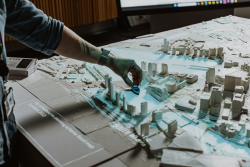
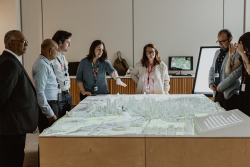
Community transparency was another key consideration. As part of the City’s ongoing Communicating City Sensing program, the team prioritised clear communication when installing digital infrastructure in public spaces. This approach supports trust, addresses potential concerns early, and makes sensing relevant to everyday life. Signage was co-designed with a local community group that included older residents and people with disabilities, ensuring clarity, accessibility, and public value. A hands-on community session allowed attendees to explore an interactive diorama of the drainage network, ask questions, and handle real sensors.
Delivering the pilot required cross-department collaboration, strong operational support, and a focus on community engagement. It addressed technical, social, and environmental challenges while laying the groundwork for more resilient and intelligent asset maintenance.
Solution and innovation:
The Stormwater Sensing Pilot modernised how Melbourne monitors and maintains its stormwater network. Traditionally, maintenance relied on fixed schedules or reactive callouts. This pilot introduced a more intelligent, data-informed model that responds to changing conditions in real time.
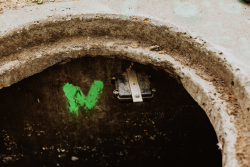
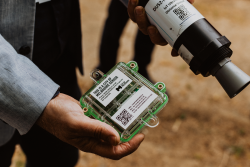
The project deployed 30 sensors across high-priority drainage locations. A mix of ultrasonic, radar, pressure, and sludge sensors tested suitability across different conditions. LoRaWAN and NB-IoT connectivity enabled greater coverage across the city. Sensor data was integrated into dashboards developed in close consultation with operational teams, ensuring insights aligned with maintenance needs.
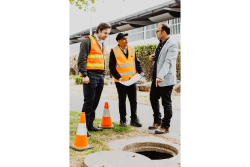
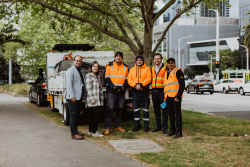
The pilot was delivered by the Smart City Incubator, sponsored by City Infrastructure, and involved Climate Change and City Resilience, and Parks and City Greening. This collaboration ensured the solution was technically sound, strategically aligned, and ready for integration into ongoing operations.
Innovation extended beyond technology, with the pilot exploring new approaches to public engagement. Signage installed at sensor locations was co-designed with a local community group, including older adults and people with disabilities, ensuring clear, inclusive, and relevant messaging. A community education session gave residents the chance to learn about the project, handle real sensors, and explore an interactive diorama of the drainage network.
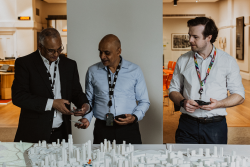
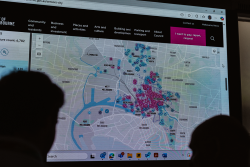
Sensor data also featured in a gamified experience of Melbourne’s 3D “City DNA” model, located at Town Hall. Showcased at the 2024 Australian Smart Communities Association (ASCA) Summit, the Stormwater Game allowed attendees to interact with sensor data in a unique way. The game is now a permanent part of the City DNA experience, enabling future visitors to engage with the city’s drainage network in an accessible and memorable way.
This was Melbourne’s first use of real-time stormwater sensing. It introduced a more responsive and inclusive way to manage critical infrastructure, with potential to influence future asset management practices.



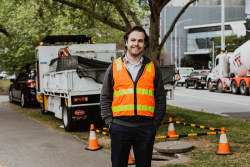
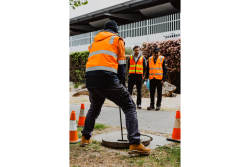
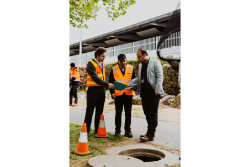
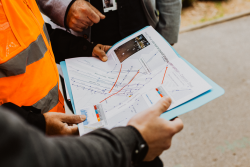
Operationally, the pilot enabled earlier detection of drainage issues, leading to reduced unplanned maintenance, faster response times, and more targeted inspections.
Impact and outcomes:
The Stormwater Sensing Pilot has delivered measurable impacts across infrastructure maintenance, climate resilience, and public engagement.
Operationally, the pilot enabled earlier detection of drainage issues, leading to reduced unplanned maintenance, faster response times, and more targeted inspections. Four major insights from sensor data prompted direct interventions:
- Water level trends near the river revealed drainage behaviour linked to tidal cycles, which had not been previously monitored.
- A faulty pump was identified early through irregular sensor readings, preventing downstream flooding and avoiding infrastructure damage.
- A blocked trash screen was flagged via a sharp spike in water levels, prompting immediate action.
- Persistently high readings in specific pits identified locations that required cleaning, improving drainage performance and extending asset life.
These outcomes improved service delivery and supported more efficient use of maintenance resources. Internal teams now use the dashboards to inform operational decisions and capital works planning.
At the community level, the pilot strengthened transparency and trust. Co-designed signage and face-to-face engagement gave residents the opportunity to understand the technology and ask questions. Printed postcards were distributed through libraries to reach those without access to digital platforms. The City DNA gamified model extended the project’s impact, allowing continued engagement and showcasing the value of sensing in a fun and accessible format.
The pilot also demonstrated how real-time data can support more proactive maintenance planning across asset teams. It showed that infrastructure projects can benefit from transparent, community-facing communication, making technical systems more visible and relevant to the public. In doing so, it set a new benchmark for how Melbourne can approach the management of underground infrastructure.
Scalability:
From the outset, the Stormwater Sensing Pilot was designed to be modular, flexible, and easily scalable. It used commercially available sensor technologies and leveraged both LoRaWAN and NB-IoT networks to maximise coverage. Data was integrated into custom dashboards built in-house in consultation with maintenance teams, ensuring they were practical, user-friendly, and adaptable for future sensor types and other infrastructure areas. Developing the dashboards internally also allowed the City to incorporate datasets such as rainfall and tides, providing richer insights into drainage system performance.
The pilot has been fully transitioned to the City Infrastructure branch, with dashboards and sensors now in active use. Operational teams use these tools to inform maintenance planning, capital works, and resilience discussions. Its integration into existing processes ensures long-term continuity, while the scalable design allows expansion without major redevelopment.
Externally, the model has been shared at industry events, including the ASCA Summit, and with other councils exploring sensor-based asset management. Its applicability to both large-scale infrastructure and smaller, localised sites makes it adaptable for councils of varying sizes and contexts.
The pilot has also inspired new thinking about how sensor data can support storytelling and public engagement. Permanent signage is being planned as part of the City’s Communicating City Sensing program, with co-designed messaging to ensure clarity and accessibility. This continued investment in communication keeps the project visible and relevant to the community.
From a sustainability perspective, the pilot advances the City’s goals in climate adaptation and smarter resource management. It supports the UN Sustainable Development Goals, particularly Goal 11 (Sustainable Cities and Communities) and Goal 13 (Climate Action), while also addressing Goal 10 (Reduced Inequalities) through its emphasis on inclusive engagement and accessibility.