

Innovation Case Study: Mornington Peninsula Shire AI Experimentation Journey
Mornington Peninsula Shire Council
A Replicable Blueprint for Responsible AI Adoption
Mornington Peninsula Shire's AI Experimentation Journey is a comprehensive capability-building initiative launched in 2024, designed to support the responsible adoption of AI through structured, staff-led experimentation. The program is spearheaded by a 65+ person AI Pioneer Network and, as a permanent innovation mechanism, positions the council as a national leader in responsible AI adoption.
2025 MAVlab Innovation Awards Finalist:
The Sandbox Award for Experimentation Practice, supported by Breakthrough Victoria.

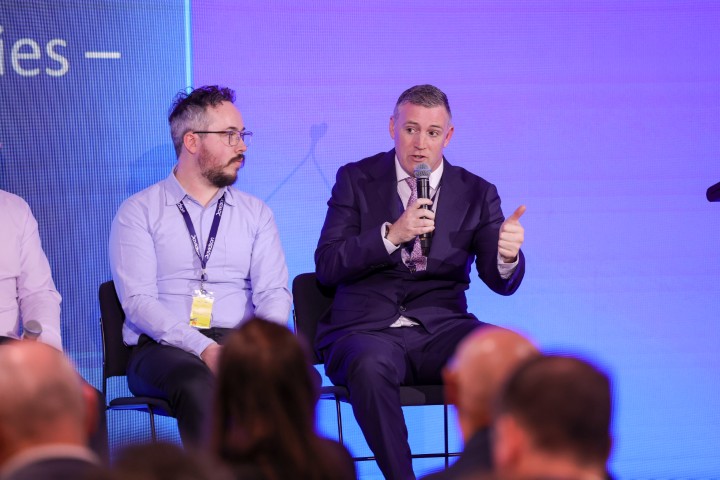
Mornington Peninsula presentation at the Local Government AI Summit
Project statistics:
- Project team: One dedicated day to day resource - initially the Manager of Transformation and then our Emerging Tech Lead. Various officers from different departments contributed such as CX, IT, Governance, Legal, Risk and Statutory Planning.
- Timing and milestones: March 2024 to present (ongoing)
- Jun 2024 - Responsible Use of Generative AI Guidelines adopted
- Aug 2024 - Org-Wide GenAI Training sessions (350+ staff)
- Nov 2024 - Emerging Technologies Lead recruited
- Jan 2025 - AI Pioneer Network formed
- Feb 2025 - Launch of INSIDE AI: Generative AI web chat
- Apr 2025 - Launch of myLot: Planning Permit / Application AI Assistant.
Project goals:
- Build internal AI capability through hands-on staff experimentation, reducing reliance on external vendors
- Establish robust governance frameworks to support innovation while managing AI risks, ethics, and privacy
- Create sustainable experimentation processes for ongoing adoption of emerging technologies across the organisation
- Deliver measurable service improvements for community members via AI-enhanced customer experience and operations
- Position council as a sector leader by developing replicable methodologies for responsible AI adoption across local government, and
- Transform organisational culture from technology-hesitant to innovation-confident through the 65+ staff Pioneer Network.
Challenge and context:
We faced the critical challenge of responsibly adopting artificial intelligence while managing significant organisational and community risks. Unlike many councils that approached AI reactively, we recognised that emerging technologies would determine whether we remained a modern, effective organisation or became an expensive burden on our community.
Our context was complex: a diverse organisation with varying digital literacy levels, stringent governance requirements, community expectations for transparency, and the need to balance innovation with risk management. Financial pressures and record-low customer satisfaction created a burning platform for enabling innovation. Traditional technology adoption approaches were insufficient for AI’s unique challenges, including ethics, privacy, bias, and accountability.
Key challenges included:
- Knowledge gaps: Staff anxiety and uncertainty about AI capabilities and limitations
- Fragmented approach: Risk of ad-hoc AI experiments without proper governance
- Resource constraints: Limited capacity for large-scale technology rollouts
- Governance complexity: Existing frameworks are inadequate for AI’s novel risks
- Cultural resistance: Natural hesitancy toward unfamiliar technology.
The rapidly evolving AI landscape meant we couldn’t wait for perfect solutions or comprehensive sector guidance. We needed a structured yet agile approach that could build capability while maintaining safety and community trust.
Most significantly, we had to shift from a traditional “implement and train” technology model to an “experiment and learn” culture. This required creating psychological safety for controlled failure, establishing cross-functional collaboration, and developing internal expertise rather than relying solely on external vendors.
Our challenge was designing an experimentation framework that could:
- Build organisational AI confidence through hands-on learning
- Establish robust governance without stifling innovation
- Create scalable processes for ongoing technology adoption
- Generate real service improvements for our community
- Position us as a sector leader in responsible AI adoption.
This context demanded a fundamentally different approach to technology adoption—one focused on capability building, cultural change, and systematic experimentation, rather than traditional procurement and deployment models.
Solution and innovation:
Our innovative solution centred on creating a comprehensive experimentation ecosystem that transformed how councils approach the adoption of emerging technologies. Rather than waiting for sector guidance or purchasing off-the-shelf solutions, we built internal capability through structured experimentation.
Staged Experimentation Framework: We developed a progressive approach moving from policy development through controlled pilots to scalable deployment:
- Phase 1: Responsible Use Guidelines and organisation-wide training (350+ staff and Councillors)
- Phase 2: Low-risk pilot projects with strong governance oversight
- Phase 3: Service-integrated applications with measurable outcomes.
The AI Pioneer Network: We established a peer-led network of 65+ staff across all directorates, creating distributed leadership rather than centralised control. This network became our primary experimentation vehicle, allowing safe exploration while building organisational confidence and expertise.
Innovation Methodology: Our approach prioritised:
- Human-centred design: Co-designing pilots with service teams to meet real needs
- Risk-first thinking: Comprehensive risk and privacy impact assessments
- Transparency: Regular community communication about AI usage
- Collaborative governance: Bringing Privacy, Legal, IT, and service teams together from project inception.
Practical Applications: We launched two high-impact pilots demonstrating real value:
- INSIDE AI: Generative AI web chat improving first-contact resolution
- myLot: Planning permit AI assistant streamlining application triage.
Knowledge Sharing: We established regular forums for teams to share learnings, failures, and ideas, flattening hierarchies and enabling distributed innovation.
What makes this innovative is our systematic approach to building internal AI capability rather than outsourcing expertise. We created sustainable mechanisms for ongoing experimentation, established replicable governance frameworks, and demonstrated that councils can lead rather than follow emerging technology adoption.
Our model has been adopted by other councils, proving its scalability and sector applicability. We've shown that structured experimentation can deliver both innovation and governance simultaneously. We continue to present at state, interstate, and national AI summits, sharing our blueprint for sustainable success across the sector.
Most significantly, we had to shift from a traditional “implement and train” technology model to an “experiment and learn” culture. This required creating psychological safety for controlled failure, establishing cross-functional collaboration, and developing internal expertise rather than relying solely on external vendors.”
Impact and outcomes:
Our experimentation approach has delivered measurable impacts across organisational culture, service delivery, and sector leadership within just 18 months.
Organisational Transformation:
- 65+ staff actively participating in the AI Pioneer Network across all directorates
- 350+ staff trained in responsible AI use, creating organisation-wide literacy
- Cultural shift: Staff report increased confidence, curiosity, and a shared language around AI
- Sustainable learning: The Pioneer Network has become a permanent mechanism for capability building.
Service Delivery Improvements:
- INSIDE AI web chat: Improved first-contact resolution rates, reduced response times, and freed staff capacity for complex queries
- myLot planning assistant: Streamlined permit triage, reducing processing time for basic queries and improving resident service access
- Vision AI pilot: Road defect identification using waste truck cameras, with expansion potential for overhanging branches and graffiti detection.
Governance Excellence:
- Comprehensive AI Policy framework developed, providing clear guidance for ongoing innovation
- Risk assessment processes established, ensuring responsible deployment
- Privacy impact assessment protocols integrated into all AI projects
- Community transparency maintained through regular communication.
Sector Leadership:
- Our methodology is being adopted and adapted by other Victorian councils
- Regular contributions to MAVlab panels and sector forums
- Informal mentoring support provided to other councils
- Structured approaches to AI governance becoming sector reference points.
Financial Innovation:
- Participation in a shared service exploration pilot for cross-council AI applications, offering exponential ROI potential for a financially constrained sector
- Demonstrated cost-effective capability building through internal expertise over external consulting
- All initiatives have our benefits realisation framework applied to ensure tangible and intangible ROI can be forecast, tracked, and realised.
Future Pipeline:
- Current experimentation roadmap includes AI camera CCTV integration, call AI projects, and asset management AI assessment, demonstrating sustainable innovation momentum.
Our impact extends beyond individual projects to fundamental organisational capability, positioning Mornington Peninsula Shire as a confident, ethical leader in local government AI adoption while delivering tangible community benefits.
Scalability:
Our experimentation framework is designed for maximum scalability across the local government sector and directly advances multiple UN Sustainable Development Goals (SDGs).
Council Network Scalability:
- Demonstrated through the shared service exploration pilot, allowing participating councils to access AI-powered applications and agents across the sector
- Collaborative model offers exponential ROI for financially constrained councils while maintaining local control and customisation.
Replicable Methodology:
- Documented frameworks: All governance processes, risk assessments, and training materials are transferable
- Flexible implementation: The Pioneer Network model adapts to different organisational structures and sizes
- Open knowledge sharing: Regular sector forums and informal mentoring accelerate adoption by other councils.
Internal Scaling:
- Distributed leadership through the Pioneer Network ensures innovation isn’t dependent on single individuals or departments
- 65+ staff across all directorates create sustainable momentum that continues regardless of personnel changes
SDG Alignment:
- SDG 11 (Sustainable Cities): Improving urban service delivery through AI-enhanced customer experience and infrastructure management
- SDG 16 (Peace, Justice, Strong Institutions): Building transparent, accountable governance frameworks for AI deployment
- SDG 17 (Partnerships): Creating collaborative models for technology sharing across the sector
- SDG 9 (Innovation and Infrastructure): Developing resilient technological infrastructure and fostering innovation.
Sector Transformation Potential:
- Addresses fundamental challenges facing all councils: resource constraints, capability gaps, and the need for innovation within strong governance frameworks
- Proves that councils can lead rather than follow in emerging technology adoption, shifting sector expectations and capabilities.
The combination of structured experimentation, collaborative governance, and knowledge sharing creates a replicable blueprint for responsible innovation. This approach can transform how local government approaches emerging technologies sector-wide, delivering better outcomes for communities across Victoria and beyond.
Further information:
Learn more in the video below: