
Innovation Case Study: Public Art Conservation Program
Ballarat City Council
Future-proofing Ballarat's Cultural Legacy Through Smart Conservation
Launched in 2023, the City of Ballarat’s Public Art Conservation Management Program supports its $20M public art collection — one of Australia’s most significant regional collections. Led by the Public Art Officer, the program includes a digital database, condition assessments, and annual conservation planning. Success is measured by completed restorations, improved condition ratings, and growing community engagement, including philanthropic support.
2025 MAVlab Innovation Awards Finalist:
The Future is Maintenance Award for Asset Management, supported by Matter.
Project statistics:
- Team: 1 Public Art Officer supported by external consultants and contractors engaged as required
- Duration: Ongoing since 2023, with annual cycles of assessment, planning, and delivery.
Project goals:
- Establish a proactive, strategic framework for managing Ballarat’s public art collection
- Preserve and restore culturally and historically significant artworks across the municipality
- Respond effectively to urgent conservation needs, including vandalism and environmental degradation
- Engage the community and key stakeholders in the stewardship of public art
- Secure sustainable funding through Council budgets and philanthropic partnerships
- Ensure long-term care, accessibility, and future-proofing of the collection through best-practice conservation.
Challenge and context:
The City of Ballarat’s Public Art Collection is one of Australia’s most significant regional collections, valued at over $20 million and comprising more than 120 permanent artworks, some dating back to the 19th century. Despite its cultural importance and strong community sentiment, the collection faced serious challenges. Conservation was often overshadowed by the commissioning of new works, and the condition of existing artworks was not consistently prioritised.
Ageing infrastructure, environmental wear, vandalism, and the absence of centralised data made it difficult to assess and maintain the collection. Prior to the launch of the Public Art Conservation Management Program, there was no unified system for evaluating condition, planning conservation, or allocating resources. Many works were in poor or critical condition, with urgent needs identified but not addressed in a systematic way.
The diversity of the collection — ranging from bronze sculptures and fountains to integrated contemporary installations — added complexity and required tailored conservation approaches. While the community is deeply invested in the collection, engagement has been uneven. Strengthening public connection to the artworks and their stories became as vital as physical preservation.
Incidents such as the vandalism of the nationally significant Prime Ministers’ Avenue and the imminent deterioration of highly popular statues underscored the need for both reactive and proactive strategies. Emergency responses required swift coordination, restoration, and clear public communication.
Remarkably, this transformation was led by a single Public Art Officer within the Creative Ballarat team. With limited resources, the officer developed strategy, coordinated contractors, managed donor relationships, and responded to emergencies — all while maintaining day-to-day operations.
The result is a scalable, strategic model for public art conservation that balances heritage protection, community engagement, and innovation — ensuring Ballarat’s cultural legacy is preserved and revitalised for future generations.
Solution and innovation:
The Public Art Conservation Management Program delivered a strategic and innovative approach to preserving Ballarat’s $20 million public art collection. Led by the Public Art Officer, the program began with a comprehensive assessment of each artwork, followed by the creation of a digital database, valuation, and condition review. This enabled the development of a prioritisation matrix to guide conservation efforts based on urgency, significance, and risk.
Innovation extended beyond preservation. The Public Art Officer launched a series of creative engagement initiatives — including guided walks, maps, and interactive activities such as a photo exhibition of the collection that invited audiences to place stickers on statues they had spotted around Ballarat — to reconnect the community with the collection. In partnership with Child Nation, the program consulted with children, young people, and carers to foster new ways of engaging with public space.
In 2024–25, the program delivered several high-impact restorations, including Hercules, the Queen Victoria Memorial, the Peterson Fountain, and the Boer War Memorial. These complex projects required coordination across contractors, heritage experts, and internal teams.
A defining moment came with the vandalism of more than 40 busts in the Prime Ministers’ Avenue. The Public Art Officer and Creative Ballarat team responded immediately, managing media narratives to focus on restoration and resilience. The busts were re-cast and restored with precision, demonstrating the program’s built-in capacity for rapid, high-quality intervention — supported by a rolling budget for emergency conservation.
The restoration of Hercules revealed structural instability, increasing both urgency and cost. A historic community donation enabled the repair, marking Ballarat’s first philanthropic partnership in public art conservation — and deepening civic engagement and cultural stewardship.
This holistic model — combining proactive planning, reactive agility, strategic funding, and community collaboration — sets a new benchmark for public art management in local government, ensuring Ballarat’s cultural legacy is protected and revitalised for future generations.


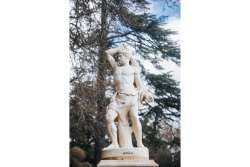
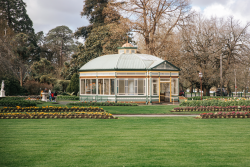
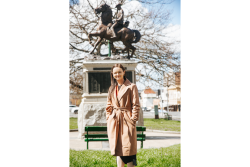
...a series of creative engagement initiatives — including guided walks, maps, and interactive activities such as a photo exhibition of the collection that invited audiences to place stickers on statues they had spotted around Ballarat — to reconnect the community with the collection.
Impact and outcomes:
The Public Art Conservation Management Program has delivered measurable and meaningful outcomes for the City of Ballarat, its residents, and its cultural legacy.
In the 2024–25 financial year alone, five major conservation projects were completed, including the restoration of Hercules, the Stoddart Collection, the Queen Victoria Memorial, the Peterson Fountain, and the Boer War Memorial. These works have visibly improved the condition and presentation of key public artworks, contributing to civic pride and cultural continuity.
The emergency response to the vandalism of the Prime Ministers’ Avenue busts demonstrated the program’s agility and effectiveness. Within weeks, the damaged busts were re-cast and restored, and the public narrative was successfully reframed to focus on resilience and restoration. This swift action reinforced community confidence in Council’s stewardship of cultural assets.
The program has also strengthened community engagement. The restoration of Hercules was made possible through a historic philanthropic donation — the first of its kind for Ballarat’s public art program. This milestone reflects growing public investment in cultural heritage and sets a strong precedent for future partnerships.
Internally, the program has improved operational efficiency and transparency. The digital database and condition tracking system enable more effective planning, reporting, and budgeting. The prioritisation matrix ensures resources are allocated based on urgency and significance, aligning conservation efforts with council’s strategic goals.
Accessibility and inclusion are embedded throughout the program. Conservation works are planned with careful consideration of heritage values, public safety, and cultural sensitivity — including consultation with First Nations stakeholders where relevant.
The outcomes of this program are not only physical, but cultural and relational. It has elevated public art conservation from a reactive task to a strategic civic responsibility, ensuring Ballarat’s public art continues to enrich the city for generations to come.
Scalability:
The Public Art Conservation Management Program offers a scalable and replicable model for local government asset management, particularly in the cultural sector. Its success lies in a structured yet adaptable framework — combining digital infrastructure, prioritisation tools, and strategic budgeting to manage a diverse and historically significant public art collection.
The program’s foundation — a comprehensive digital database, condition assessments, and valuation — can be readily adopted by other councils seeking to manage their own collections. The prioritisation matrix enables transparent decision-making and resource allocation, making it suitable for collections of any scale.
The program also demonstrates how a small team — in this case, a single Public Art Officer — can deliver high-impact outcomes through strategic planning, cross-departmental collaboration, and external partnerships. This lean delivery model is particularly relevant for regional councils with limited resources.
While the City of Ballarat’s public art collection could easily require over $1 million annually to fully restore and maintain every asset, such expenditure is not sustainable. The program’s strength lies in its ability to deliver meaningful outcomes through targeted investment, prioritising works based on urgency, significance, and public value. The inclusion of a rolling budget for reactive conservation ensures resilience and responsiveness, while the successful integration of philanthropic funding — for example, the restoration of Hercules — showcases how community engagement can be leveraged to support public asset maintenance.
The program aligns with several UN Sustainable Development Goals, including:
- Goal 11: Sustainable Cities and Communities
- Goal 17: Partnerships for the Goals
- Goal 12: Responsible Consumption and Production.
By embedding conservation into strategic planning and civic storytelling, the program transforms maintenance from a reactive task into a proactive cultural investment — offering a blueprint for councils across Victoria and beyond.