
Innovation Case Study: Shaping the Future of Noojee
Baw Baw Shire Council
Building Economic Resilience and Community Leadership
Shaping the Future of Noojee is a four-year project (August 2022 – December 2026) supporting economic diversification and resilience following the cessation of native timber harvesting. Led by a dedicated team, it focuses on local job creation, business and product collaborations, increased tourism, and stronger community connection — helping Noojee transition from its timber-town identity to a more sustainable economic future.
2025 MAVlab Innovation Awards Finalist:
The Fin-novation Award for Financial Ingenuity, supported by Finpro and The Connector Award for Community Inclusion and Cohesion, supported by NBN Local.

Project statistics:
- Council team: 2 staff including Project Manager and Project Support Officer
- Duration: Project commenced August 2022 and will end December 2026 (3 years and 3 months).
Project goals:
- Support Noojee and surrounding communities to prepare for the cessation of native timber harvesting by strengthening economic resilience and diversification.
- Foster innovation and investment in sustainable industries that create long-term economic opportunities.
- Create local employment opportunities, with a strong focus on supporting displaced forestry workers and their families.
- Strengthen community connectedness and social cohesion by creating the conditions for inclusive participation and collaboration.
- Establish and support place-based working groups to lead the exploration, development, and delivery of locally identified opportunities.
- Build community capacity and support the formation of local leadership groups to represent, advocate for, and guide the future of the community.
Challenge and context:
The cessation of native timber harvesting resulted in the loss of a significant number of direct and indirect jobs in the region. In 2016, Agriculture, Forestry and Fishing accounted for 41% of local employment. The end of the industry was perceived by many as further neglect of the region, and strong resentment emerged towards all levels of government. This followed the progressive shutdown of key community assets, including the local primary school and library.
This distrust of government was compounded by a perception within the community that Council “don’t do anything.” While multiple project consultations had taken place, few tangible outcomes were perceived by residents. This was largely due to a mismatch between community expectations and project results, further reinforcing frustration and disengagement.
The population of the area peaked in the 1950s and 1960s and has steadily declined since. The community has an older demographic, with 47% of residents aged over 60. Education levels and labour force participation are lower than average, and the region’s median weekly income is approximately 60% of the Victorian median. With limited local job diversity, the area has struggled to attract young families and significant business investment. Additionally, the availability of relatively cheap real estate has resulted in around 30% of properties being used as holiday homes, further limiting opportunities for population renewal.
Community division reached a crisis point following a public meeting about a proposed logging harvest site in the town five years prior to the commencement of this project. Since that meeting, residents have increasingly identified as either pro- or anti-forestry, with opposing political views continuing to entrench divisions. This breakdown in communication led to misunderstandings, assumptions, and rumours, further fracturing the community and creating an unwillingness to work collaboratively.
Solution and innovation:
The dedicated project team (1.5 EFT), funded through a Forestry Transition Grant, applied a Smart Specialisation Strategy with a strong focus on place-based leadership and the inclusion of the Quadruple Helix — community, industry, government, and academia — in decision-making.
The team was given full discretion to determine how best to work with the community, rather than relying on traditional Council engagement approaches. This flexibility enabled community members, many of whom had previously experienced power imbalances and a lack of “voice” in decision-making, to become valued contributors and equal partners in discussions about the region’s future.
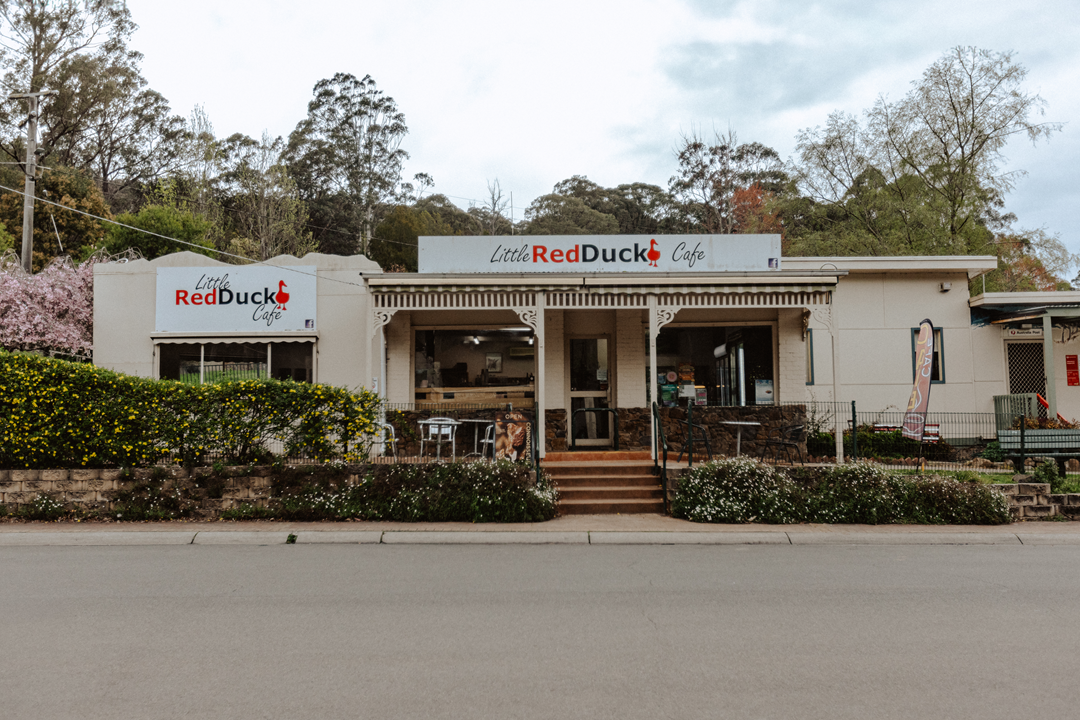
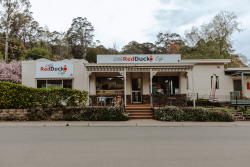
To build trust and visibility, the team was based in the local café/post office, widely regarded as the community hub. Becoming recognised and accepted as “regulars” was pivotal in building relationships and humanising government staff. This presence helped break down perceptions of Council staff operating from an “ivory tower” and the belief that Council did not understand the community or its needs.
The informal setting encouraged relationship-building and allowed residents to ask questions in a familiar, relaxed environment, removing physical and psychological barriers and reducing the sense of “us versus them.” Once trust was established, formal community interviews commenced, typically lasting around 90 minutes. These interviews began with established contacts and expanded organically, as word-of-mouth recommendations from neighbours prompted others to request participation.
Interviews were conducted wherever participants felt most comfortable, including in their homes. This approach enabled clear explanation of the project’s intent, deeper understanding of community values, and exploration of perceived opportunities and challenges for the region, as well as aspirations for the future. Discussions of the “why” often reshaped the “what,” as assumptions and misinformation were clarified in real time.
Communication was intentionally informal and shaped by community feedback. Information was shared through the community Facebook page, project newsletters delivered to letterboxes for those without computer access, and in-person engagement at community events.
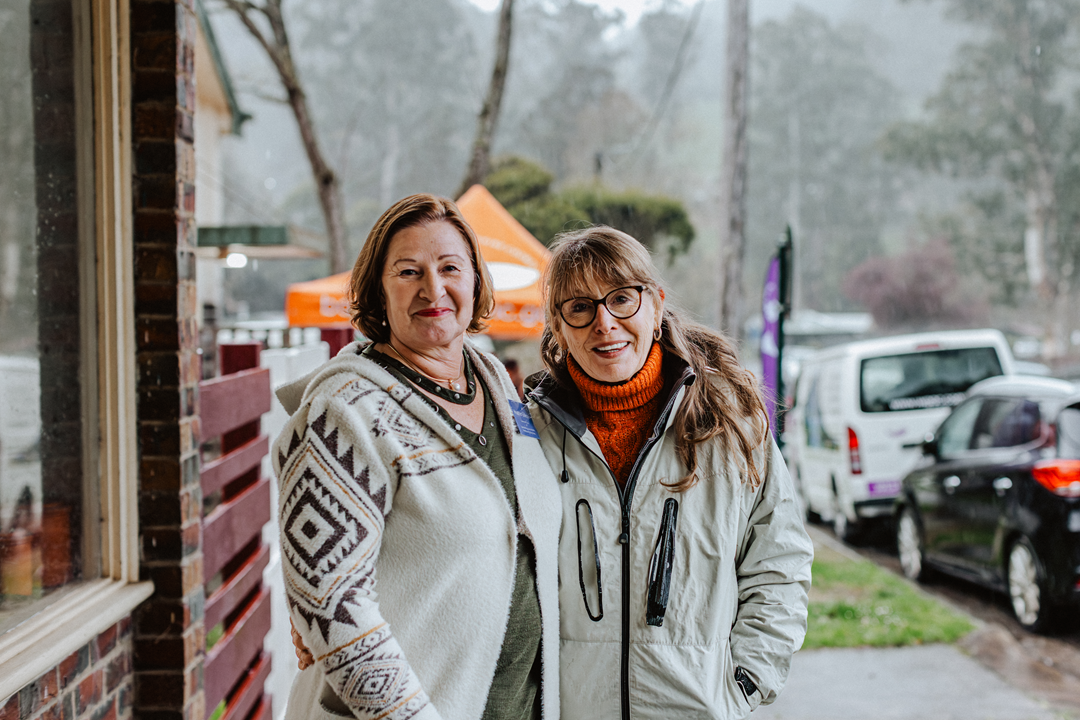
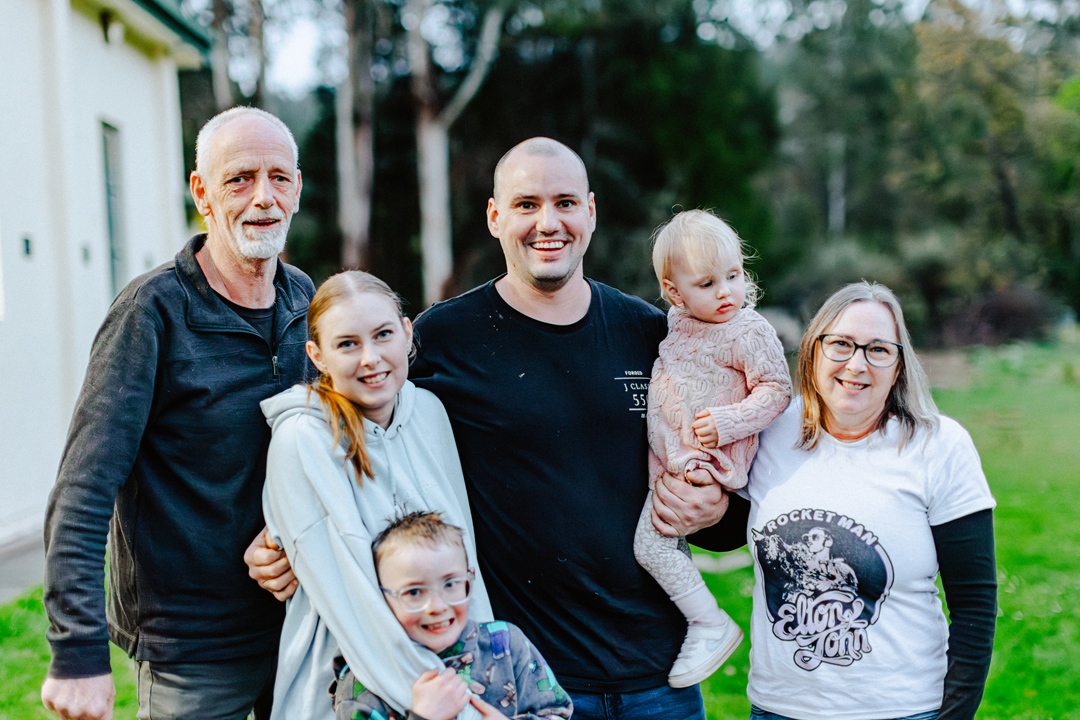
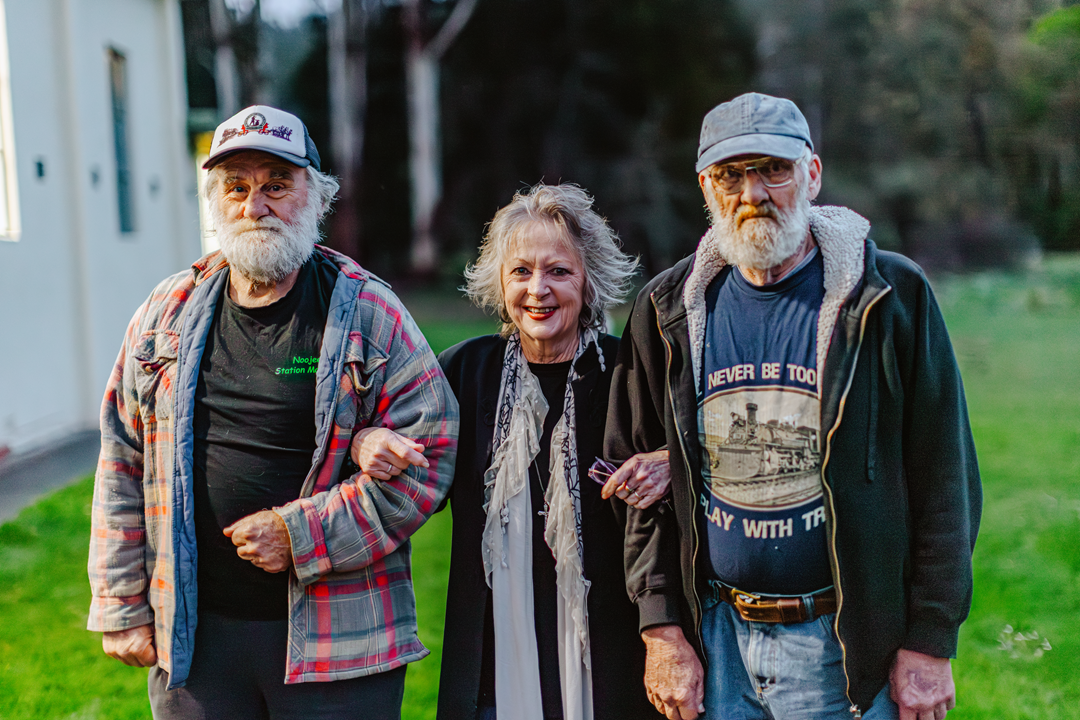
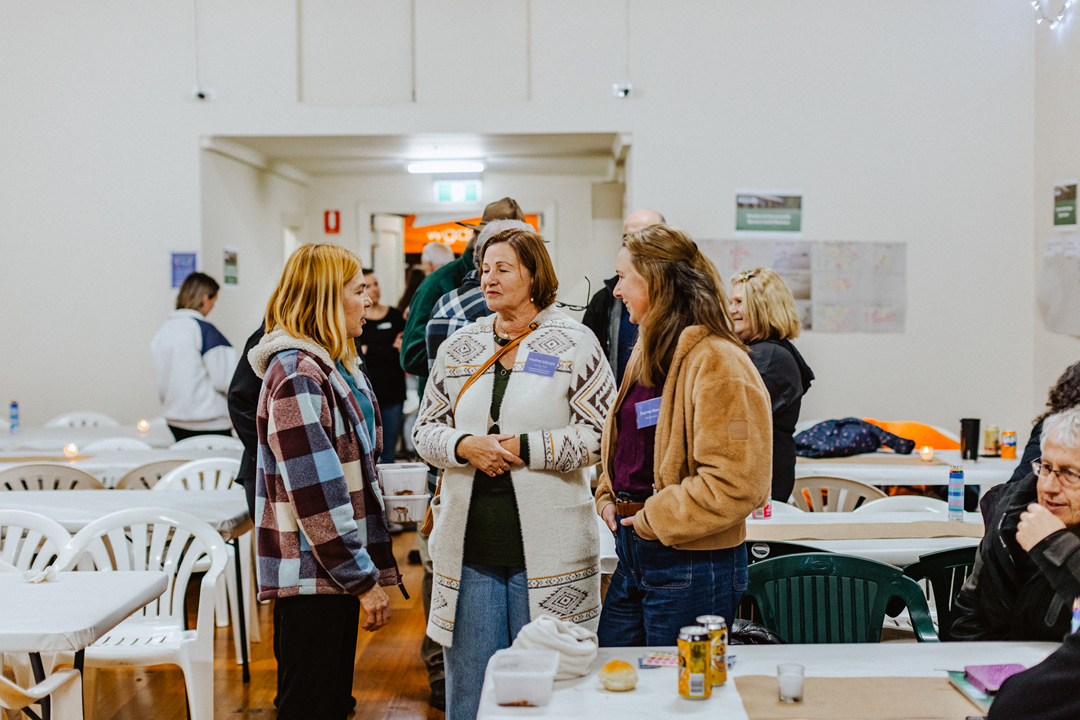
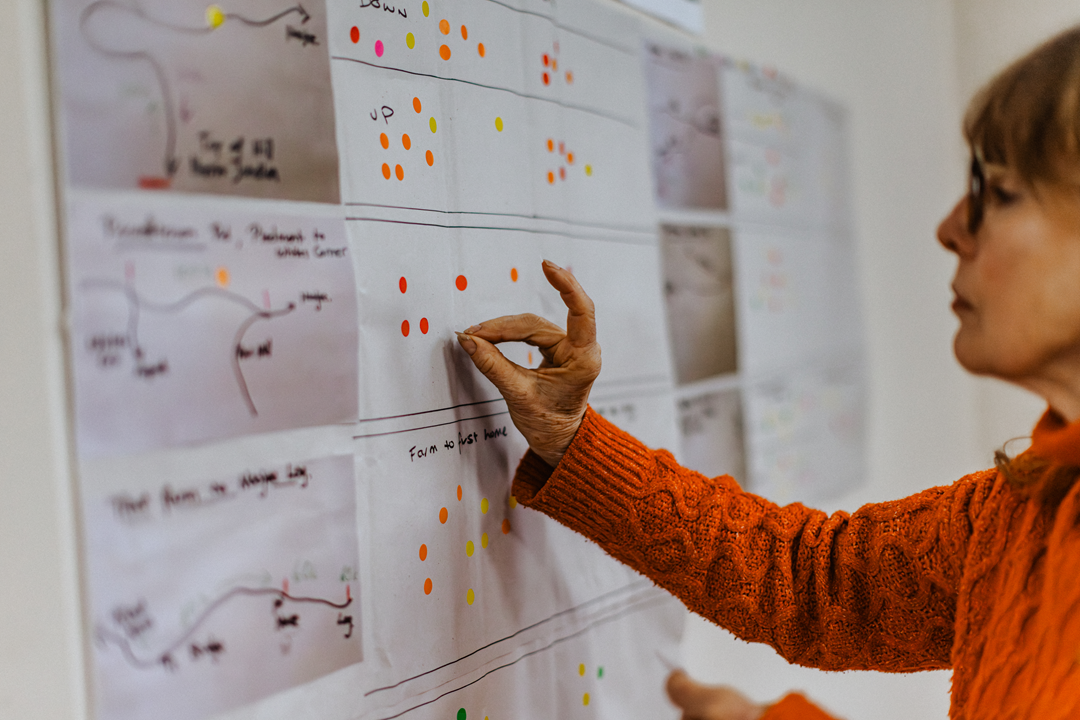
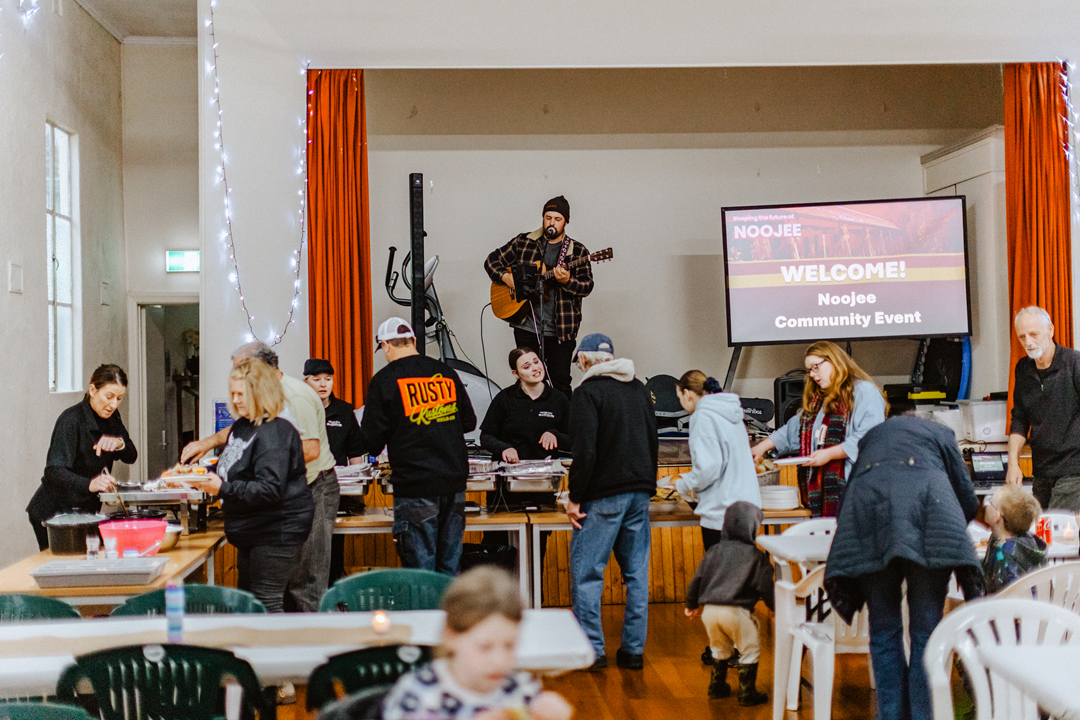
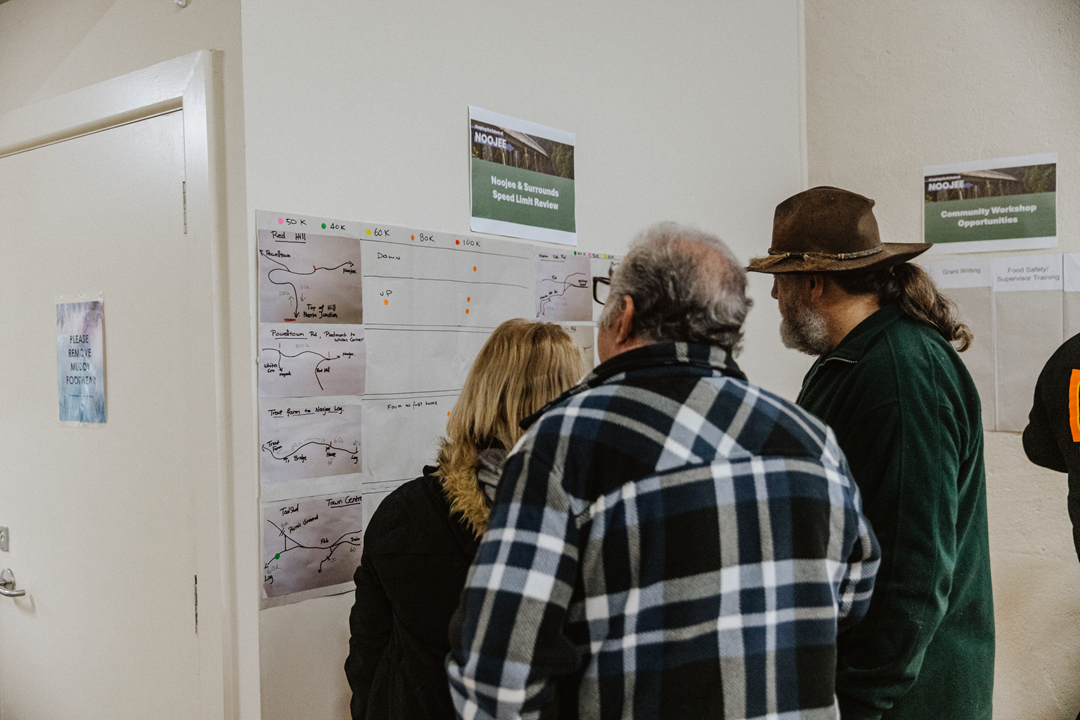
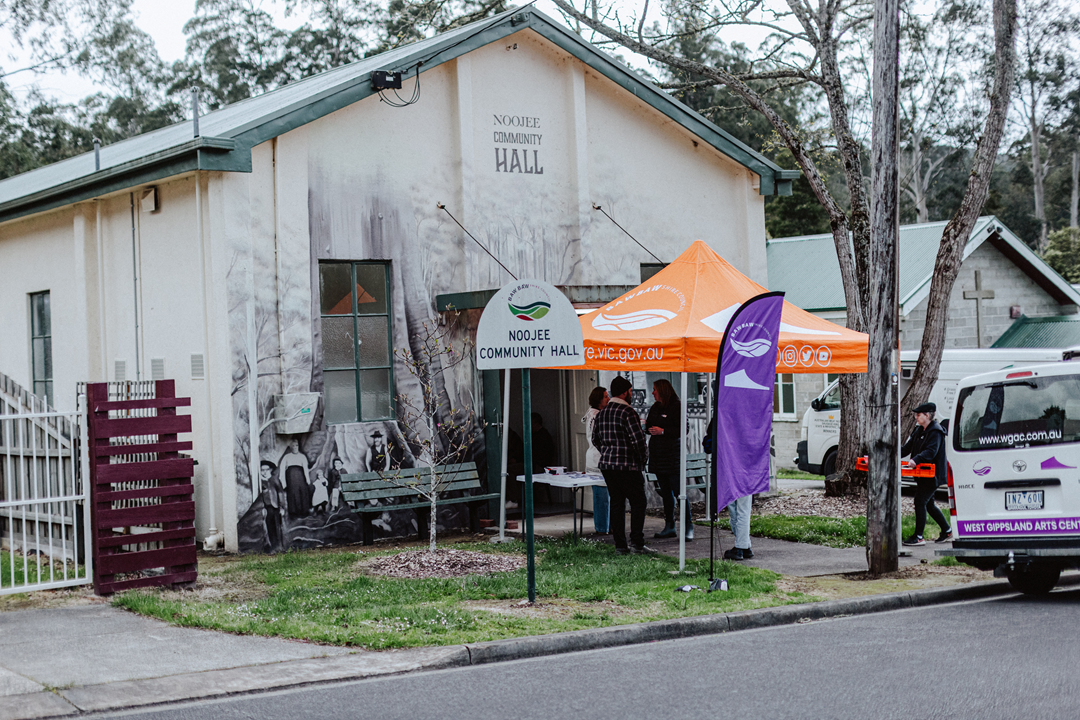
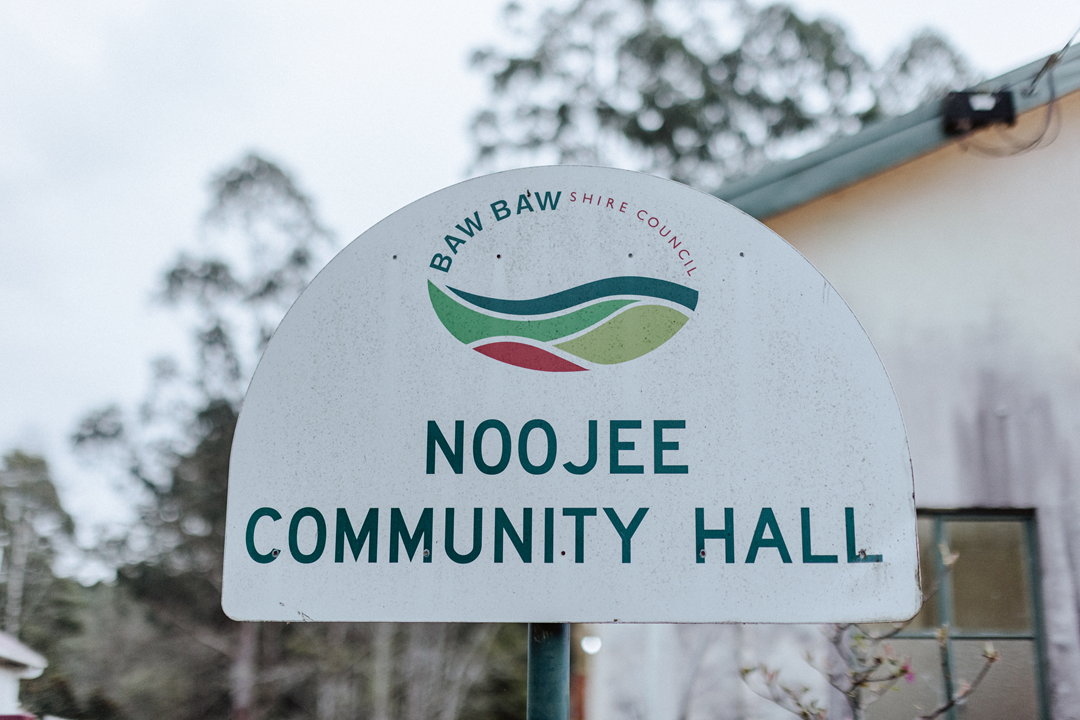
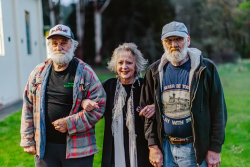
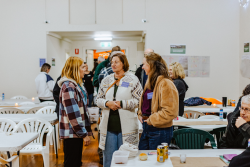
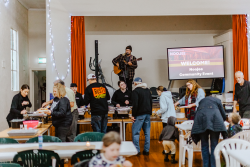
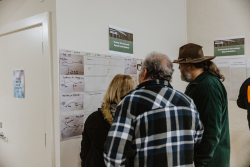
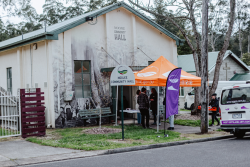
These gatherings [quarterly community events] have had a substantial positive impact on people’s sense of connectedness, reduced isolation, and enhanced support networks for previously isolated community members who often reported poor mental health.
Impact and outcomes:
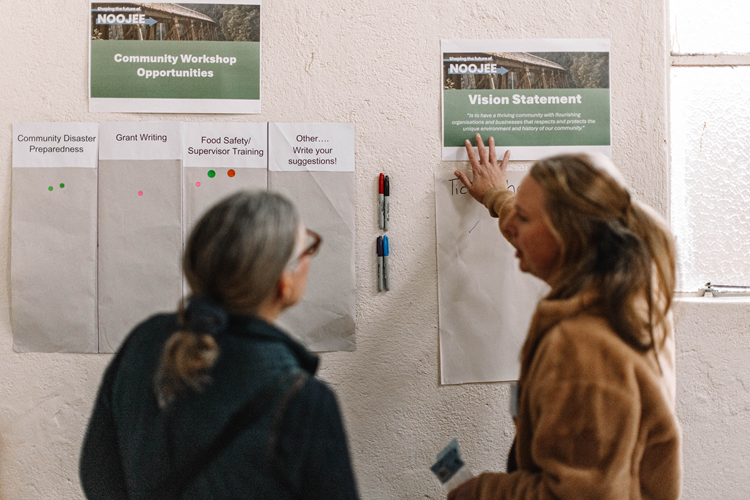
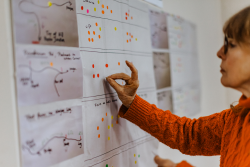
The results from the interviews, combined with a desktop analysis, were reported back to the community. The report identified five opportunities for sustainable economic development. Working Groups, with membership drawn from the local community, local businesses, industry, researchers, and local and state government, were established for each opportunity. Since 2023, these groups have met monthly in Noojee — emphasising the community as a pivotal contributor and encouraging active participation. The groups are responsible for researching, testing, and refining the opportunities, while also acting as conduits to the wider community.
The Project Team works closely with the community to ensure project language is always accessible and to identify opportunities for community capacity-building, enabling residents to become leaders. A Governance Group has also been established, which will continue the legacy of the project beyond December 2026 — with the community now empowered and connected to the networks needed to progress the opportunities.
Every quarter, a community event is organised to bring everyone together, share updates on the project, and strengthen community cohesion. Events average 80+ participants and have resulted in significantly improved social connections, including employment opportunities and business collaborations. These gatherings have had a substantial positive impact on people’s sense of connectedness, reduced isolation, and enhanced support networks for previously isolated community members who often reported poor mental health.
This place-based, community-centred approach has enabled the project team to develop a strong social licence within the community and improve perceptions of local and state government. Three years into the project, applications from community members to join Working Groups continue, community advocacy and promotion remain strong, and there is a renewed sense of community pride and ownership.
Scalability:
By following Smart Specialisation Strategy and ensuring the Quadruple Helix (community, industry, government and academic) were supported to collaborate and create innovative solutions together, we significantly improved the capability and capacity of community members, who previously felt unseen and unheard.
Integrating community groups into the project as ‘team members’ eliminated the assumptions and scepticism that usually exist from the community regarding Council activities. By addressing the ‘elephant in the room’ from the beginning, the project built trust early on, resulting in robust community relationships. With the community as active partners rather than as customers, social license was developed quickly and enabled Council to better understand the problems and co-design appropriate solutions.
Community members can now effectively advocate for their community, understand how to best navigate different levels of government, and recognise the importance of making data-informed decisions. This has enabled the community to continue the legacy of the work undertaken and fostered a willingness to work in partnership with Council on future activities.
During the project, misunderstandings and assumptions by the community occasionally created resentment. By having staff available who were considered ‘one of them’, the team could identify and clarify misinformation quickly. When the community understood why decisions were made, they could appreciate the reasoning—even if it wasn’t the outcome they sought.
Community working group members developed their professional skills through their involvement in the project and became project ambassadors, encouraging others to also become active participants. This has fostered an environment of momentum for Council activities, rather than Council responding to a passive and resentful ‘customer’.
Community engagement can be measurably improved through a more community-centred, place-based approach. This requires support from management to approach consultation in non-traditional ways and to be less office-based.