
Innovation Case Study: Soft Plastics Circular Contract
Brimbank City Council
Turning Soft Plastics into Streets: A Circular First for Brimbank
Launching in August 2025, Brimbank’s Circular Plastics Project will be Melbourne Metro’s first permanent council-led soft plastics recycling program with a closed-loop guarantee. In partnership with Close the Loop, collected plastics will be turned into asphalt additive for local roads. The program targets landfill diversion, illegal dumping, and community participation, with success measured by diversion, uptake, and engagement.
2025 MAVlab Innovation Awards Finalist:
The Systems and Cycles Award for Regenerative Design, supported by RMIT University.

Project statistics:
- Team: Approximately 6 core team members
- Duration: 14 months total, June 2024 - ongoing
- Key phases:
- Internal planning and decision-making: June 2024
- Engineering and infrastructure works commenced: October 2024
- Waste Operations team mobilisation: May 2025
- Public launch as an ongoing service: 13 August 2025.
Project goals:
- Divert soft plastics from landfill through convenient local drop-off services.
- Establish Melbourne Metro’s first council-led soft plastics recycling program, buying back the converted material for use within the municipality.
- Partner with Close the Loop to process materials into high-performance asphalt, used in Brimbank roads.
- Demonstrate scalable circular economy solutions at the local government level.
- Reduce illegal dumping by providing accessible recycling alternatives for bulky and problematic plastics.
- Empower the community to engage in the circular economy through education and user-friendly infrastructure.
Challenge and context:
Soft plastic is a ubiquitous material in everyday life, from food packaging to postal satchels, yet it remains one of the most problematic waste streams for councils to manage. It frequently ends up in the wrong bin — overflowing general waste, contaminating kerbside recycling, and disrupting systems not designed to process it. Most councils have limited recovery options, leaving residents with few trusted alternatives.
While offering soft plastics recycling is a worthwhile initiative on its own, Brimbank set out to close the loop. This project isn’t just about collection — it’s about creating a truly circular system. Through a Circular Contract with Close the Loop, Brimbank collects soft plastics, processes them into TonerPlas (a high-performance asphalt additive made from recycled soft plastics and toner cartridges), and uses the material in local road construction and maintenance. TonerPlas improves road durability while embedding recycled content into essential infrastructure, turning a waste problem into a long-term community asset.
This will be Melbourne Metro’s first permanent council-led soft plastics recycling program that guarantees both local processing and local reuse — a genuine circular economy milestone at the municipal level.
The project was developed with no dedicated budget, instead leveraging existing procurement and operational streams. Traditional materials were swapped for circular alternatives, embedding innovation without increasing costs. Success depended on strong internal collaboration across Climate Emergency, Waste Operations, and Special Projects teams, working cross-functionally without external consultants or contractors.
With community trust in recycling shaken following the collapse of major take-back schemes, this initiative provides a tangible, local solution that restores confidence. By offering a free, permanent service with a guaranteed and visible end use, Brimbank is making circular economy action both accessible and credible — turning recycling from a promise into something residents can see and believe in.
Solution and innovation:
Brimbank's Circular Plastics Project reimagines soft plastics recycling at the local level — not just as a collection problem, but as a systems opportunity. Rather than sending materials away with no clear outcome, Brimbank designed a circular model that ensures soft plastics are collected, processed, and reused within the municipality.
The solution was delivered in four key steps:
- Reframing the problem: Instead of seeking new funding, existing budgets were leveraged by replacing traditional road surfacing materials with TonerPlas, a recycled asphalt additive.
- Cross-departmental collaboration: Climate Emergency, Waste Operations, and Special Projects worked closely to align procurement, infrastructure, and operational planning.
- Embedding infrastructure: Soft plastics drop-off was added to Brimbank's Resource Recovery Centre with no change to resident fees, keeping access free and inclusive.
- Circular Contract activation: Through a partnership with Close the Loop, Brimbank committed not just to collect soft plastics, but to buy back the converted material and use it locally—becoming Melbourne Metro's first council to guarantee end-to-end circularity.
What makes this approach innovative isn’t just the material technology; it’s the operating model. The initiative fits seamlessly into existing services, proves that circularity doesn’t always require extra funding, and builds trust with residents by visibly closing the loop. It represents a shift from “what can we collect?” to “what can we repurpose and reuse?”
By removing cost barriers, embedding the service into an established site, and providing a trusted outlet for a widely misunderstood material, the solution is both accessible and scalable. It sets a replicable precedent for other councils, demonstrating how local government can lead on circular economy innovation through collaboration, creativity, and practical, place-based action.


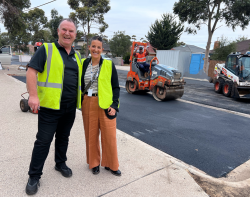
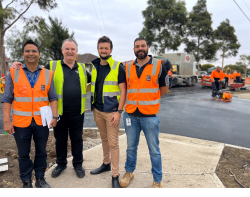
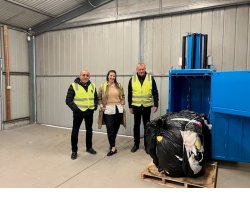
The initiative fits seamlessly into existing services, proves that circularity doesn’t always require extra funding, and builds trust with residents by visibly closing the loop. It represents a shift from ‘what can we collect?’ to ‘what can we repurpose and reuse?’
Impact and outcomes:
Though Brimbank's Circular Plastics Project officially launches in August 2025, the outcomes are already tangible, and future impacts are designed to scale.
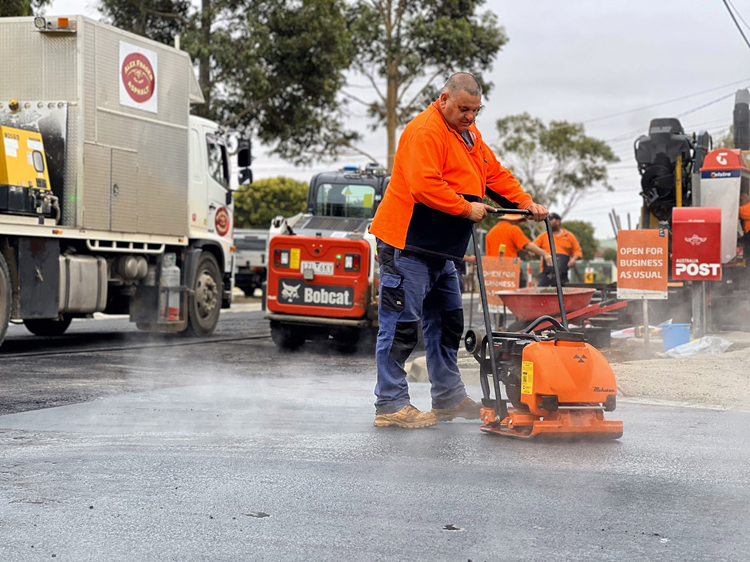
Operationally, the infrastructure is in place: a permanent soft plastics drop-off point at the Resource Recovery Centre has been established with no cost to residents. Importantly, Brimbank has already used TonerPlas—a recycled asphalt additive made from soft plastics and toner cartridges—across three local roads. This early application laid the foundation for a circular, tonne-for-tonne model: for every tonne of TonerPlas purchased, Close the Loop commits to taking back an equivalent tonne of Brimbank-collected soft plastics. To date, 12 tonnes of soft plastics have already been used in Brimbank's road construction through TonerPlas, enabling the council to accept 12 tonnes of soft plastics for recycling under the tonne-for-tonne agreement. This represents a significant volume for a community-based program and provides a powerful proof point for residents that their efforts directly contribute to local infrastructure, turning household waste into a lasting public benefit.
Systemically, the project has embedded circularity into existing council operations without requiring additional budget. Traditional road surfacing spend was redirected to recycled alternatives, demonstrating that circular innovation can be achieved through procurement reform rather than new funding. The model is now embedded, with TonerPlas continuing to be used in Brimbank roadworks, ensuring the soft plastics stream remains recyclable long-term.
Socially, the project helps restore community trust in soft plastics recycling following the collapse of REDcycle. By offering a free, permanent service with a guaranteed local end use, the initiative is accessible and credible, particularly for residents in apartments or on low incomes who previously had no viable disposal option.
Impact is measured through diversion volumes, community uptake, procurement records, and road kilometres resurfaced with recycled content. Early results have already attracted interest from other councils, demonstrating the replicable potential of this circular economy approach.
Scalability:
Brimbank's Circular Plastics Project is intentionally designed to be scalable, replicable, and practical for other councils, particularly those seeking low-cost, low-barrier entry points into circular economy action.
What makes this model scalable is its simplicity: it doesn’t require kerbside reform, major capital investment, or dedicated new funding. Instead, it integrates circular procurement into existing operations by replacing traditional road surfacing materials with TonerPlas, a recycled alternative made from soft plastics and toner cartridges. Councils can adopt the same tonne-for-tonne buy-back agreement with Close the Loop, ensuring the materials they recycle are converted and reused locally in public infrastructure.
Brimbank’s internal learnings—including infrastructure setup, OH&S planning, cross-department collaboration, and contractor engagement—are being documented and shared to support transferability. As an always-on drop-off model, the program is particularly suited to municipalities with existing Resource Recovery Centres, and can be rolled out without waiting for state or federal reform.
Within council, the approach can be extended to other waste streams and departments by applying the same principle: reframe the problem through procurement, swap linear processes for circular alternatives, and redirect existing spend to drive environmental and social value.
This model supports several UN Sustainable Development Goals, including:
- SDG 11: Sustainable Cities and Communities – by embedding recycled materials in infrastructure
- SDG 12: Responsible Consumption and Production – through procurement-led circularity
- SDG 13: Climate Action – by reducing landfill, transport emissions, and virgin material use.
By sharing this approach through council networks, circular economy forums, and MAV channels, Brimbank is committed to helping scale this innovation across Victoria, leveraging the collective power of local government to create lasting, place-based impact.