
Innovation Case Study: The Harbour: Social Housing Pilot
Darebin City Council
Darebin walks the talk: a groundbreaking lease redefining social housing
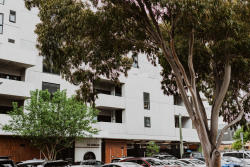
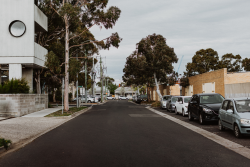
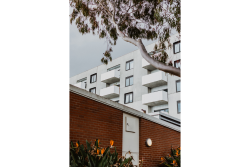
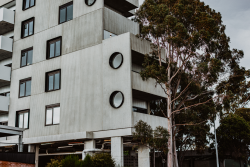
This project is piloting the long-term lease (50 years) of underutilised council-owned land to deliver social housing. Following extensive community engagement and an expression of interest process, the site was leased to a community housing provider, Housing Choices Australia. Completed in August 2023, the development delivers 39 high-quality, sustainably designed social housing dwellings by Six Degrees Architects while retaining public parking and trees to support long-term community housing needs.
2025 MAVlab Innovation Awards Finalist:
The Refuge Award for Innovation in Housing and Safe Spaces for Community, supported by Neighbourhood Houses Victoria.
Project statistics:
- 1-2 council staff
- Project duration: 5 years from inception to completion
- Milestones: Community engagement in 2018, followed by a robust and extensive procurement process, with leasing of the land in 2022, and completion date of August 2023.
Project goals:
- Test the feasibility of a long-term (50-year) lease model to deliver social housing on underutilised Council land
- Trial innovative affordable housing approaches that allow Council to retain ownership of its land
- Increase social and affordable housing in response to Darebin’s housing stress and support the municipality’s diverse community of more than 150,000 residents from 148 countries
- And demonstrate how all levels of government can actively contribute to expanding affordable housing supply.
Challenge and context:
There is a significant and growing need for affordable housing in Darebin. Almost 10,700 households require housing assistance, and with approximately 3,600 existing social housing dwellings, there is a shortfall of more than 7,000 affordable homes. This gap is projected to increase to over 11,000 dwellings by 2036. Allowing Council-owned land to be developed for affordable housing can directly help address this need and improve the wellbeing of people in low-income households.
Darebin actively explored opportunities to use its land holdings to deliver social housing and take direct action in response to the housing crisis by providing well-designed and sustainable affordable housing options. Aware that its landholdings are limited, Council sought ways to develop land for housing while retaining ownership so it could continue serving the community in perpetuity.
In 2018, when Council launched the expression of interest process, this pilot project was the first of its kind in local government, testing a long-term lease model for affordable housing delivery. Council initiated the project at a time when community support was not guaranteed, and both feasibility and market interest were uncertain.
Council also had to consider its own risk appetite and the trade-offs required to balance ambition with practicality. It aimed to retain public car parking at ground level, preserve significant trees, require high sustainability standards and architectural merit, and ensure 100% social housing for the lowest-income and marginalised groups — while keeping the land in public ownership. Success was far from certain, but Council proceeded with determination.
Innovation and solution:
This residential development has delivered architect-designed, environmentally sustainable affordable homes for a minimum of 50 years, using a community housing model that supports residents and strengthens community connections.
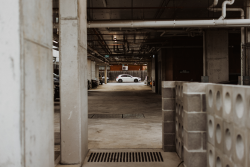
Council leased the land to Housing Choices Australia to deliver 39 dwellings with high sustainability ratings (5 Star Green Star and 7 Star NatHERS), while also retaining significant trees and public parking on the ground floor.
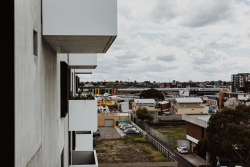
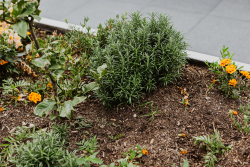
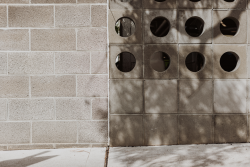
Designed by award-winning Six Degrees Architects and Simon Ellis Landscape Architects, the building has become a celebrated landmark in the Preston Activity Centre, with images featured in state government planning and design policies and guidelines.
Housing Choices Australia secured funding through the Victorian Government’s Social Housing Growth Fund, along with a $1 million grant from the Lord Mayor’s Charitable Foundation.
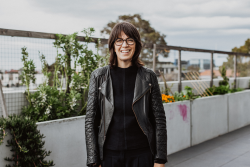
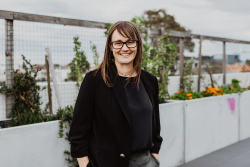
All homes have been fully leased to applicants from the Victorian Housing Register, prioritising people on low incomes and people with disabilities. Housing Choices provides property management and community-building programs, with placemaking initiatives and a communal rooftop garden helping to foster social connection, belonging, and enjoyment of place.
A key benefit of this local government ground lease model is that the land remains in public ownership in perpetuity. After 50 years, the land and building return to Council unless a further lease is arranged. This approach enabled Council to ensure high-quality design and sustainability outcomes while helping make the city a more affordable and inclusive place to live by supporting increased supply of affordable housing to meet critical community need.




The project laid important groundwork for how councils can leverage public land for social benefit and has demonstrated the viability of this model for other local governments.
Impact and outcomes:
Council engaged the community in 2018 to understand whether there was support for social housing at this location. A total of 309 submissions were received, showing broad support (39%) alongside more localised opposition (61%) relating to concerns about safety, density, loss of car parking, and potential land devaluation.
Council considered an evidence-based analysis of these concerns to understand the underlying fears and assess whether they had a factual basis. This process enabled Council to proceed with the project on the basis of net community benefit, while applying conditions to mitigate issues raised in submissions, such as car parking and design.
To help trial innovative affordable housing models, additional funding was required, and Council partnered with the Lord Mayor’s Charitable Foundation, securing a $1 million grant.
Council undertook an Expression of Interest process to test market interest, followed by a Request for Proposal stage requiring detailed submissions aligned with Council’s requirements. These included use of the site for social housing, provision of ground-floor public car parking, and delivery of high-quality sustainability and design outcomes. A probity advisor was appointed to oversee the process, and an evaluation panel was formed.
Council awarded the lease to Housing Choices Australia and collaborated with them to finalise the lease, secure planning approvals, and obtain additional funding. Throughout this period, a range of challenges were resolved, including the complexities of a long-term lease model, risk mitigation for both parties, and unforeseen planning and development issues.
The Harbour lease was the first of its kind for local government. It successfully tested the viability of developing social housing through a long-term lease model in which Council retained control over design quality and sustainability while prioritising low-income and marginalised communities.
Scalability:
The Harbour, which tested the use of a long-term ground lease model for affordable housing delivery, was the first local government-led initiative of its kind and has been a significant success for Darebin. The project laid important groundwork for how councils can leverage public land for social benefit and has demonstrated the viability of this model for other local governments.
Following Darebin’s lead, ground lease models have gained greater acceptance within the state government and the affordable housing sector. The approach is now recognised as a replicable option for councils seeking to deliver affordable housing without permanently divesting their land assets. As an alternative to traditional subsidised sale or land gifting, the model supports long-term community benefit while maintaining responsible asset stewardship.
The pilot also showed that a well-structured lease arrangement — even within the constraints of a 50-year maximum lease term — can attract strong interest from affordable housing providers while allowing flexibility to secure funding at later stages.
As the model continues to mature, there is an opportunity for the sector to develop a shared framework or set of principles that councils can adopt to collectively build on the pilot’s success. The project has already attracted attention across Victoria, with Darebin receiving substantial interest from both regional and metropolitan councils. By sharing learnings from the pilot, other councils have been able to apply the model to achieve their own affordable housing outcomes (UN SDGs 17 & 11).
The collaborative nature of the project — bringing together Council, not-for-profit partners, housing associations, and the state government — demonstrates an innovative and sustainable approach for reducing inequality through the provision of affordable, secure, long-term housing for low-income and vulnerable people (SDG 10).