
Innovation Case Study: Timber Transition: Upper Yarra Local Development Strategy
Yarra Ranges Shire Council
From Forest Floor to Innovation Hub: The Upper Yarra Transformation
Launched in mid-2023, the Upper Yarra Local Development Strategy is a three-year initiative empowering communities impacted by the timber industry’s closure. Through Smart Specialisation and Quadruple Helix collaboration, the project supports locally led Innovation Working Groups to create job-generating projects that build long-term township viability.
2025 MAVlab Innovation Awards Finalist:
The Stronger Together Award for Council Collaboration, supported by JLT Public Sector.
Project statistics:
- Team: 2 dedicated staff day to day, supported by a broader Council economic development team
- Timing:
- 2023 (Mid–Late): Initiation & Design
- Early 2024: Innovation Working Groups (IWGs) Formation & Early Projects
- Late 2024–2025: Project Implementation & Ecosystem Growth
- 2026–April 2027: Sustainability Planning & Transition.
Project goals:
- Respond to the sudden closure of Victoria’s native timber industry and its impact on Upper Yarra communities.
- Prevent economic decline by identifying locally grounded, future-focused opportunities.
- Empower community-led innovation through the Smart Specialisation Strategy (S3).
- Foster strong collaboration via the Quadruple Helix model—community, business, government, and academia.
- Build long-term resilience through interconnected projects and capacity development.
- Shift from deficit-based thinking to asset-based development, inspiring hope and community ownership.
- Establish a replicable framework for other regions undergoing economic transition across Australia.
Challenge and context:
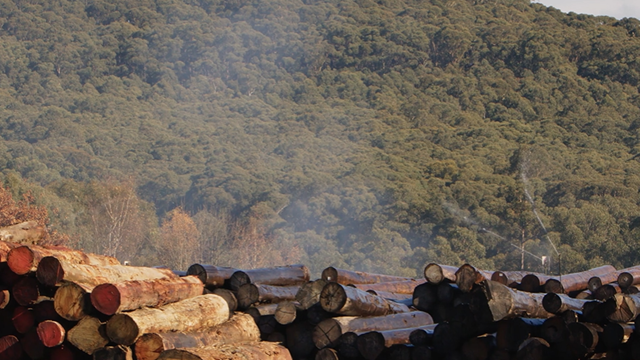
When the Victorian Government brought forward the end of native timber harvesting from 2030 to January 2024, the Upper Yarra region faced a sudden and profound economic shock. Timber wasn’t just an industry — it was a way of life, deeply embedded in the identity, economy, and social fabric of the region. Communities had just eight months to prepare for a transition they had expected to take seven years.
The challenge was urgent and complex — how to support vulnerable, often isolated communities through a rapid economic shift, while preserving dignity, identity, and hope. Many residents had limited exposure to alternative industries, and trust in external solutions was low. Traditional economic development models, focused on attracting outside investment, risked overlooking local strengths and voices.
In response, Yarra Ranges Council and RMIT University co-designed an innovative, community-led approach. Using the Smart Specialisation Strategy and a Quadruple Helix engagement model, the project brought together community, business, government, and academia as equal partners. This inclusive model empowered local people to lead the change, not just adapt to it.
The project prioritised vulnerable cohorts, long-term timber workers, small business owners, and young people. By focusing on building local capacity, creating new employment pathways, and fostering a sense of ownership, Innovation Working Groups became engines of hope, generating projects in renewable energy, eco-tourism, and sustainable agriculture.
Despite the tight timeframe, geographic isolation, and political sensitivity, the project succeeded because it trusted the community to lead. It turned disruption into opportunity, and despair into determination. The Upper Yarra story proves that when communities are empowered, they don’t just survive change — they shape it.
Solution and innovation:
Faced with a sudden industry collapse, the Upper Yarra Local Development Strategy reimagined economic development as a community-led, innovation-driven process. Rather than imposing external solutions, we empowered locals to lead the transformation, turning disruption into opportunity.
Our approach was grounded in the Smart Specialisation Strategy (S3), adapted for the first time to an Australian regional context. We combined this with a Quadruple Helix engagement model, bringing together community, business, government, and academia as equal partners. This inclusive structure ensured that solutions were not only technically sound but socially embraced.
We launched five Innovation Working Groups (IWGs), each focused on a key opportunity area: renewable energy, eco-tourism, transport, artisanal agriculture, and heritage building revitalisation. These groups operated like early-stage enterprises, developing feasibility studies, business cases, and funding proposals. Importantly, they were open to all, with targeted support for vulnerable cohorts, including displaced timber workers, young people, and small business owners.
Workshops used the Entrepreneurial Discovery Process to surface local knowledge and systematically test ideas. Digital tools, GIS mapping, and collaborative platforms ensured accessibility, even in geographically dispersed communities.
What makes this approach different is its shift from deficit-based planning to asset-based development. We didn’t ask, “What have we lost?” — we asked, “What can we build on?” This mindset sparked a wave of optimism and ownership.
The result is a replicable, scalable model for local government: one that centres community voice, builds economic resilience, and delivers climate-positive outcomes. It’s not just a new way of doing economic development — it’s a new way of thinking about who leads it. The approach explicitly required communities to think differently, moving from industry-replacement thinking to innovation ecosystem building.
We didn’t ask, “What have we lost?” — we asked, “What can we build on?” This mindset sparked a wave of optimism and ownership.
Impact and outcomes:
Socially, the project has shifted the community mindset from decline to innovation. Vulnerable cohorts, including displaced timber workers and small business owners, have been actively engaged, with inclusive structures ensuring broad participation. Workshops were accessible, held locally, and supported by digital tools for remote involvement.
The Upper Yarra Local Development Strategy has delivered tangible, community-led outcomes through five active Innovation Working Groups (IWGs), each focused on building economic resilience and long-term viability.
- The Renewable Energy IWG secured state funding for solar infrastructure and a Neighbourhood Battery in Powelltown, while progressing a landfill solar farm through detailed technical assessments.
- The Transport IWG trialled a community shuttle service, collecting data to inform future mobility solutions.
- The Eco-Tourism IWG advanced trail upgrades and new visitor experiences, boosting local tourism potential.
- The Artisanal Agriculture IWG developed viable business models for agricultural diversification, including site assessments for a regional abattoir.
- The Repurposing Abandoned Buildings IWG completed feasibility studies for heritage sites, unlocking opportunities for community hubs and small enterprises.
These IWGs functioned as proto-enterprises, developing business cases, securing funding, and building collaborative capacity. Their interconnected projects reinforce each other: solar energy powering transport, heritage buildings showcasing local produce, and tourism linked to improved infrastructure.
Impact was measured through a robust framework developed with RMIT University, tracking participation, project milestones, funding outcomes, and community confidence. The formation of a Leadership Group and plans for an Upper Yarra Innovation Centre ensure the ecosystem will continue to grow beyond the funding horizon. This project proves that when communities lead, innovation flourishes, and the outcomes are truly transformative.
Scalability:
The Upper Yarra Local Development Strategy offers a scalable, replicable model for community-led economic transformation. By combining the Smart Specialisation Strategy (S3) with Quadruple Helix engagement, the project created a structured yet adaptable framework that can be applied across councils and regions facing economic disruption.
Its success lies in its inclusivity and flexibility. The Innovation Working Groups (IWGs) model — locally driven, cross-sectoral, and outcome-focused — can be replicated in other municipalities and tailored to local assets and priorities. The methodology is already generating interest from other regions, with knowledge-sharing underway to support peer learning and cross-council collaboration.
Within Yarra Ranges Council, the approach is informing broader strategic planning and community engagement practices. The emerging Upper Yarra Innovation Centre will serve as a hub for ongoing innovation, capacity building, and regional knowledge transfer, ensuring that the legacy of the Local Development Strategy continues to grow.
The project directly supports several UN Sustainable Development Goals, including:
- SDG 8: Decent Work and Economic Growth — by creating new employment pathways and supporting local enterprise.
- SDG 11: Sustainable Cities and Communities — through revitalisation of heritage assets and inclusive planning.
- SDG 13: Climate Action — by transitioning from extractive industries to renewable energy and sustainable agriculture.
- SDG 17: Partnerships for the Goals — through its collaborative Quadruple Helix model.
This initiative demonstrates that when councils empower communities, they unlock scalable solutions that are resilient, inclusive, and future-focused. The Local Development Strategy is not just a local success story; it is a blueprint for regional renewal across Australia.