
Innovation Case Study: Welcome Baby to Wurundjeri Country Ceremony
Brimbank City Council and Maribyrnong City Council
Connecting First Nation Families to Country, Culture and Community
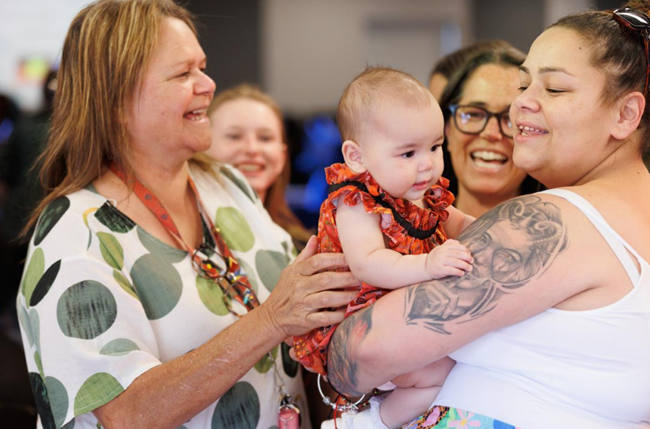
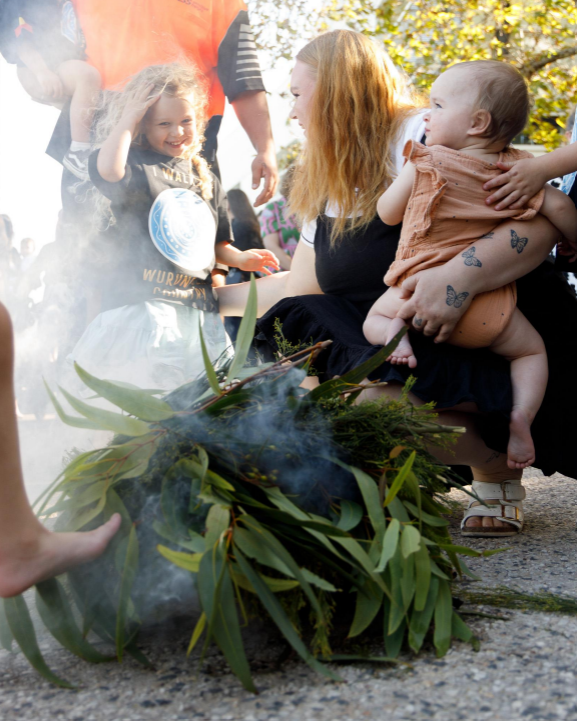
The Welcome Baby to Wurundjeri Country ceremony for First Nations children aged 0-5 and their families, fostered connections to culture, community, and Country as well as improving access to Early Years services. The event was run by Maribyrnong and Brimbank councils on 25 February 2025. 43 children were welcomed by Wurundjeri Elder Aunty Dianne Kerr, joined by 200 family and community members.
2025 MAVlab Innovation Awards Winner:
The Stronger Together Award for Council Collaboration, supported by JLT Public Sector.

Project statistics:
- Project team: 10 key team members from Maribyrnong City Council, Brimbank City Council, Victorian Aboriginal Community Services Association, Victorian Aboriginal Child and Community Agency, Department of Education, and Western Health.
- Project duration: 10 months.
Project goals:
- Connecting Aboriginal and First Nations families to Country, culture and community
- Building trust and genuine relationships between councils and Aboriginal families
- Developing deeper connections between councils, Aboriginal organisations and Elders
- Connecting First Nations families with early years services, and
- Ensuring children get the best start to life.
Challenge and context:
Welcome Baby to Wurundjeri Country aimed to increase participation of First Nations families with Early Years Council services. Low engagement with these services is reflective of community distrust for government organisations and grounded in a history of exclusion or disconnection experienced by First Nations families. This project sought to repair the relationship between councils and their First Nations communities by listening and engaging with families through rich cultural practices to ultimately improve health and wellbeing outcomes.
Building relationships with local Aboriginal organisations and Traditional Owners was essential and required both councils to invest in relationships before outcomes. To create an engaging and fulfilling program, both councils developed the program with First Nations organisations rather than offering programs to them. It also required navigating internal Council structures to create space for culturally responsive work, often in areas that had limited experience engaging with First Nations communities.
The planning considered specific barriers including young families dealing with intergenerational trauma, low access to culturally safe health and education services, limited transport and low awareness about programs. To address these, Councils partnered with Aboriginal-led organisations to co-design the ceremony and subsequent possum skin sessions to strengthen cultural connection whilst supporting opportunities to link services and programs that support early childhood development in a culturally safe way.
This project wasn’t just about creating an engaging one-off program — it was about trust-building and laying the groundwork for long-term, respectful collaboration. As a result, both councils have begun to see stronger relationships, increased engagement from First Nations families, and a more culturally confident approach from their Early Years teams.
Solution and innovation:
The Welcome Baby to Wurundjeri Country project demonstrates a significant shift from conventional Early Years practices delivered by Maribyrnong and Brimbank councils. The project prioritised cultural traditions and community involvement when working with First Nations families by planning from the ground up with a dedicated working group made up of Elders, First Nations organisations, project officers, as well as Maribyrnong and Brimbank staff. Through the working group, deep listening sessions were held with Elders and community leaders, allowing cultural protocols to guide planning whilst recognising the role of Aboriginal organisations as trusted connectors.
Ensuring that First Nations voices were central to the program design and delivery created a more inclusive and respectful system that placed First Nations people at the heart of Early Years program planning and delivery.
The initiative was also the first collaboration between two metropolitan councils and First Nations organisations to deliver a Welcome Baby to Wurundjeri Country ceremony that honours the traditional land of the Wurundjeri people of the Kulin Nations. First Nations members of the working group appreciated the positive impact of the collaboration, and the effect was an event that met the cultural needs of local mob.
With the guidance of the Elders, Traditional Owner group, and the working group, the Welcome Baby Ceremony was a warm and inclusive evening deeply grounded in Aboriginal culture. It was a night shaped by mob for mob. The follow-up Possum Skin sessions provided an opportunity for families to connect, learn, and create culture together. Attendees learnt possum skin marking and made emu feather headbands whilst also interacting with and connecting with Elders, Koorie Engagement Support Officers, and VACCA staff in a culturally safe space.
This project wasn’t just about creating an engaging one-off program — it was about trust-building and laying the groundwork for long-term, respectful collaboration.
Impact and outcomes:
The Welcome Baby to Wurundjeri Country ceremony was developed with deep respect for First Nations community and their cultural heritage. The program created stronger partnerships between First Nations organisations, local councils, and Aboriginal communities, and increased equitable access to services and opportunities, which are core objectives in both the Maribyrnong and Brimbank Council Plans and Reconciliation Action Plans.
The project enhanced family outcomes by connecting children and carers to Early Years services they might previously have missed or lost touch with. This included links to Maternal and Child Health, playgroups, bush kindergartens, and Koorie Education Support Officers. Following the program, Brimbank reported more Aboriginal children up to date with MCH appointments, and previously disengaged families were now joining playgroups. One family contacted VACCA to explore their country and mob, and three others connected with their Koorie Engagement Support Officer.
The initiative also supported local Aboriginal families by promoting cultural continuity and celebration. It marked a major celebration of First Nations culture, emphasising how connection with traditional owners and Elders supports health, wellbeing, and identity for ‘boorai’ — children in Wurundjeri language. Families frequently commented on the powerful impact of this connection, fostering stronger ties between families, Elders, and service providers.
Following the ceremony, families have continued to attend follow-up Possum Skin sessions, reinforcing their links with Early Years and First Nations networks. These sessions, in collaboration with VACCA, will continue to be offered and grow impact and connection. Brimbank’s Reconciliation Officer noted how much families valued the collaboration between councils and meeting other community members.
The initiative has achieved positive change through cultural connection and pride. Each child was celebrated as a valued member of their Aboriginal and broader community. Families highlighted the significant positive influence of connecting with Elders — particularly for reinforcing a strong sense of cultural belonging and unity.
Scalability:
This project has already extended beyond municipal boundaries to help First Nations families feel safe and included. It offers a valuable model that other local government areas could adopt by collaborating with Traditional Owner groups and neighbouring councils. This approach aligns events more closely with cultural, rather than administrative, boundaries.
The project serves as a foundation for broader engagement within councils, particularly among youth teams and other community programs. By working in partnership with Traditional Owner groups and local Aboriginal organisations, organisations are empowered to create culturally meaningful offerings that strengthen community connection and support improved health and educational outcomes.
The working group is already discussing opportunities to deliver a Welcome Ceremony to children and young people (5 and above) who have not had opportunities to participate in a ceremony before. Prior to this expansion, consultation will be conducted with Traditional Owner groups and Aboriginal organisations to ensure that the approach is culturally appropriate and aligned with community needs. Their input will guide the development of the expansion, ensuring it is respectful, inclusive, and meets the needs of community.
Overall, the project contributes to achieving UN Sustainable Development Goal 3: Good Health and Well-Being. It promotes strong, healthy families who are connected to culture and uses these cultural networks to develop stronger connections to Maternal Child Health and other Early Years services that ultimately reduce infant and child mortality.